Linseed OilPublished on 10 min read
Food-grade linseed oil: the complete guide
Everything you need to know about food-grade linseed oil: its omega-3, its use in cold dishes, how to store it and the right everyday amount.
Updated on
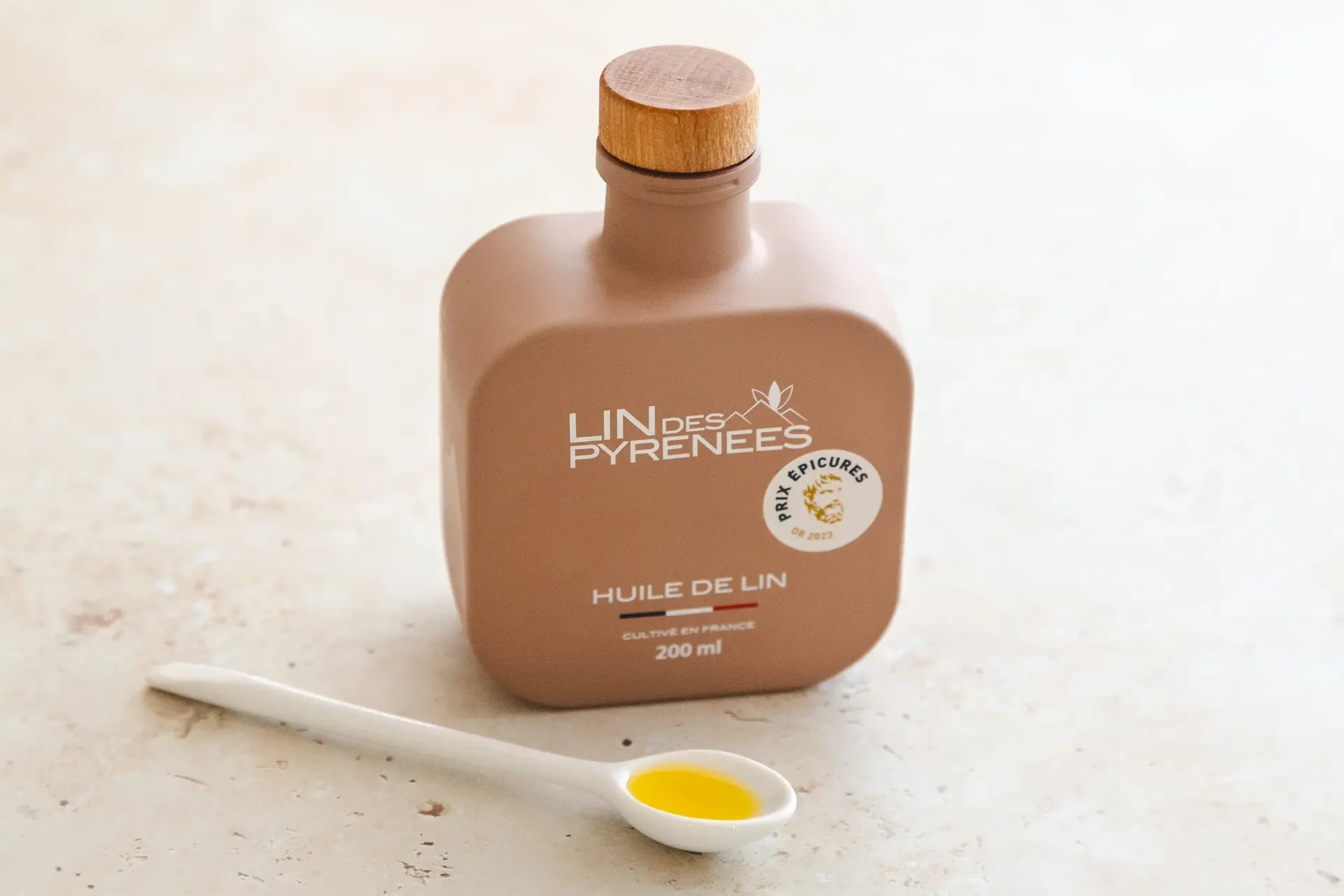
Food-grade linseed oil is one of the plant oils richest in ALA omega-3. But you still need to know how to choose it, store it and use it: it is a fragile oil that is never cooked and is enjoyed exclusively cold. This complete guide brings together the essentials - its composition, its taste, its uses in cooking, the right ratios for vinaigrettes, how to store it and the buying criteria that really matter - illustrated with our cold-pressed virgin linseed oil, grown and processed in the heart of the Pyrenees.
What is food-grade linseed oil?
Food-grade linseed oil is extracted from the seeds of the oilseed flax plant (Linum usitatissimum). It must not be confused with technical linseed oil, used in woodwork or painting: only virgin, food-grade, cold-pressed oil is intended for the table. It is a golden, fluid oil with a subtle taste of hazelnut and fresh grass, used in dressings and as a finishing touch.
What makes it unique is its fatty acid profile: it is one of the few common oils in which omega-3 clearly dominates, whereas most everyday oils (sunflower, grapeseed) are mainly rich in omega-6. To discover flax grown in the Pyrenees, explore our feature on flax.
The composition of linseed oil in brief
Analytically, food-grade linseed oil has a very distinctive profile:
- around 53% alpha-linolenic acid (ALA), the plant-based omega-3;
- around 16% linoleic acid (omega-6);
- around 18% oleic acid (omega-9, like olive oil);
- a low proportion of saturated fatty acids, and vitamin E naturally present in the seed.
No other common food oil reaches such a level of ALA: this figure explains linseed oil’s special place in kitchens. It is also what makes it fragile, and what calls for the precautions detailed below.
Cold pressing: why the process changes everything
ALA is a fragile fatty acid: heat, light and oxygen quickly degrade it. The extraction method is therefore decisive. Cold pressing is a purely mechanical process: the seed is pressed at low temperature, without solvents and without heating to increase the yield. The oil is then simply left to settle, then bottled in tinted glass. Nothing is added: no preservatives, no flavourings.
By contrast, a refined oil undergoes heating, sometimes solvents, and deodorisation. The process gives a neutral, stable and cheap oil, but erases the aromas and original character. That is the whole difference between an anonymous supermarket oil and a virgin oil from a specific terroir. We go into this in our article on cold pressing linseed oil, and our story and our know-how rest entirely on this standard.
From field to bottle: a linseed oil from the Pyrenees
What sets a great linseed oil apart is first and foremost its origin. Pyrenean oilseed flax is grown on a specific terroir, at the foot of the mountains, harvested when ripe, then pressed a few kilometres from the fields, in the days following the harvest. This short supply chain shortens the time between seed and bottle - a decisive factor for an oil that is sensitive to oxidation.
Traceability is complete: we know where the seed comes from, who grew it, when it was harvested and pressed, and each batch is identified right through to bottling. This revival of a regional supply chain was supported by concrete backing: EAFRD co-financing (European Agricultural Fund for Rural Development) and a partnership with Ecloz. Nothing is wasted either: the press cake left after pressing is finely milled to become our flaxseed flour. The full journey is told in our article on the Pyrenean oilseed flax supply chain.
Taste, colour and texture: how do you recognise a good linseed oil?
Your senses are the best quality control. A fresh, well-stored linseed oil has:
- a golden to amber colour, clear, never cloudy;
- a fresh smell, plant-like, slightly grassy;
- a frank nutty taste, gentle, with no marked bitterness;
- a fluid texture that coats without heaviness.
Conversely, strong bitterness or a smell of old cardboard, paint or fish indicate an oxidised oil: it has gone off and should be discarded. This frank aromatic profile is precisely what our ambassador chefs look for when they work with it in the kitchen, and what the Best Of Gastronomie 2026 Gold Medal came to recognise - an award won on taste.
The criteria for a quality linseed oil
Not all bottles are equal, and the label says a great deal. Five simple pointers help you sort them when buying:
- The words "virgin" and "first cold pressing": the foundation of an unrefined oil.
- An opaque or tinted bottle, which protects the oil from light - never clear glass exposed on a shelf.
- A recent pressing or harvest date, not just a distant best-before date: freshness matters more than shelf life.
- A clear origin and traceability: knowing where the seed was grown and pressed is the sign of a genuine supply chain.
- A small size (such as 200 ml), a guarantee that it will be used quickly once opened.
These are exactly the criteria we set ourselves for our virgin linseed oil. To compare places to buy, our article where to buy food-grade linseed oil reviews the best options.
How to use linseed oil in cooking (without ever heating it)
The golden rule fits in one sentence: linseed oil is never cooked. Heated, it smokes quickly, develops a persistent bitterness and loses its nutty aroma. It is therefore used only cold, as a finishing touch or in dressings:
- drizzled over steamed vegetables, a mash or a velouté once served, off the heat;
- in a vinaigrette, mixed with a more neutral-tasting oil;
- on cold fish, a tartare, raw vegetables or fromage blanc;
- in a smoothie, a yoghurt or a warm porridge, stirred in at the last moment.
A serving tip: pour the oil after plating, directly onto the plate, rather than into the pan. That way you keep all its aroma and control the amount down to the last drizzle.
Three simple recipes to get you started
- Nutty vinaigrette: 1 tablespoon of linseed oil, 2 tablespoons of mild olive oil, 1 teaspoon of wholegrain mustard, 1 tablespoon of cider vinegar, salt and pepper. Emulsify at the last moment.
- The morning open sandwich: whipped fromage blanc, a drizzle of linseed oil, a pinch of fleur de sel, a few kibbled flaxseed and a twist of black pepper, on toasted wholemeal bread.
- The green smoothie: a handful of spinach, a banana, 200 ml of plant-based milk and 1 tablespoon of linseed oil blended cold - its taste blends completely into the mix.
The pairings that work best
The nutty taste of linseed oil pairs naturally with local produce and mild flavours:
- Vegetables: warm potatoes, grated carrots, beetroot, cooled roasted squash, young leaves;
- Fish: smoked trout, marinated salmon, fish tartare, sardines;
- Cheeses: fromage blanc, Pyrenean sheep’s cheese, fresh goat’s cheese;
- Pulses and grains: lentil salad, houmous, bulgur, warm brown rice;
- Sweet: apple compote, porridge, yoghurt with honey.
You will find these pairings turned into signature recipes on our recipes page, alongside our chefs' creations.
How much linseed oil should you use?
In cooking, the guideline is simple: one tablespoon, or 10 to 15 ml, is enough to flavour a dish for two people. In a vinaigrette, allow one third linseed oil to two thirds of a more neutral oil: the nutty taste stays present without dominating. For a mixed salad for four, two tablespoons are plenty.
Like any fat, linseed oil is used in moderation. It is not the quantity that makes a dish a success, but the moment you add it: always at the end, never in the pan.
The most common mistakes
- Heating it, even for a few seconds in a frying pan or a boiling sauce.
- Leaving it on the worktop, next to the other oils, instead of in the fridge.
- Buying a large bottle "to save money": the oil oxidises before it is finished.
- Judging it on a tired bottle: many people think they do not like linseed oil when they have only tasted an oxidised one.
- Forgetting to close it straight after use: air is its main enemy.
Storage: protecting a fragile oil
Because it oxidises quickly, linseed oil calls for a little method:
- in the fridge, always, as soon as it is opened;
- away from light, in its tinted bottle, tightly closed after each use;
- used within 4 to 6 weeks of opening, ideally;
- never near the hob or on a shelf exposed to the sun.
An oil that smells strongly "old" or fishy has gone off: replace it without hesitation. This is also why we offer it in a 200 ml size, calibrated for regular use without waste.
Flaxseed, rapeseed, walnut or olive oil: the comparison in the kitchen
No oil combines every advantage. The idea, then, is not to name "the best", but to keep two or three in the cupboard and use each one where it excels: rapeseed or olive for cooking, flax for cold seasoning.
Oil | ALA content | Cooking | Ideal use | Taste |
|---|---|---|---|---|
Flax | Very high (~53%) | Never | Dressings, cold finishing | Frank nutty |
Rapeseed | Moderate (~9%) | Gentle cooking tolerated | Versatile, everyday cooking | Discreet, slightly green |
Walnut | Medium | No | Salads, cheeses, chicory | Pronounced walnut |
Olive | Low | Yes | Cooking, Mediterranean cuisine | Fruity, sometimes peppery |
For a detailed head-to-head between the two oils richest in ALA, see our comparison linseed oil or rapeseed oil.
Oil, seeds, flour or cracked seeds: which to choose in the kitchen?
Flax comes in complementary products, each with its own playground:
- The oil: the fat fraction alone, used cold, in dressings and to finish a plate.
- Flaxseeds: whole for crunch, ground to blend into dishes and act as a binder. Our complete guide to flaxseeds covers all of this.
- Kibbled flaxseed: the crushed seed, ready to sprinkle on a salad, a yoghurt or a gratin.
- The flour, made from the press cake: in baking, in coatings and as a "flax egg" binder. See our guide to gluten-free flaxseed flour.
A 100% plant-based oil
Linseed oil is 100% plant-based, with no ingredients of animal origin: it naturally has its place in vegetarian or vegan cooking. It fits effortlessly into plant-based dishes - on a houmous, in a grain bowl, mixed with a nut butter, in a salad dressing or on marinated tofu.
Combined with flaxseed flour, which acts as a "flax egg" binder in egg-free cooking, it makes up a coherent plant-based toolkit, from breakfast to dinner, with the same nutty taste as a common thread.
Where can you buy quality food-grade linseed oil?
Linseed oil can be found in specialist shops, delicatessens and online, but freshness and traceability vary greatly from one brand to another. Go back to the five criteria above: the words "virgin" and "cold-pressed", a tinted bottle, a recent pressing date, an identified origin, a small size.
Lin des Pyrénées linseed oil, cold-pressed and traceable from the Béarn, is available directly from our online shop and from our partner retailers. To discover the whole range - oil, flour, seeds, cracked seeds and gift boxes - visit the home page.
Frequently asked questions
Is food-grade linseed oil the same as linseed oil for wood? No. Only virgin, food-grade, cold-pressed oil is for eating. Technical linseed oil intended for wood is not edible.
Can you cook with linseed oil? No, never. Heat makes it bitter and strips it of its nutty aroma. It is used exclusively cold, as a finishing touch or in dressings.
What does linseed oil taste like? A frank, gentle, plant-like nutty taste, with no marked bitterness when it is fresh. Strong bitterness or a smell of old cardboard indicate an oxidised oil.
How should linseed oil be stored once opened? In the fridge, away from light, tightly closed after each use, and ideally used within 4 to 6 weeks.
How much linseed oil should go into a vinaigrette? Allow one third linseed oil to two thirds of a more neutral oil, which is about one tablespoon for a dish for two people.
Sources: ANSES, omega-3 fatty acids (in French); the Ciqual food composition table (ANSES); EFSA, dietary reference values for fats.
Recent articles
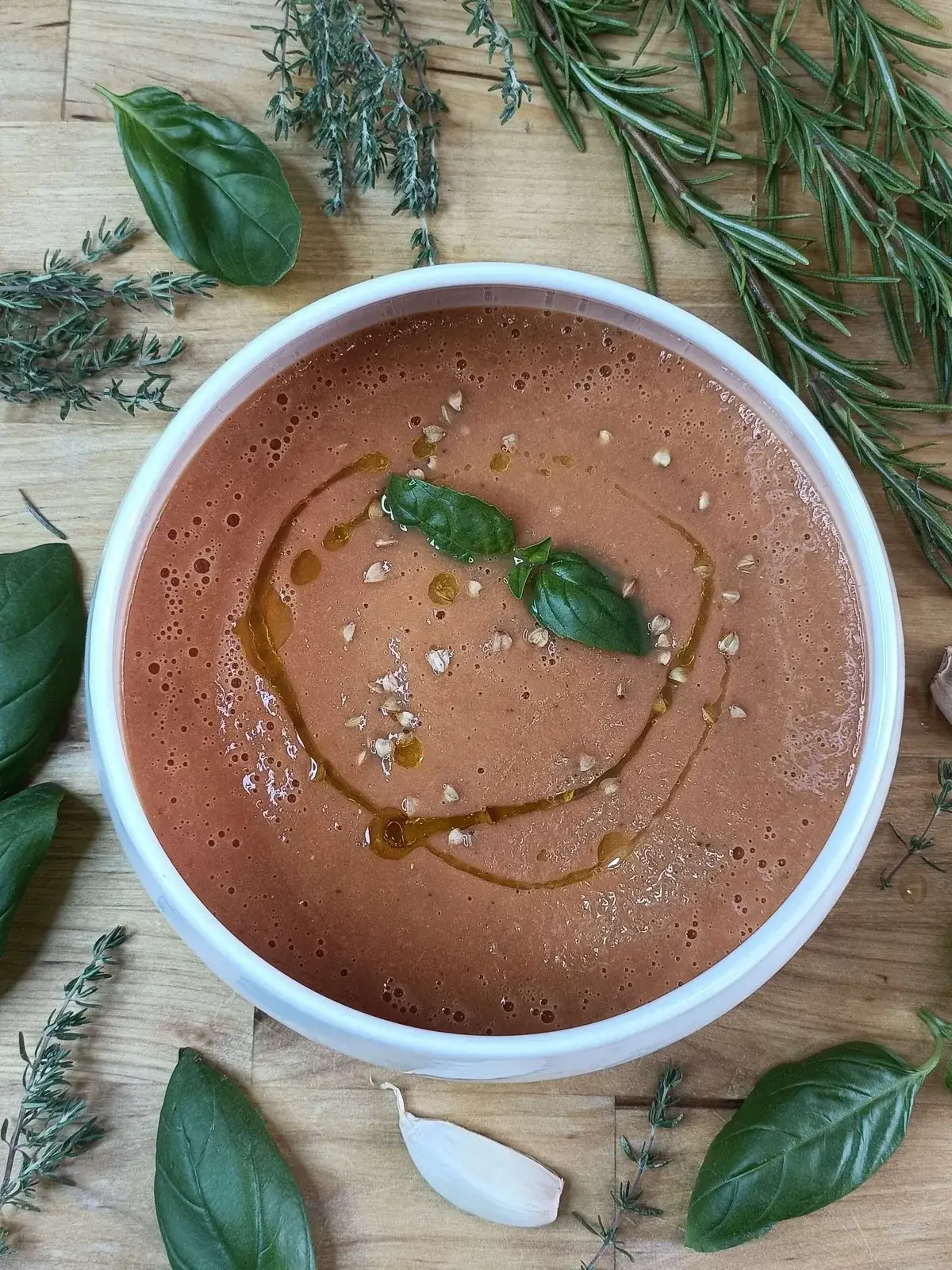
Chilled roasted tomato and garlic soup, with a drizzle of linseed oil
Florence Oustau's chilled soup: oven-roasted tomatoes and garlic, a night in the fridge, crunchy kasha and a drizzle of linseed oil just before serving.
1 min read
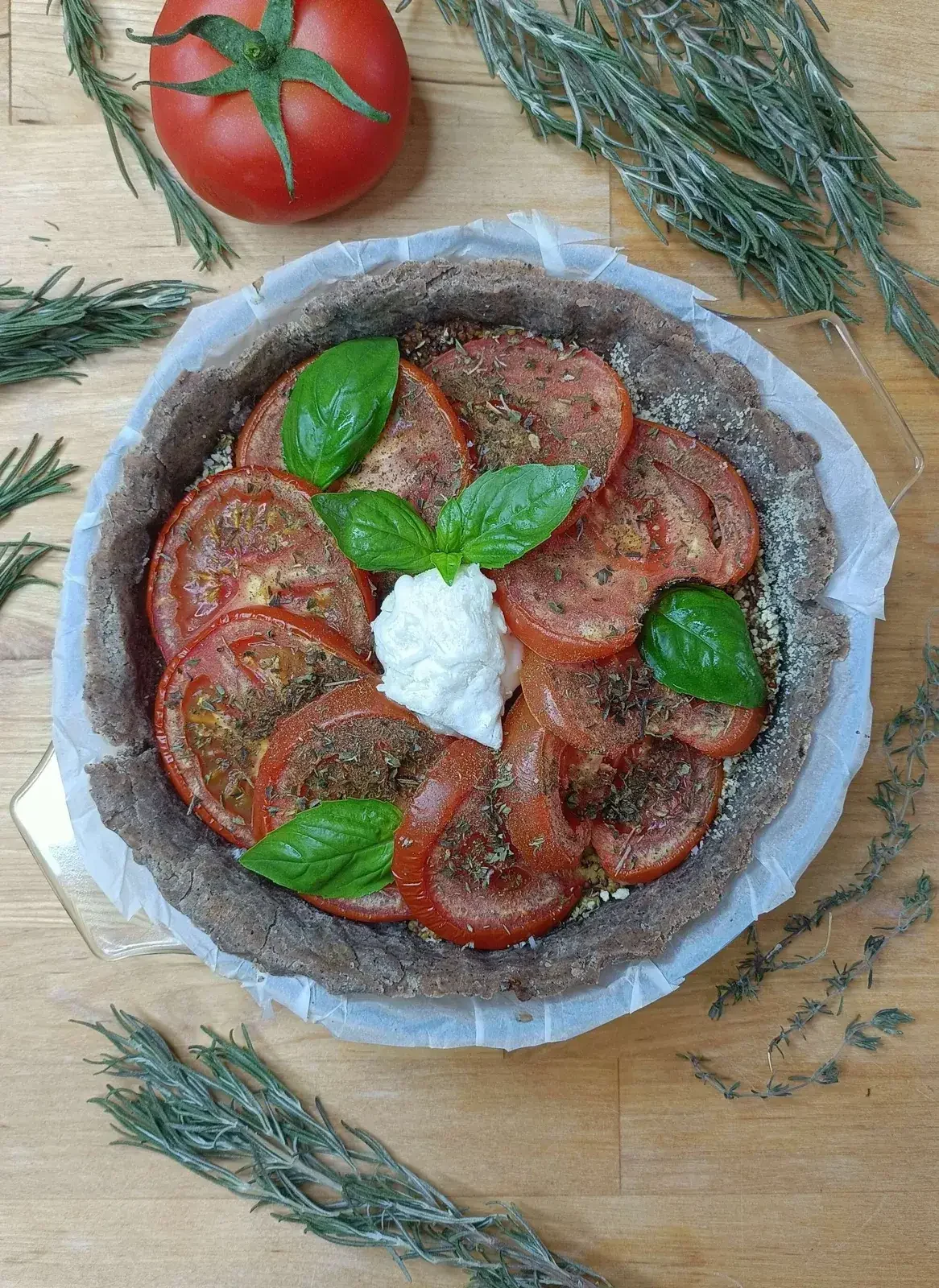
Tomato and goat's cheese tart, gluten-free pastry with flaxseeds
Florence Oustau's summer tomato and goat's cheese tart: a gluten-free shortcrust pastry bound with ground flaxseeds, a rosette of tomatoes and melted goat's cheese.
1 min read
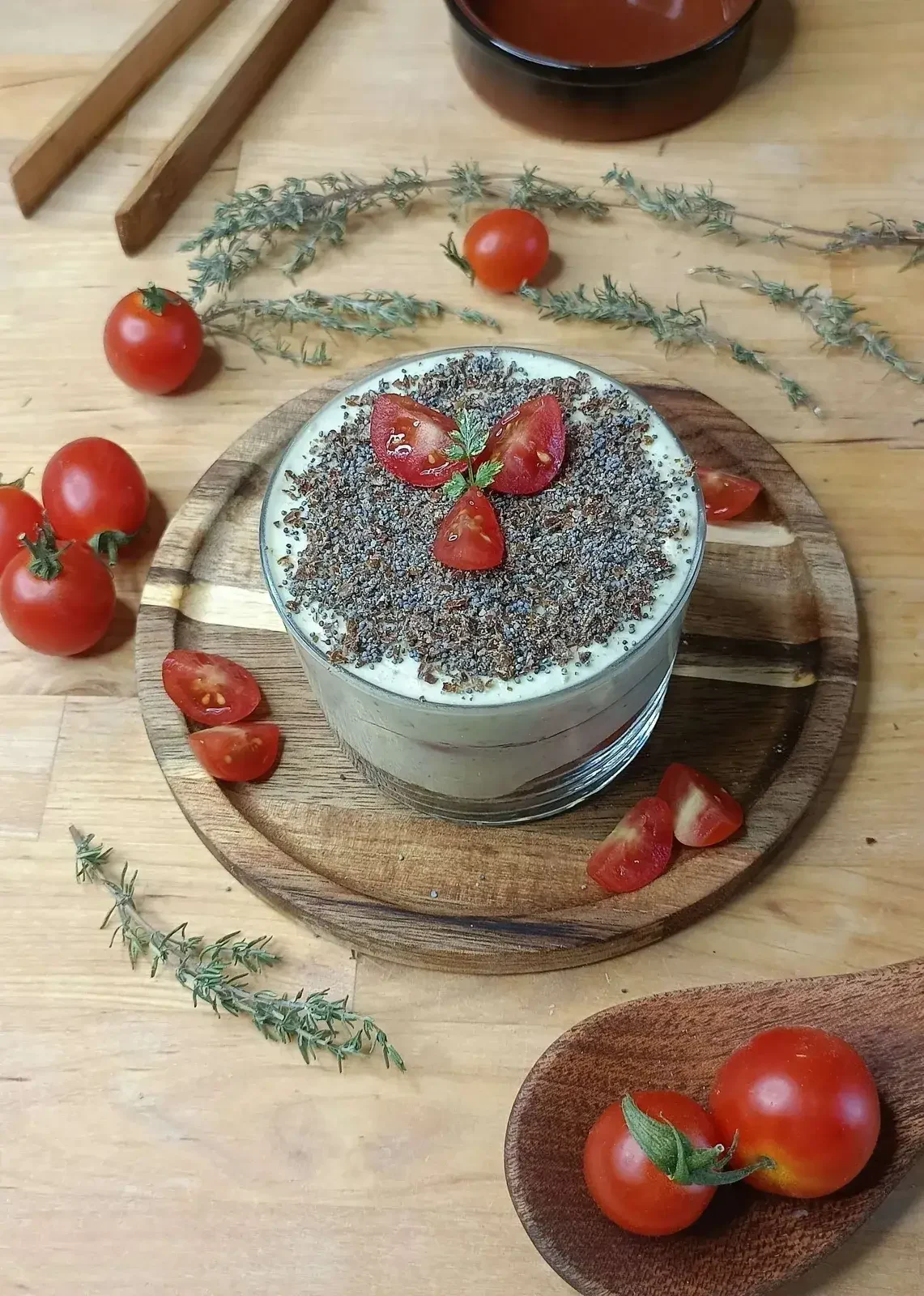
Savoury tomato, pesto and kibbled flaxseed tiramisù
Florence Oustau's savoury tiramisù: plant-based mascarpone, pesto, tomato and the crunch of kibbled flaxseed. A chic and fresh aperitif verrine.
2 min read