Linseed OilPublished on 6 min read
Linseed oil vs rapeseed oil: which omega-3 oil should you choose?
Linseed oil or rapeseed oil: ALA omega-3 content, smoke point, taste and uses compared so you can make the most of them every day.
Updated on
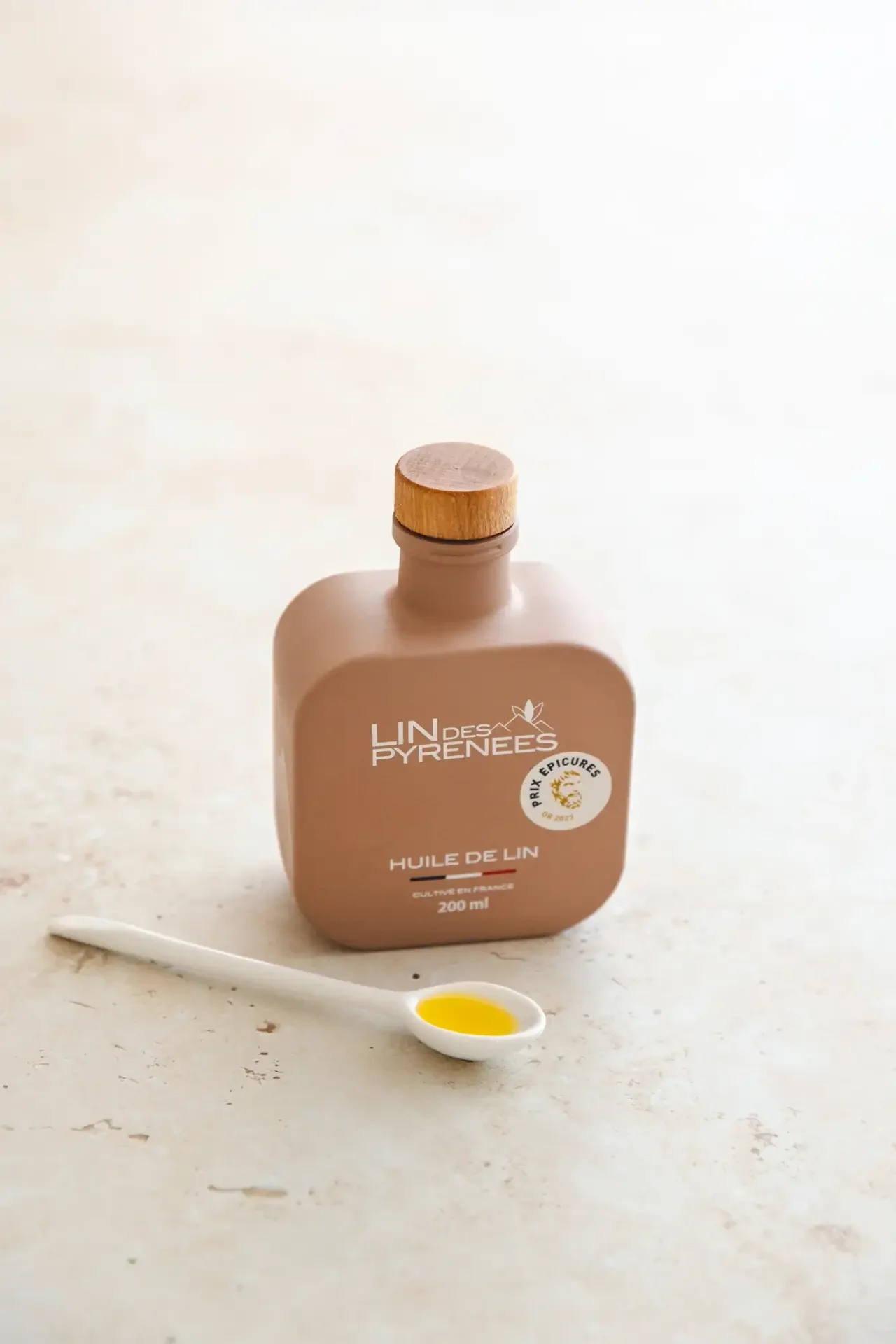
Flaxseed or rapeseed oil? These two plant oils inevitably come up in conversation whenever omega-3 in cooking is mentioned. Both are among the food oils richest in alpha-linolenic acid, but they play very different roles on the plate. To help you decide - or rather to combine them wisely - this comparison reviews their ALA content, smoke point, taste and uses, in the light of our cold-pressed virgin linseed oil from the Pyrenees.
Two omega-3 oils, but not the same profile
Let’s start with the essentials: linseed oil and rapeseed oil are two of the few common oils that are genuinely rich in ALA omega-3, whereas most (sunflower, grapeseed) are mainly rich in omega-6. That is what makes them interesting in the kitchen for varying the fats in your cupboard. But their ALA content and resistance to heat differ markedly, which changes everything about how to use them. To discover flax grown in the Pyrenees, explore our feature on flax.
ALA omega-3 content: flax’s clear advantage
This is the decisive criterion for anyone focusing on omega-3. Linseed oil has an alpha-linolenic acid (ALA) content among the highest in the plant kingdom, around half of its fatty acids. Rapeseed oil contains a much more modest share: worthwhile, but noticeably lower.
In concrete terms, a tablespoon of linseed oil provides several grams of ALA, whereas you need more rapeseed oil for an equivalent amount. One useful point, however: the oil, unlike the seed, carries only the fat fraction. It contains neither fibre nor protein. If you want to bring the whole seed into your cooking, turn to our flaxseeds for grinding or our flaxseed flour, made from the press cake. To find out more, see our complete guide to food-grade linseed oil.
Smoke point and cooking: rapeseed tolerates it, flax never
This is where the two oils diverge radically, and the smoke point - the temperature at which an oil starts to visibly break down - explains it simply. That of linseed oil is very low, around 105 °C: well below even a moderately hot frying pan. Linseed oil is therefore never cooked: heated, it oxidises, darkens and develops a marked bitterness. It is used exclusively cold, in dressings or as a finishing touch.
Rapeseed oil has a much higher smoke point - around 200 °C for a refined oil, noticeably less for a virgin version. It therefore tolerates gentle cooking: sautéing vegetables, searing over moderate heat. This difference explains why rapeseed is often the everyday "all-purpose" oil, while flax is kept for raw dishes. A simple rule to remember: if it’s being heated, it’s never flax.
Taste: frank nuttiness versus neutral mildness
On the palate, the two oils offer distinct experiences. Linseed oil unfolds a frank nutty taste, slightly grassy, with a finishing note typical of an unrefined virgin oil: it gives dishes their signature and works wonders on local produce. Rapeseed oil, more discreet and slightly vegetal, recedes more behind the flavours of the dish.
This taste profile naturally guides how they are used: choose flax when you want the oil to express itself (raw vegetables, cold fish, fromage blanc, steamed potatoes), and rapeseed when you are looking for a neutral base. Our ambassador chefs draw on precisely this aromatic signature of flax in their creations - a signature recognised by the Best Of Gastronomie 2026 Gold Medal.
Comparison table: linseed oil vs rapeseed oil
To see the essentials at a glance, here are the two oils side by side:
Criterion | Linseed oil | Rapeseed oil |
|---|---|---|
Omega-3 (ALA) | Very high (~53%) | Moderate (~9%) |
Smoke point | Very low (~105 °C) | Higher (~200 °C refined) |
Cooking | Never - cold only | Gentle cooking tolerated |
Taste | Frank nutty, grassy | Mild, neutral, slightly vegetal |
Storage | Fragile, kept cool, within 4-6 weeks | More stable, cupboard |
Ideal use | Dressings, cold finishing | Versatile, everyday cooking |
This table makes it clear: neither oil combines every advantage. Flax wins on ALA content and taste; rapeseed shines through its versatility in the kitchen. Hence the most sensible conclusion.
Our advice: combine them rather than choose
Do you really have to choose between linseed oil and rapeseed oil? Not necessarily. The smartest strategy is to pair them according to their strengths: rapeseed for cooking and preparing your hot dishes, flax for cold seasoning, where its ALA content and nutty note are at their best. Two bottles in the cupboard, each in its place, and you get the best of both.
In practice, a successful vinaigrette readily combines one third linseed oil to two thirds of a more neutral oil: the taste stays balanced and the linseed oil does not overpower anything. You can even go further by using flax in several forms: a drizzle of linseed oil on your dishes, ground flaxseeds in your yoghurts, kibbled flaxseed on your salads and flaxseed flour in your baking. For concrete ideas, browse our recipes page. And for a traceable linseed oil, cold-pressed in the heart of the Pyrenees, discover our story and our know-how.
Storage and freshness: a point that changes everything
Beyond ALA content and taste, storage clearly sets these two oils apart, and it is a criterion too often forgotten when choosing. Rapeseed oil, relatively stable, keeps without any particular difficulty in a cupboard away from light. Linseed oil, on the other hand, is fragile: very rich in unsaturated fatty acids, it oxidises quickly when exposed to heat, light and air.
In concrete terms, linseed oil is kept in the fridge as soon as it is opened, in its tightly closed tinted bottle, and ideally used within four to six weeks. Marked bitterness or a smell of old cardboard indicate an oxidised oil, to be discarded. This is why it is best to choose it in a small 200 ml size, freshly pressed and fully traceable: how well it keeps directly determines its omega-3 content and its taste. Rapeseed, by contrast, is more forgiving of small lapses in storage, which makes it the "worry-free" everyday oil - one more reason to keep flax for the cold uses where it gives its very best. To choose a linseed oil at the peak of its freshness, opt for a cold-pressed, traceable oil like ours.
Frequently asked questions
Which is richer in omega-3, linseed oil or rapeseed oil? Linseed oil, by a clear margin. Its alpha-linolenic acid (ALA) content is among the highest in the plant kingdom, well above that of rapeseed.
What is the smoke point of linseed oil? Very low, around 105 °C, compared with about 200 °C for a refined rapeseed oil. That is why flax is never cooked.
Which oil tastes best? It is a matter of preference: flax offers a frank nutty taste that gives dishes their signature, while rapeseed remains mild and neutral, ideal as a base.
Do you have to choose between linseed oil and rapeseed oil? No, the ideal is to combine them: rapeseed for cooking, flax for cold seasoning, at one third flax to two thirds neutral oil in a vinaigrette.
How should linseed oil be stored once opened? In the fridge, away from light, and ideally used within 4 to 6 weeks, as it oxidises faster than rapeseed oil.
Sources: ANSES, omega-3 fatty acids (in French); the Ciqual food composition table (ANSES); EFSA, dietary reference values for fats.
Recent articles
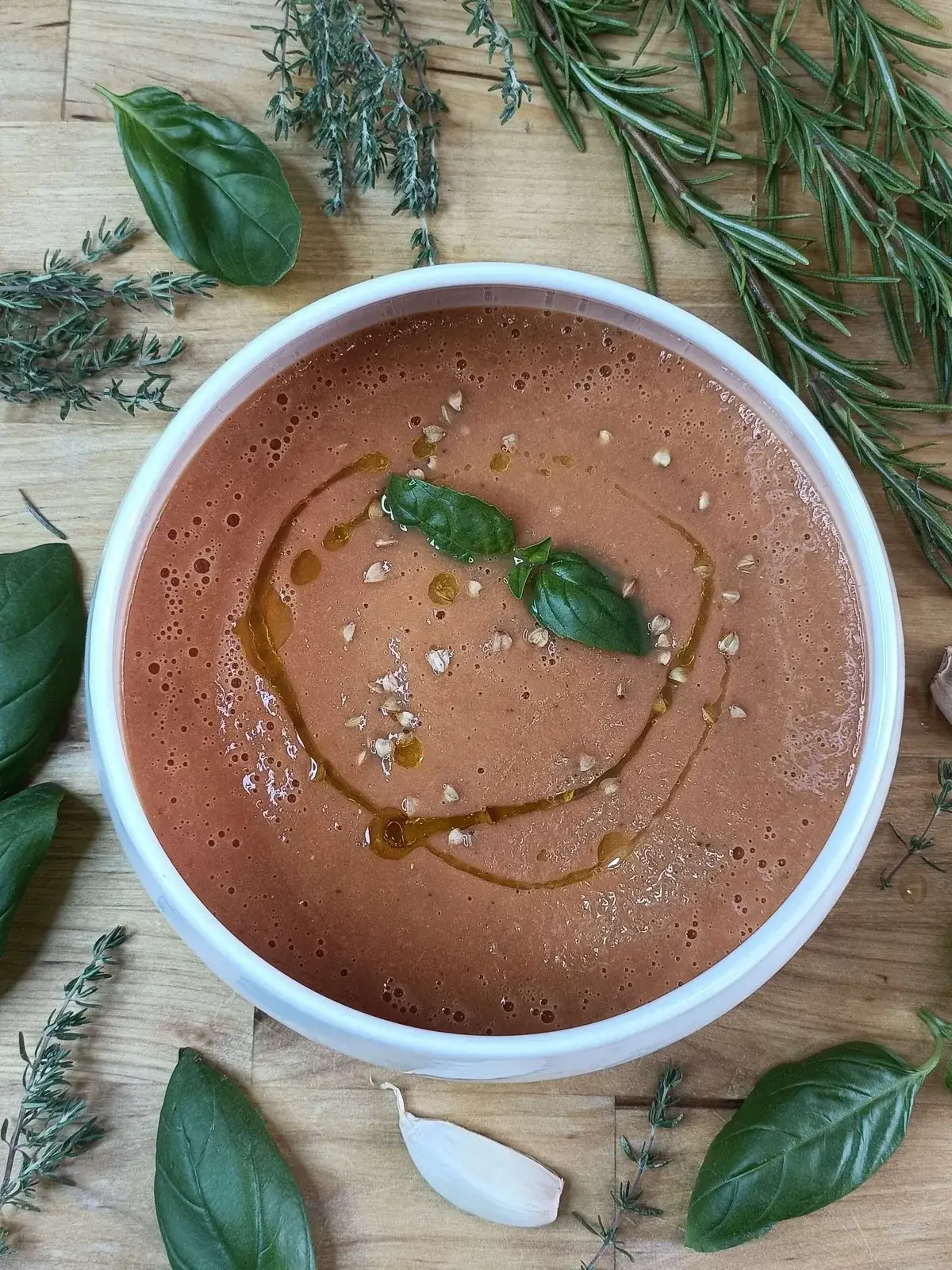
Chilled roasted tomato and garlic soup, with a drizzle of linseed oil
Florence Oustau's chilled soup: oven-roasted tomatoes and garlic, a night in the fridge, crunchy kasha and a drizzle of linseed oil just before serving.
1 min read

Tomato and goat's cheese tart, gluten-free pastry with flaxseeds
Florence Oustau's summer tomato and goat's cheese tart: a gluten-free shortcrust pastry bound with ground flaxseeds, a rosette of tomatoes and melted goat's cheese.
1 min read
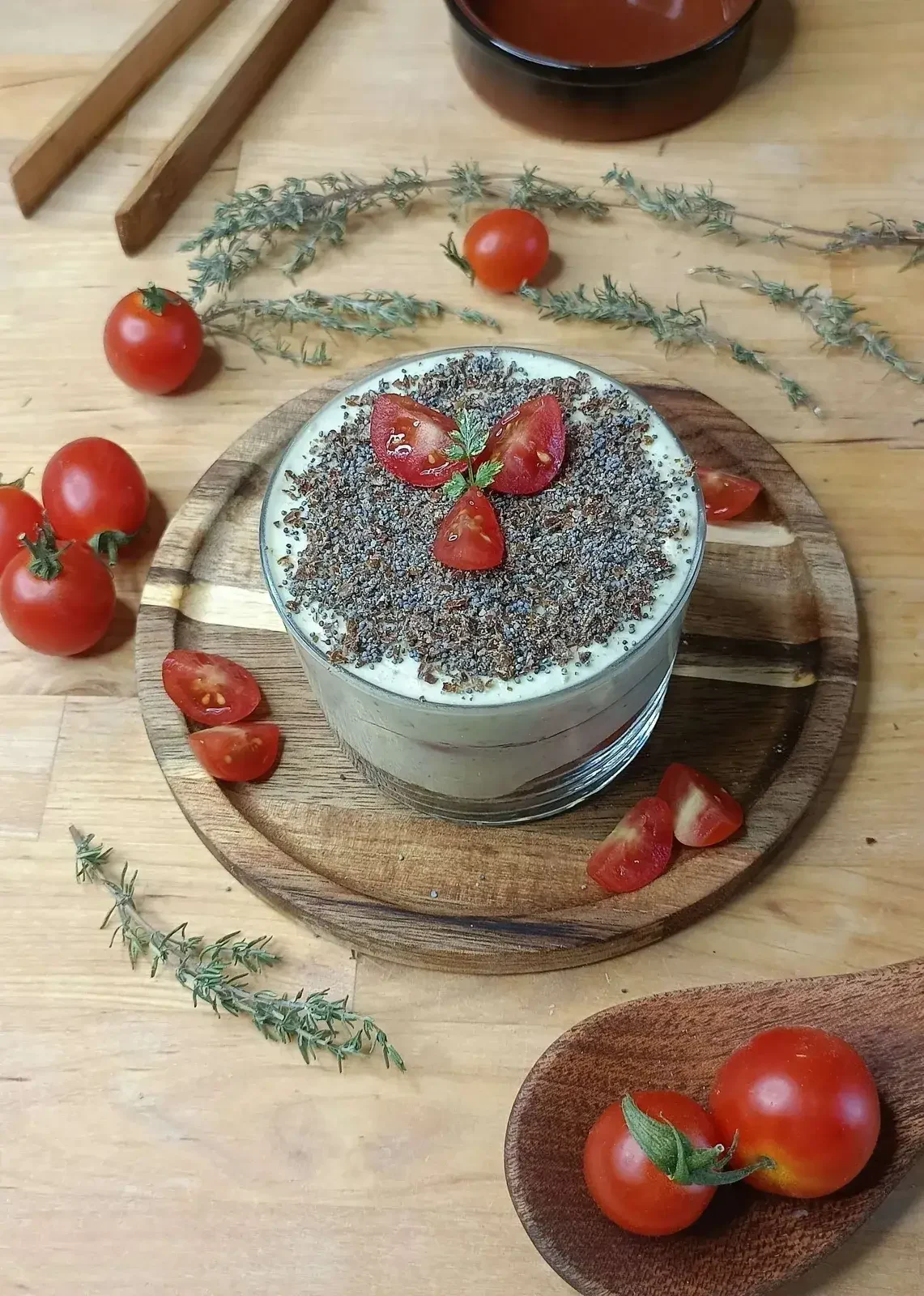
Savoury tomato, pesto and kibbled flaxseed tiramisù
Florence Oustau's savoury tiramisù: plant-based mascarpone, pesto, tomato and the crunch of kibbled flaxseed. A chic and fresh aperitif verrine.
2 min read