Linseed OilPublished on 6 min read
Where to buy culinary linseed oil in France?
Where can you find a good culinary linseed oil? Our quality criteria, the best buying channels and the strengths of a French supply chain.
Updated on
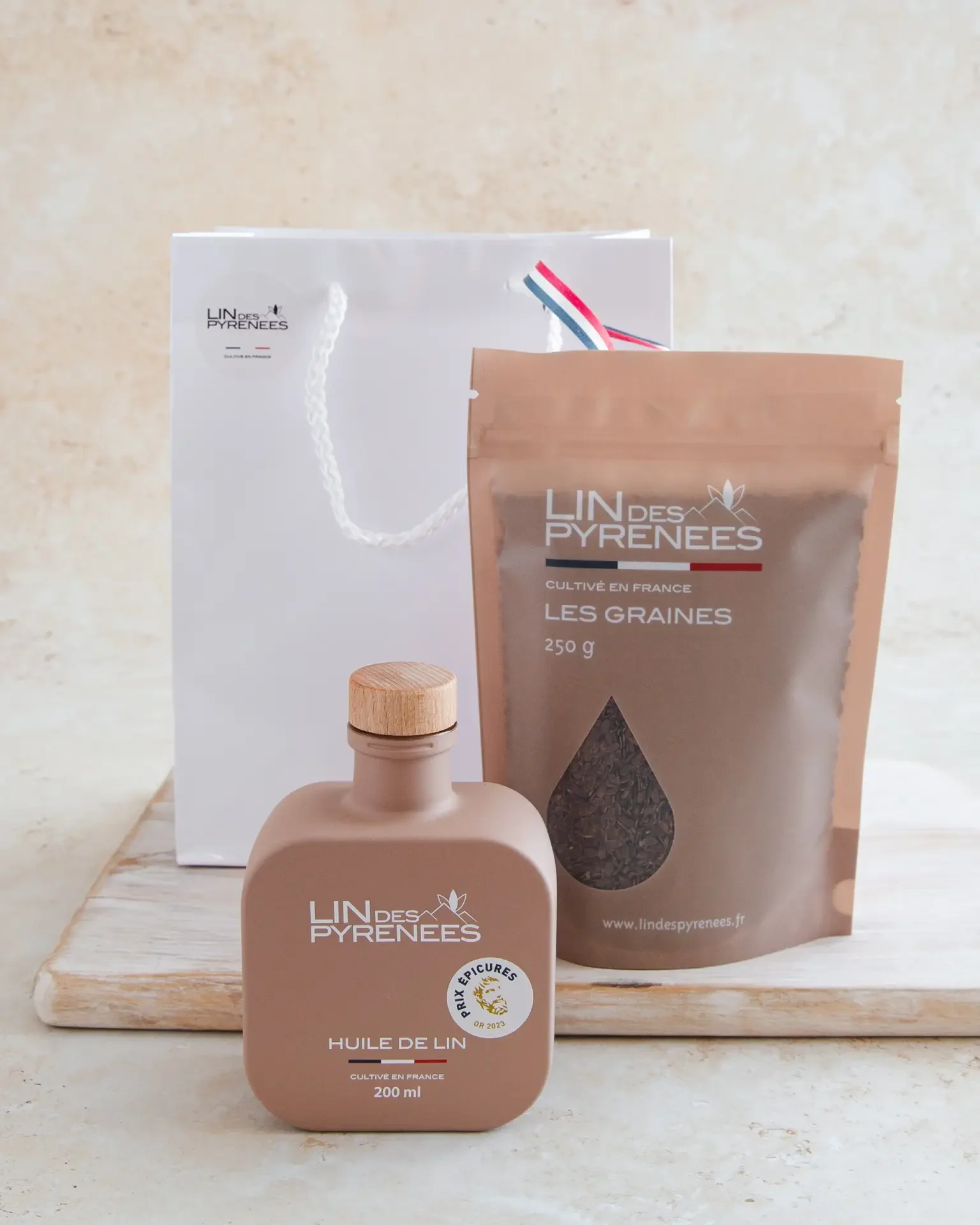
Looking for where to buy culinary linseed oil without ending up with a tired, oxidised or untraceable product? It is a fair question: this oil, rich in omega-3 ALA, is also one of the most fragile in the cupboard, and not all buying channels are equal. To help you choose with confidence, this guide brings together the criteria that really matter and the right buying habits - starting with our cold-pressed virgin linseed oil, grown and processed in the heart of the Pyrenees.
Before buying: the criteria for a quality linseed oil
Buying culinary linseed oil is not just about comparing prices: it is about knowing how to read a label. Even before choosing where to buy, bear in mind that quality comes down to a few specific mentions. An oil rich in omega-3 ALA only keeps its freshness and flavour if it has been properly extracted, properly packaged and consumed quickly. To understand in detail what you are buying, our complete guide to culinary linseed oil covers the subject from every angle.
Virgin and cold-pressed
This is the first criterion, and it is non-negotiable. Only a virgin, cold-pressed oil (mechanical extraction with no solvents or excessive heat) preserves the fragile fatty acids and the aromas of the seed. Avoid "refined" oils or those with no mention of extraction: the heat of refining neutralises the flavour and colour.
An opaque bottle
Light oxidises linseed oil within a few days. A tinted or opaque bottle is therefore not an aesthetic detail: it is a guarantee of freshness. Be wary of clear containers displayed on shelves under neon lights.
A recent pressing date
Beyond the simple best-before date, look for the pressing date. The more recent it is, the better. Linseed oil is best consumed in the weeks following opening: opt for small sizes, which ensure a quick turnover and an always fresh product.
Clear traceability
Finally, a good linseed oil owns its origin: where the seed comes from, who grew it, where it was pressed. This transparency is the best sign of quality. Conversely, an anonymous oil with no indication of provenance should put you on your guard.
Where to find culinary linseed oil? The buying channels
Once you have the criteria in mind, you need to know where to look. Culinary linseed oil can be found through several channels, each with its strengths and limitations. Here is how to find your way and buy in the right place.
The producer’s online shop
This is by far the safest route to a fresh and traceable oil. Buying directly from the producer shortens the chain between pressing and your kitchen - a decisive factor for such a sensitive oil. Our culinary linseed oil is available in a few clicks on our online shop, shipped quickly and kept away from light all the way to your door. You will also find the rest of the range there: flaxseeds, flaxseed flour and kibbled flaxseeds.
Partner retailers and points of sale
Prefer to buy in person? More and more delicatessens, local produce shops and fine dining restaurants stock linseed oil from the Pyrenees. Find the list of our points of sale on the retailers page: a way to discover the product near you, often along with advice from a passionate shopkeeper. Our ambassador chefs also help to make this oil known among lovers of good food.
Organic shops and specialist grocers
Organic chains generally stock culinary linseed oil. It is a convenient channel, but be extra vigilant about freshness criteria: check the pressing date and the opacity of the bottle and, ideally, choose a product stored in a cool place. The "organic" label guarantees the growing method, but not, on its own, the freshness of the oil.
Why favour a French, local supply chain
With equal quality criteria, origin often makes the difference. Choosing a French linseed oil from a short supply chain offers several concrete advantages. Firstly freshness: fewer kilometres and intermediaries between the seed and the bottle means an oil that arrives livelier on your plate. Secondly traceability: a local supply chain knows precisely where its raw material comes from.
This is the whole point of the Lin des Pyrénées approach. The flax is grown on a specific terroir in the Pyrenees, harvested when ripe and then pressed a few kilometres from the fields. This local roots, told in our story, guarantee an oil with a clear hazelnut taste and full transparency, from field to bottle. It also makes it possible to turn the press cake into flaxseed flour, without discarding any of the seed. To discover the flax grown in the Pyrenees, browse our feature on flax.
How much does a good culinary linseed oil cost?
The price of a quality linseed oil reflects how it is produced: careful cultivation, cold pressing, small sizes and protective packaging all come at a cost. Be wary of abnormally low prices, often a sign of refined oils or old stock. Rather than thinking per litre, think per use: one spoonful per dish is enough, and a well-kept 200 ml bottle will last several weeks of cooking. The real saving is a fresh oil that you use up entirely, without waste.
Mistakes to avoid when buying
A few pitfalls come up often. Here they are, so you can buy with peace of mind:
- Choosing a large size "to save money": the oil may turn before you finish it.
- Neglecting the pressing date in favour of the best-before date alone.
- Buying a clear bottle exposed to shelf lighting.
- Confusing culinary oil with technical oil: linseed oil for wood is not edible.
- Forgetting to check the origin and traceability of the product.
By keeping these habits in mind, you give yourself every chance of getting a fresh, flavourful oil that lives up to its price.
Our advice for buying your linseed oil well
In short: aim for an oil that is virgin, cold-pressed, in an opaque bottle, freshly pressed and fully traceable, and favour a local French supply chain. One last useful benchmark: awards won in tastings, such as the Médaille d’Or Best Of Gastronomie 2026 awarded to our oil, which rewards taste rather than a sales pitch. To combine all these criteria in a single purchase, the simplest way is to order our linseed oil from the Pyrenees directly from the online shop, or to find it at one of our partner retailers. You will then discover a thousand ways to cook with it on our recipes page.
Frequently asked questions
Where can I buy the best quality culinary linseed oil? Directly from the producer, through their online shop, for a fresh and traceable oil. Lin des Pyrénées sells its cold-pressed oil online and through its partner retailers.
Can you find linseed oil in organic shops? Yes, but check the pressing date and the opacity of the bottle: the organic label guarantees the growing method, not the freshness of the oil.
Why choose a French linseed oil? A short, local supply chain shortens the time between pressing and your plate, a guarantee of freshness, and offers full traceability of origin.
What size of linseed oil should I buy? Opt for small sizes (around 200 ml), used up within a few weeks, to prevent the oil from oxidising before you finish it.
How can I recognise a quality linseed oil when buying? Look for the words "virgin" and "cold-pressed", an opaque bottle, a recent pressing date and a clearly stated origin.
Sources: ANSES, omega-3 fatty acids (in French); the Ciqual food composition table (ANSES).
Recent articles
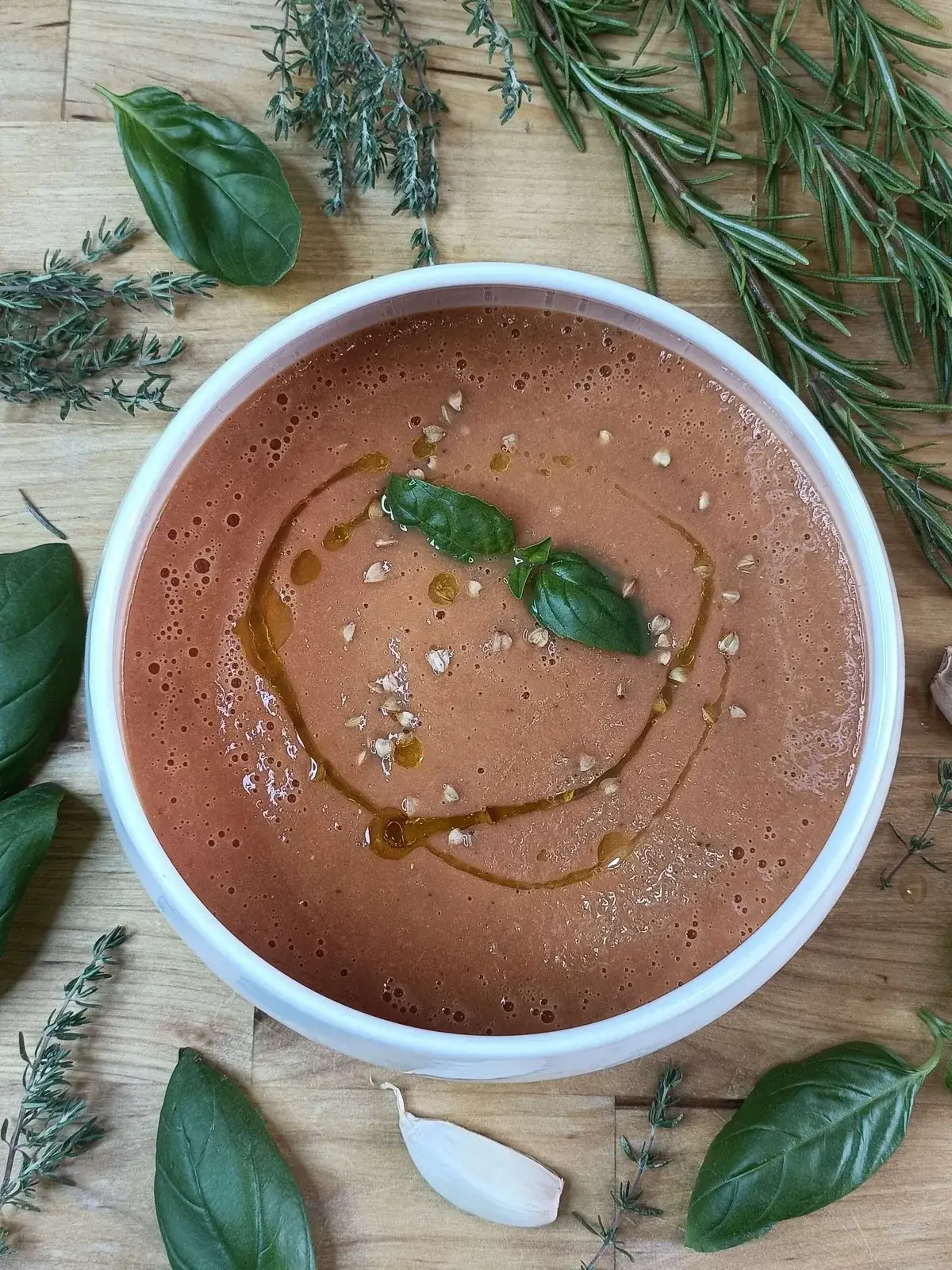
Chilled roasted tomato and garlic soup, with a drizzle of linseed oil
Florence Oustau's chilled soup: oven-roasted tomatoes and garlic, a night in the fridge, crunchy kasha and a drizzle of linseed oil just before serving.
1 min read
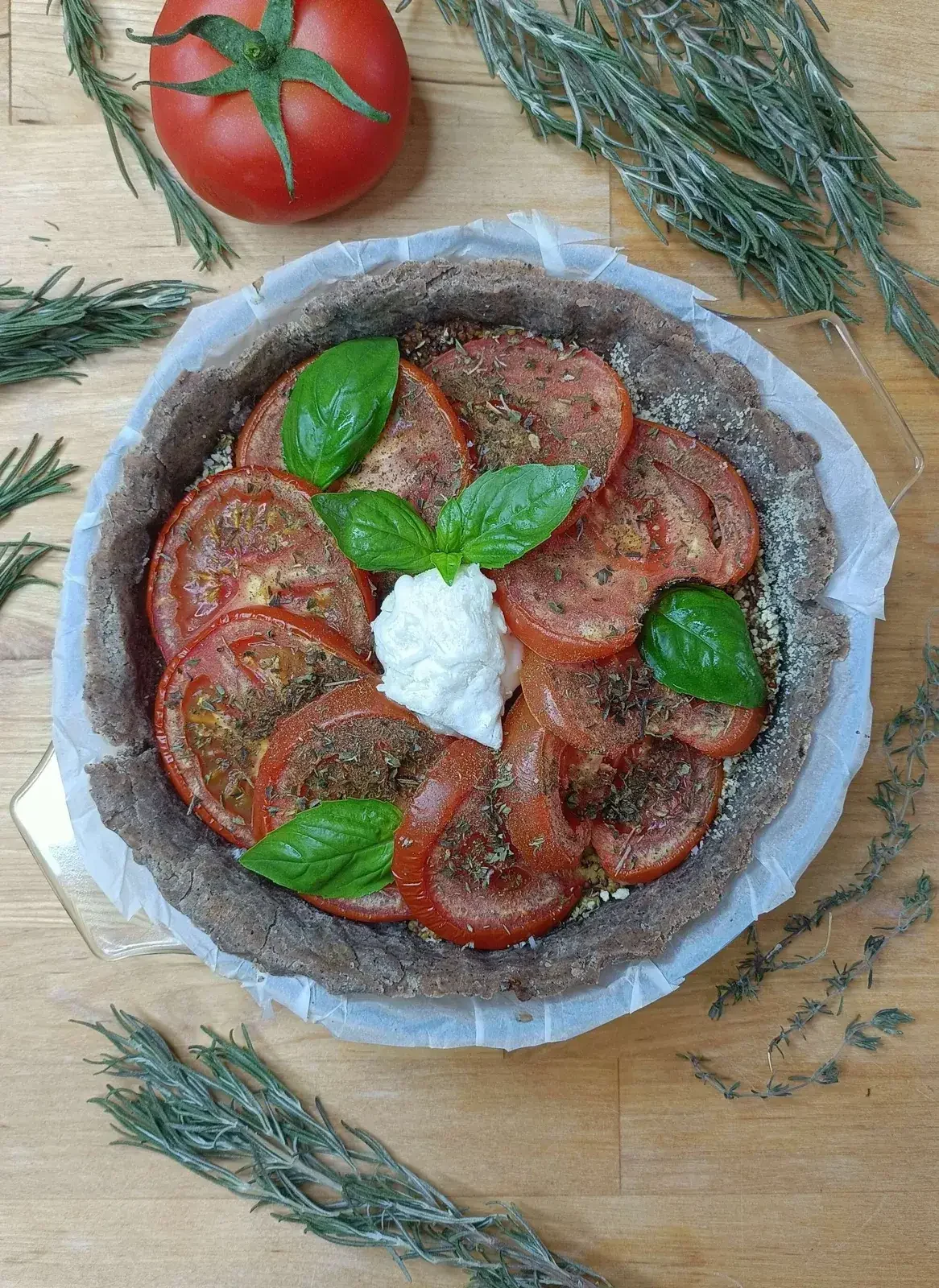
Tomato and goat's cheese tart, gluten-free pastry with flaxseeds
Florence Oustau's summer tomato and goat's cheese tart: a gluten-free shortcrust pastry bound with ground flaxseeds, a rosette of tomatoes and melted goat's cheese.
1 min read
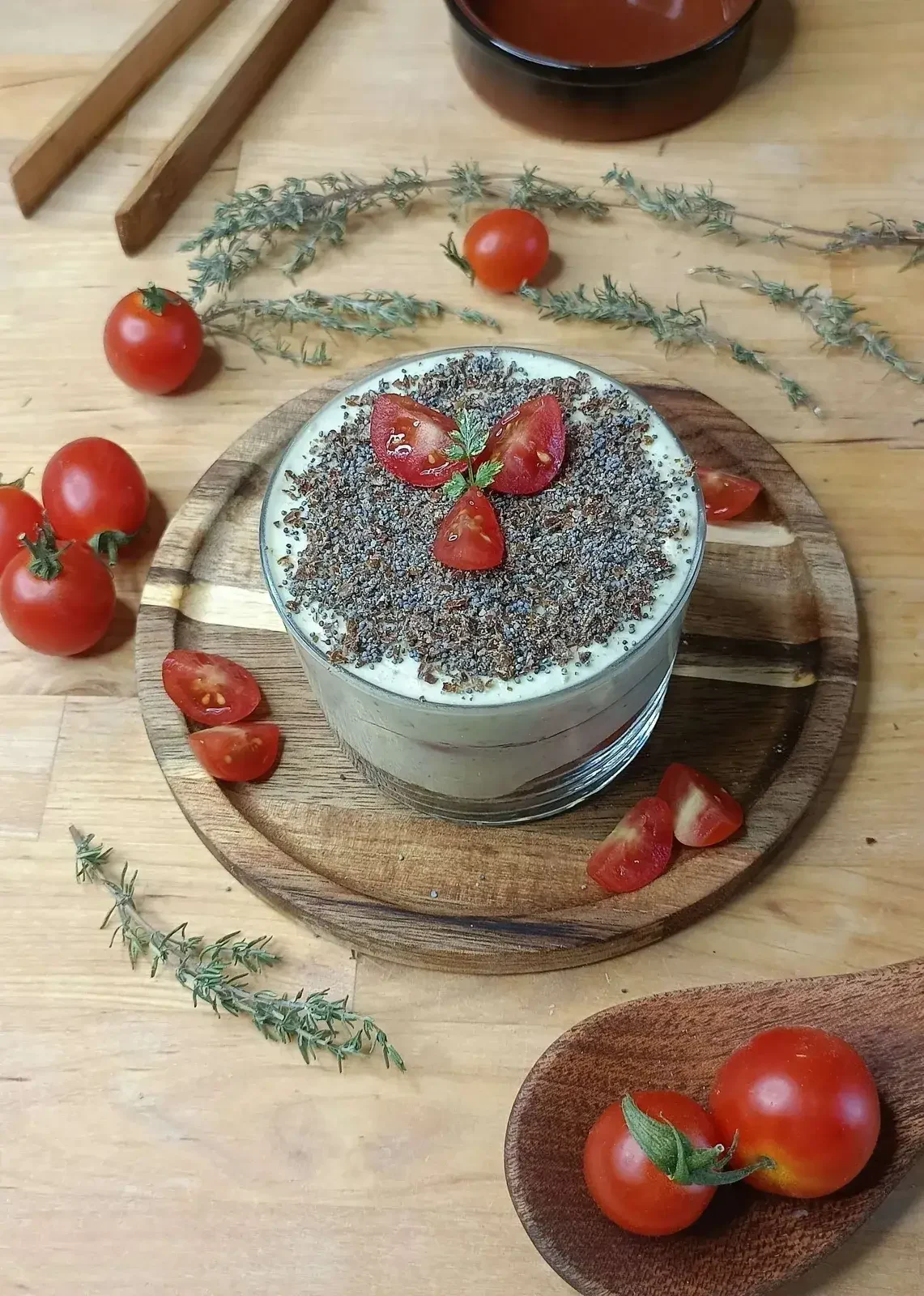
Savoury tomato, pesto and kibbled flaxseed tiramisù
Florence Oustau's savoury tiramisù: plant-based mascarpone, pesto, tomato and the crunch of kibbled flaxseed. A chic and fresh aperitif verrine.
2 min read