FlaxseedsPublished on 7 min read
Brown or golden flaxseeds: which should you choose?
Brown or golden flaxseeds: differences in taste and appearance, uses, and how to grind them to get the most out of them. A clear comparison from Lin des Pyrénées.
Updated on
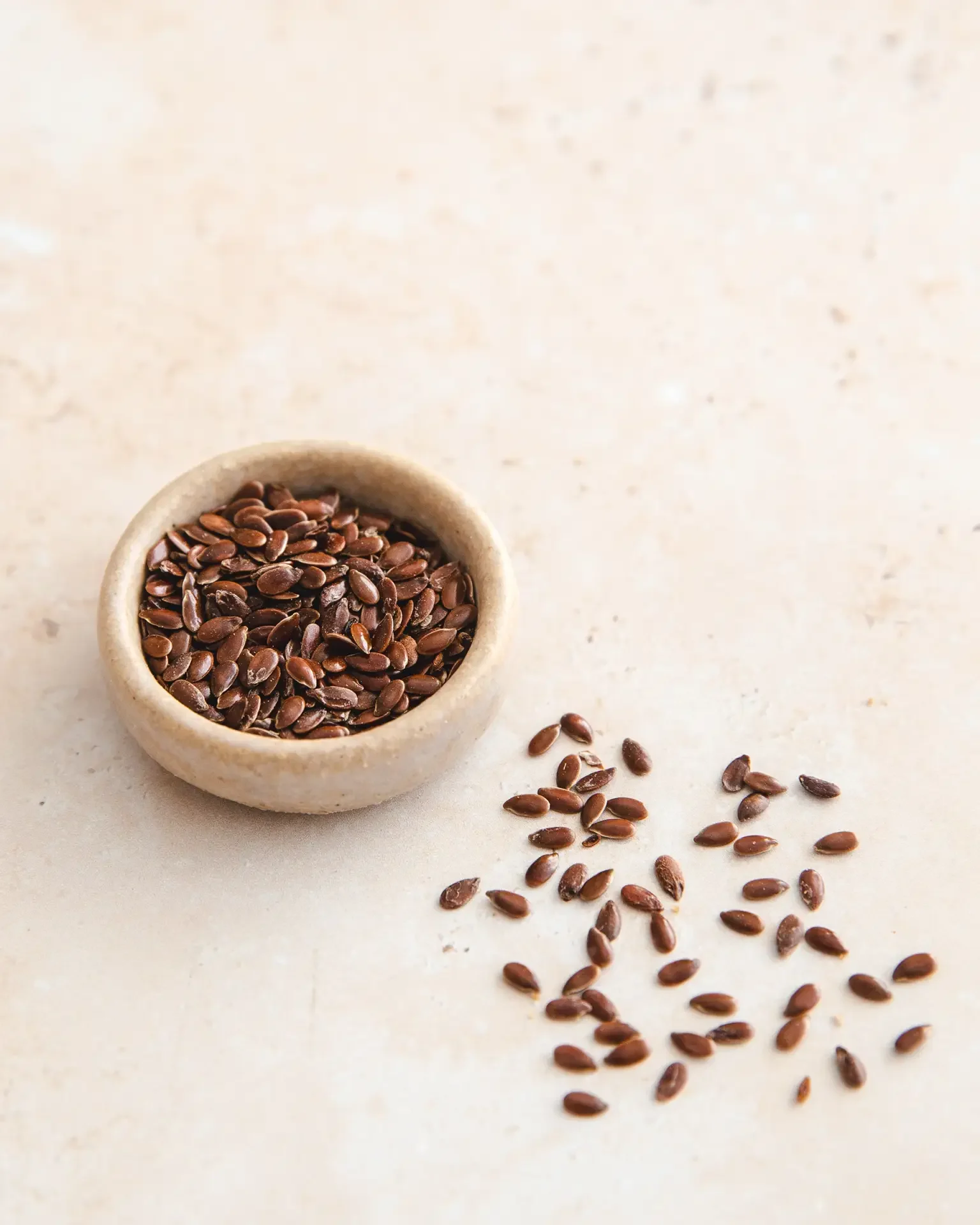
Brown or golden flaxseeds? Faced with the two colours, many people hesitate, convinced that one must be very different from the other. The answer is reassuring: there are differences, but they are minor and mainly concern taste, appearance and how they are cooked. This comparison sets the record straight, illustrated with our flaxseeds grown in the heart of the Pyrenees, in a short, traceable supply chain from field to bag. To learn everything about how to use them, our complete guide to flaxseeds is the ideal companion to this read.
Brown or golden: where does the difference come from?
Brown and golden flaxseeds come from the same botanical species, oilseed flax (Linum usitatissimum). The difference in colour is simply down to the variety grown: some produce mahogany-brown seeds, others pale golden-yellow ones. People sometimes speak of "brown flax" and "golden flax" (or yellow flax) as if they were two distinct products, but they belong to the same large family.
Historically, brown flax is the most widespread, particularly in Europe, where it adapts well to local terroirs and crop rotations. Golden flax, long rarer, has become more common thanks to its light appearance. Beyond colour, then, it is mainly nuances of flavour and presentation that set them apart.
A comparable composition from one colour to the other
This is the point that should reassure you before choosing: brown and golden seeds have a very similar composition. In both cases, flaxseed is rich in ALA omega-3, the plant-based fatty acid, it is a source of fibre and provides around 20% protein. Measured differences between varieties do exist, but they remain small and vary as much with terroir and harvest year as with colour.
In other words, there is no "good" or "bad" colour: the real difference lies elsewhere, in freshness, traceability and how the seed is prepared in the kitchen. That is what we cover in the rest of this comparison.
The rare nuances that can matter
If you look very closely, you sometimes see slight variations in size: the golden seed is often a touch smaller and more tender to the bite, the brown one a little firmer and crunchier. These differences are so slight that they change nothing in how a recipe turns out. There is no need, then, to choose your seed colour the way you would choose a substitute ingredient: the two can be swapped weight for weight.
Taste: the real sensory difference
It is on the palate that the distinction is most noticeable. Brown flax has a more pronounced flavour, slightly more rustic and earthy, with a frank nutty note. Golden flax, for its part, is said to be milder and more delicate, which sometimes makes it more widely appealing to sensitive palates.
This difference in taste nonetheless remains subtle. In a strongly flavoured dish - a wholemeal loaf, a rustic dish - brown flax blends in perfectly, and its nutty note works wonders. But it is just as at home in a delicate recipe - a yoghurt, a smoothie, a fine pastry - where its flavour comes through without dominating. These are simply preferences, not rules: the brown seed suits every use.
Appearance: a question of presentation
The other visible difference is purely aesthetic. Brown seeds, being darker, stand out clearly on a light-coloured dish - a contrast that is often sought after, which nicely sets off a loaf, a salad or a yoghurt and signals the presence of flax on the plate. Golden seeds, being lighter, give a more discreet look. A question of visual taste, then, far more than of quality: on a pastry, the brown speckles of the seeds also add a much-appreciated rustic touch.
Our ambassador chefs particularly like to play on this contrast of brown flax to dress their creations, as much for the eye as for the palate. For inspiration, the recipes page is full of ideas where flax adds as much to the look as to the taste.
Which one to choose, and for what use?
The really good news is that there is no wrong choice: a flaxseed, whatever its colour, suits every everyday use. Here are a few pointers:
- In savoury cooking: a brown seed, with its frank nutty note, goes as well with a loaf, a salad or a soup as with a dish of root vegetables.
- In baking: it blends into a yoghurt, a smoothie, muffins or shortbread biscuits, and its speckles add a lovely rustic touch.
- What really matters: freshness, traceability and grinding it count for infinitely more than its colour.
Put simply, the best choice is the one you will enjoy cooking with regularly. That is exactly what Lin des Pyrénées offers: brown flaxseeds from the Béarn for all your uses, from rustic bread to the most delicate dessert. You will find our whole range - seeds, cracked seeds, flour and oil - on the home page.
What Lin des Pyrénées offers
At Lin des Pyrénées, we have made a clear choice: brown flaxseeds, grown and packaged in the heart of the Béarn in a short supply chain. Because our standards are above all about quality and traceability - a far more decisive point than colour, as the seed’s fatty acids are sensitive to oxidation. Grown to maturity, harvested and packaged locally, our brown seeds reach you fresh and fully traceable, from field to bag. This same supply chain gives our cold-pressed virgin linseed oil and our flaxseed flour, made from the press cake.
So the right reflex remains the same for all your uses - from bread to dessert: choose fresh, well-stored, traceable seeds, like our brown seeds from the Béarn, rather than chasing a marginal difference between brown and golden.
How to prepare your flaxseeds: the reflex to know
Brown or golden, flaxseeds share one golden rule in the kitchen: to get the best out of them, you need to grind them. The seed’s outer coat is so tough that, eaten whole, it stays closed and releases neither its flavour nor its texture. By grinding it just before use, on the other hand, you unlock its full nutty note and get a powder that truly blends into your dishes.
A few practical tips, valid for both colours:
- Grind at the last moment (coffee grinder, small blender) to preserve freshness and aromas;
- Store the whole seeds in a dry place away from light, as they are more stable than ready-ground seeds;
- Allow one to two tablespoons a day, sprinkled over a yoghurt, muesli, salad or soup.
A cook’s tip: mixed with a little water, ground seed forms a gel that acts as a plant-based binder, particularly as an egg substitute. For convenience, our kibbled flaxseed offer a ready-crushed alternative, ready to sprinkle. And to explore the questions "should you grind them, how much, how to store them" in more depth, our complete guide answers in detail.
Frequently asked questions
Are brown flaxseeds different from golden ones? Very little: their composition is similar and the difference lies mainly in taste and appearance. A fresh, traceable brown seed like ours is perfectly suited to every use.
What is the difference in taste between brown and golden flax? Brown flax has a slightly more pronounced nutty flavour; golden flax is said to be slightly milder. The difference remains subtle, and brown flax blends into a delicate recipe just as well as into a rustic dish.
Should brown flaxseeds be ground like golden ones? Yes, in both cases. Whole, they stay closed and do not release their flavour; ground just before use, they give their full nutty note.
Are brown flaxseeds suitable for baking? Absolutely. Their gentle nutty flavour blends into desserts and bakes, and their speckles even add a lovely rustic touch. Our brown flaxseeds from the Béarn can be used for everything, from bread to dessert.
Does Lin des Pyrénées offer brown or golden seeds? We offer brown flaxseeds, grown in the Béarn in a short, traceable supply chain. It is freshness and traceability, more than colour, that make a quality seed.
Sources: ANSES, omega-3 fatty acids (in French); the Ciqual food composition table (ANSES).
Recent articles
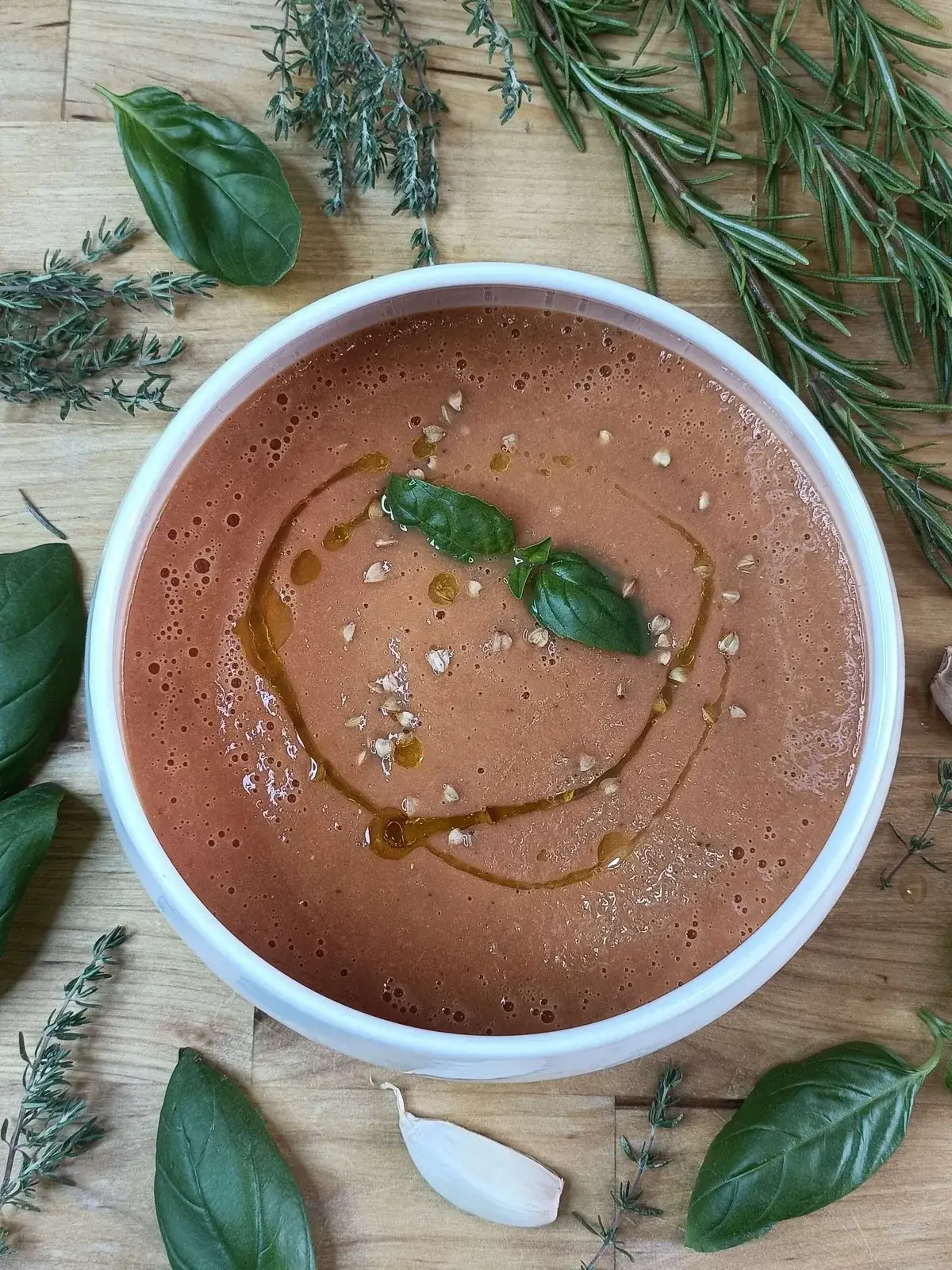
Chilled roasted tomato and garlic soup, with a drizzle of linseed oil
Florence Oustau's chilled soup: oven-roasted tomatoes and garlic, a night in the fridge, crunchy kasha and a drizzle of linseed oil just before serving.
1 min read
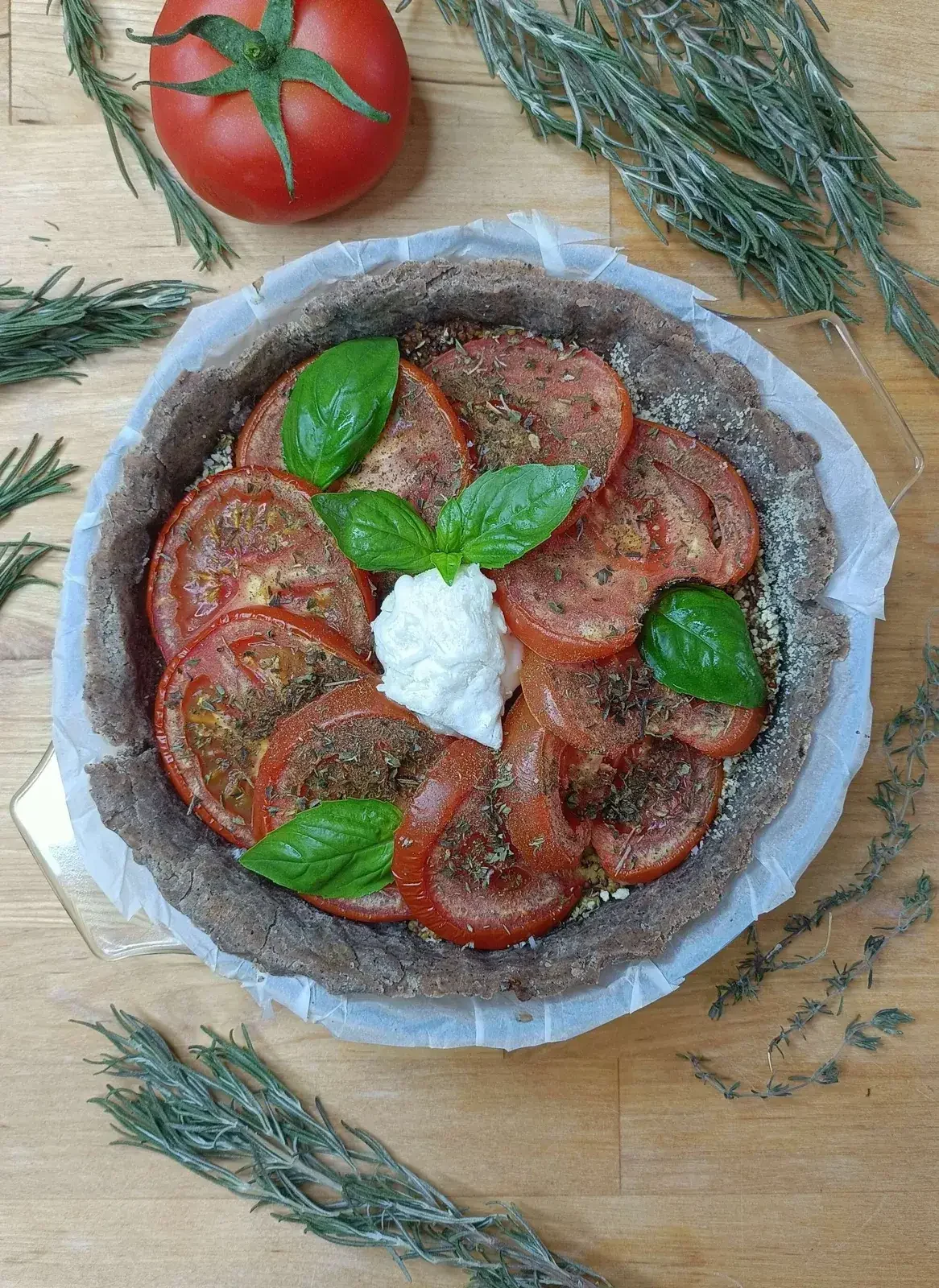
Tomato and goat's cheese tart, gluten-free pastry with flaxseeds
Florence Oustau's summer tomato and goat's cheese tart: a gluten-free shortcrust pastry bound with ground flaxseeds, a rosette of tomatoes and melted goat's cheese.
1 min read
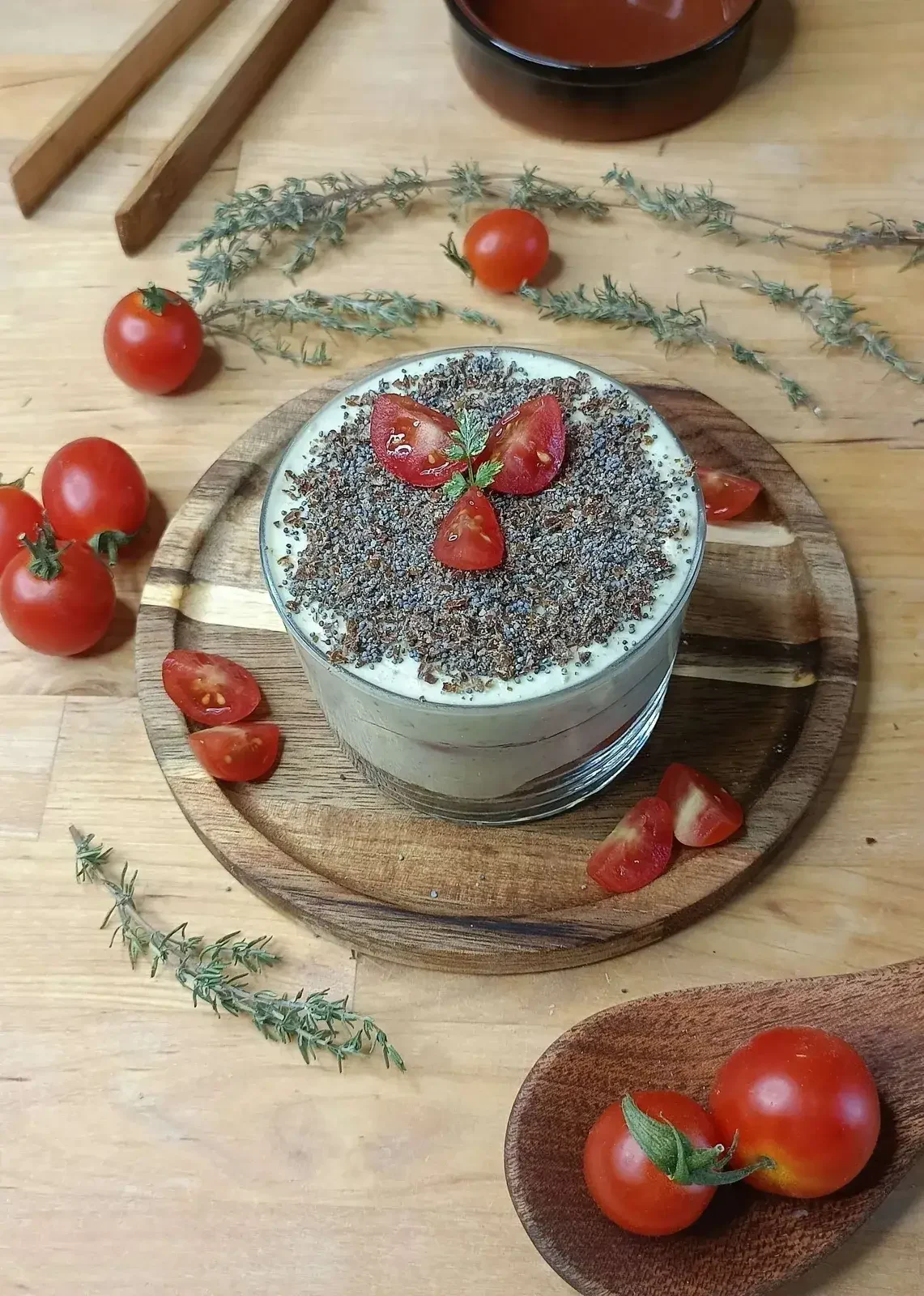
Savoury tomato, pesto and kibbled flaxseed tiramisù
Florence Oustau's savoury tiramisù: plant-based mascarpone, pesto, tomato and the crunch of kibbled flaxseed. A chic and fresh aperitif verrine.
2 min read