Flaxseed FlourPublished on 7 min read
Flaxseed flour: pancakes, breads, bakes - the right ratios
Cooking with flaxseed flour: substitution ratios, the flax egg binder, pancakes, breads, bakes and coatings. The practical guide from Lin des Pyrénées.
Updated on
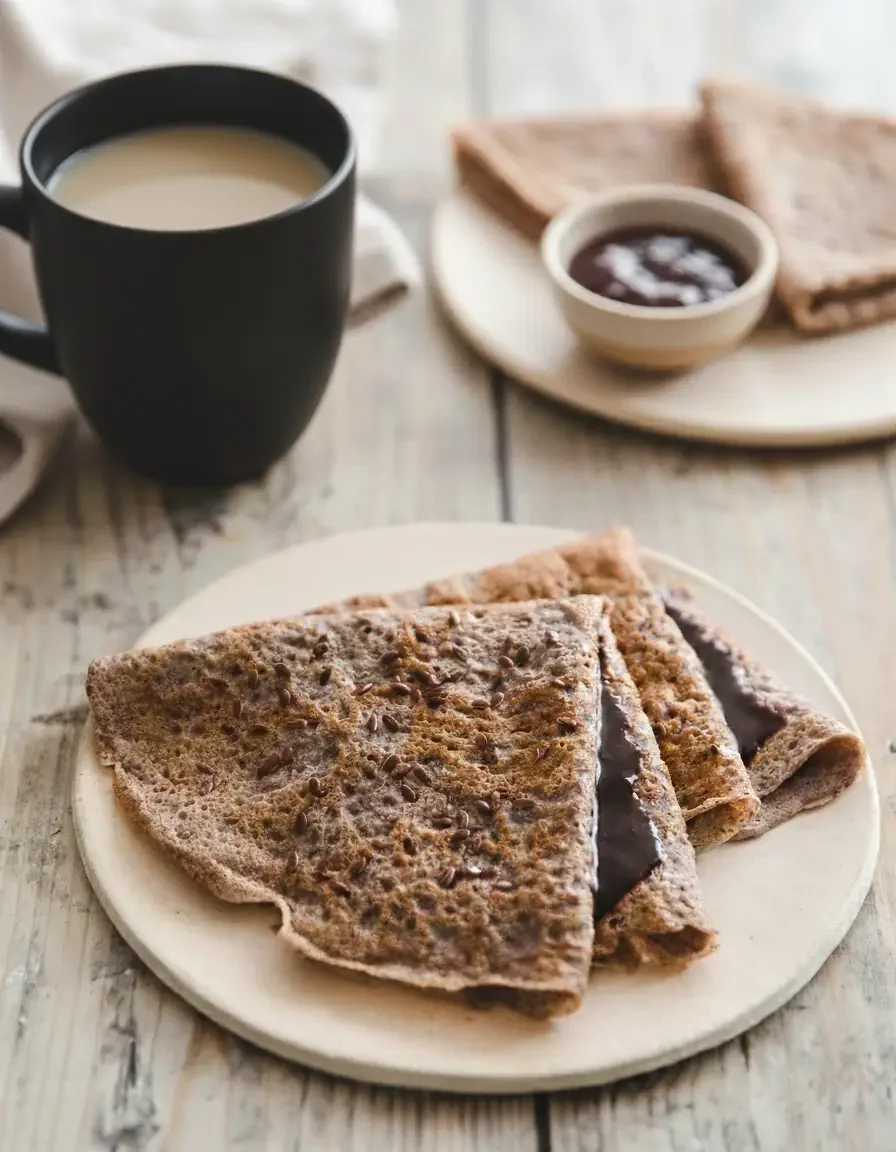
Succeeding with a flaxseed flour recipe comes down to a single rule: knowing the right ratios. Too much flaxseed flour and the dough becomes dense and sticky; too little, and you miss out on its fibre and omega-3. This practical guide brings together tried-and-tested proportions - for pancakes, breads, bakes and coatings - along with the famous "flax egg" trick, illustrated with our flaxseed flour milled in the Béarn, made from the press cake of our seeds pressed in the heart of the Pyrenees. For the full theory, our guide to gluten-free flaxseed flour remains the reference; here, the focus is on practice.
The basic ratio: 15 to 30% of the flour, no more
Flaxseed flour does not behave like ordinary flour. Naturally gluten-free, it has no structuring power: it does not "rise" and does not hold air the way wheat does. So it is used as a partial substitute, not a complete replacement. The guideline to remember comes down to two numbers: replace 15 to 30% of the flour in your recipe with flaxseed flour.
In practice, for 200 g of flour, that means substituting 30 to 60 g with flaxseed flour. At 15%, the nutritional benefit is already real and the texture remains almost unchanged - ideal for getting started. At 30%, the nutty taste and golden colour become much more pronounced, and the crumb becomes denser and softer. Beyond that, the mixture risks becoming compact and crumbly and lacking structure. This partial-substitution approach also applies to our ground flaxseed, which is used in the same way.
Why flaxseed flour "drinks" liquid
Flaxseed flour is extremely rich in fibre and mucilage, compounds that swell on contact with water. The result: it absorbs considerably more liquid than wheat flour. Whenever you add some, allow for a little more liquid in the mix - milk, water or egg - or you will end up with a mixture that is too dry. Letting the batter or dough rest for a few minutes allows the fibre to hydrate and gives a more even result.
The "flax egg": a plant-based binder in 5 minutes
This is the most magical use of flaxseed flour: it replaces egg in most recipes. The principle relies on mucilage, which forms a binding gel once mixed with water. The flax egg recipe is disarmingly simple:
- 1 tablespoon of flaxseed flour (or freshly ground flaxseeds);
- 3 tablespoons of water;
- mix, then leave to rest for 5 to 10 minutes in the fridge.
The mixture thickens until it reaches a gel-like consistency, similar to egg white. This amount is equivalent to one egg in a cake, pancake, muffin or cookie mix. It is the perfect solution for vegan recipes, for people with egg allergies, or simply for days when the fridge is empty. The flax egg provides binding and cohesion without noticeably changing the taste. Our ambassador chefs use it regularly in their egg-free creations.
Flaxseed flour pancakes: soft and golden
Pancakes are probably the best place to start, as flaxseed flour gives them remarkable softness and a delicate nutty taste. Start from a classic pancake recipe and replace 20% of the flour with flaxseed flour. For 150 g of flour, that means 30 g of flaxseed flour and 120 g of your usual flour.
Slightly increase the milk (one to two tablespoons) to compensate for the absorption, and let the batter rest for five minutes. The result: golden, tender pancakes that are more filling than usual thanks to the fibre. For a fully indulgent, egg-free version, combine the flour substitution with a flax egg as a binder. Serve them with a drizzle of our virgin linseed oil mixed with a little maple syrup, or find more ideas on our recipes page.
Breads and bread doughs: structure and density
In bread, the gluten in wheat provides structure and rise. Flaxseed flour, which contains none, must therefore remain a minority addition: aim instead for 15 to 20% of the total flour. Beyond that, the bread risks lacking volume and becoming compact.
At this level, flaxseed flour enriches the crumb with an amber colour, a nutty taste and real nutritional density. It also improves keeping: the mucilage retains moisture and the bread dries out less quickly. Remember to increase the dough’s hydration by about 10%, as flax drinks a lot. For a completely gluten-free bread, flaxseed flour cannot provide the structure on its own: combine it with rice, buckwheat or chestnut flour and a suitable binder. Our gluten-free guide details these combinations.
Bakes: cakes, muffins, cookies
Baking is flaxseed flour’s ideal playground, as a soft texture is sought after there rather than airy lightness. For cakes, muffins, madeleines and cookies, you can confidently go up to 25 to 30% substitution. The crumb becomes denser, and the nutty taste pairs beautifully with chocolate, banana, apple or dried fruit.
A few guidelines for successful flax bakes:
- Increase the liquids by 10 to 15% to compensate for the absorption;
- Do not reduce the baking powder: it provides what little lightness is possible;
- Let the mixture rest before baking, for an even texture;
- Keep an eye on baking: flax mixtures brown faster, so lower the oven by 10 °C if needed.
In cookies, flaxseed flour brings a very pleasant shortbread-like quality; in muffins, a softness that lasts for several days. It is also an easy way to slip omega-3 and fibre into indulgent recipes, without sacrificing any flavour.
Coatings and finishing touches: flax on the savoury side
It rarely comes to mind, yet flaxseed flour also excels in savoury cooking. As a coating, on its own or mixed with breadcrumbs, it brings a golden crunch and a nutty flavour to fish, chicken breast or breaded vegetables. As it browns quickly, keep an eye on the cooking and opt for moderate heat.
It can also be used as a thickener for sauces and soups: a tablespoon mixed in thickens a velouté while enriching it. Sprinkled over a salad, a gratin or a savoury fromage blanc, it adds fibre and omega-3 without cooking. To vary textures and crunch, combine it with our kibbled flaxseed, perfect as a finishing touch.
Cooking, taste and storage: what changes
Adding flaxseed flour subtly changes your dishes, and it is best to know this in advance. In terms of taste, it brings a gentle, never overpowering nutty note that blends well into both sweet and savoury dishes. In terms of texture, expect more density and softness, and a little less lightness - the flip side of the absence of gluten.
In terms of cooking, flaxseed flour colours faster: for bakes, it is best to lower the oven slightly and extend the time a little. Note too that its residual omega-3 does not cope well with prolonged very high temperatures, which is why the oil itself is never cooked - keep linseed oil for cold seasoning. Finally, store your flaxseed flour in a dry place, away from light, ideally in the fridge once the bag is open, to preserve its freshness. You will find our whole range - flour, seeds, cracked seeds and oil - on the home page.
Frequently asked questions
Can you replace all the wheat flour with flaxseed flour? No. Being gluten-free, flaxseed flour provides no structure: keep it to 15-30% of the total flour, alongside another flour.
How do you make a "flax egg"? Mix 1 tablespoon of flaxseed flour with 3 tablespoons of water, then leave to rest for 5 to 10 minutes: the resulting gel replaces one egg.
What ratio of flaxseed flour for pancakes? About 20% of the flour, i.e. 30 g of flaxseed flour to 120 g of ordinary flour, adding a little milk.
Is flaxseed flour suitable for baking cakes and pastries? Yes, it is actually ideal: up to 25-30% substitution for soft, nutty-tasting cakes, muffins and cookies.
Do you need to add liquid when cooking with flaxseed flour? Yes. It absorbs a lot: increase the liquids by 10 to 15% and let the batter or dough rest before baking.
Sources: the Ciqual food composition table (ANSES); AFDIAG, the French coeliac association.
Recent articles
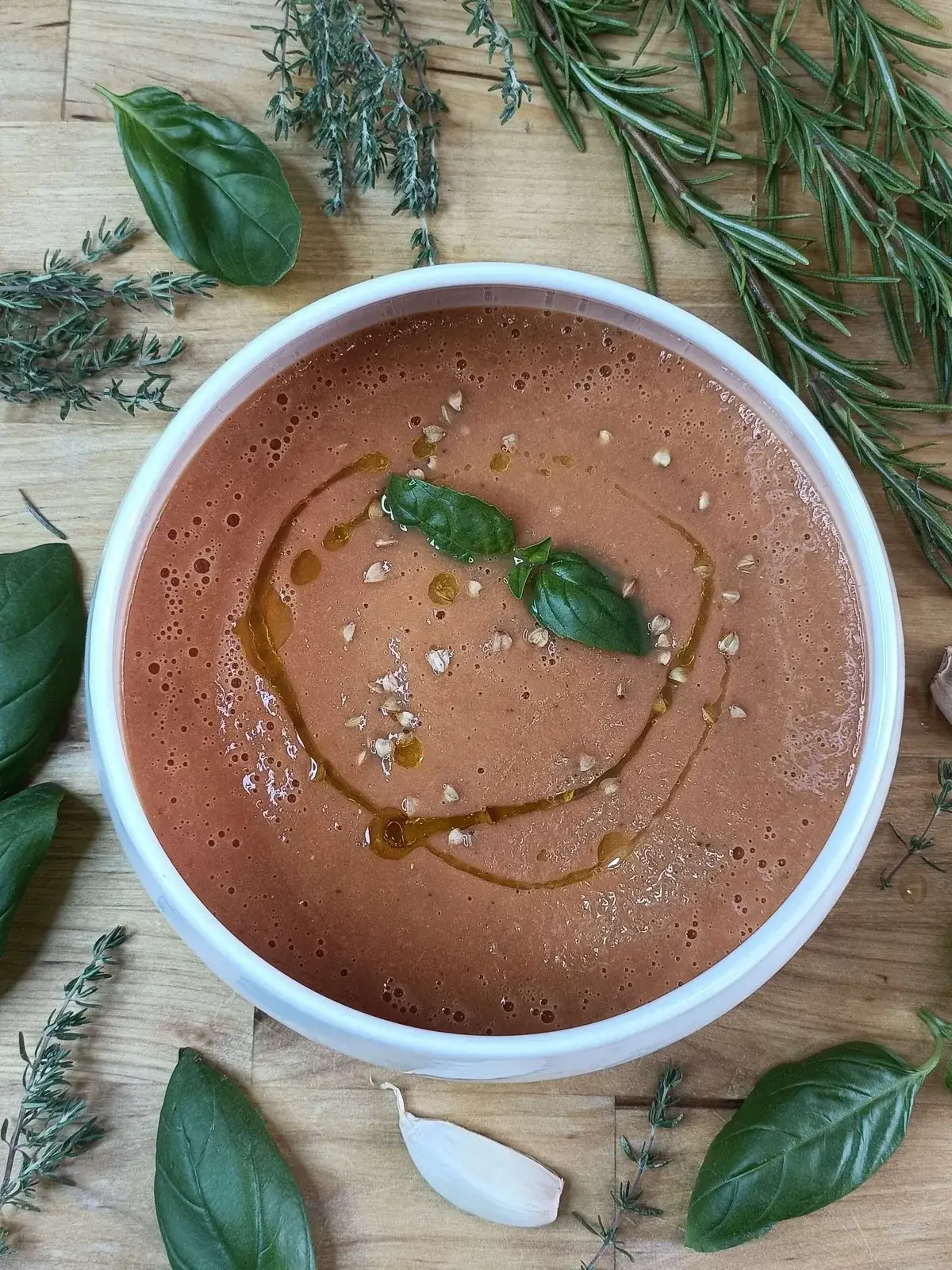
Chilled roasted tomato and garlic soup, with a drizzle of linseed oil
Florence Oustau's chilled soup: oven-roasted tomatoes and garlic, a night in the fridge, crunchy kasha and a drizzle of linseed oil just before serving.
1 min read
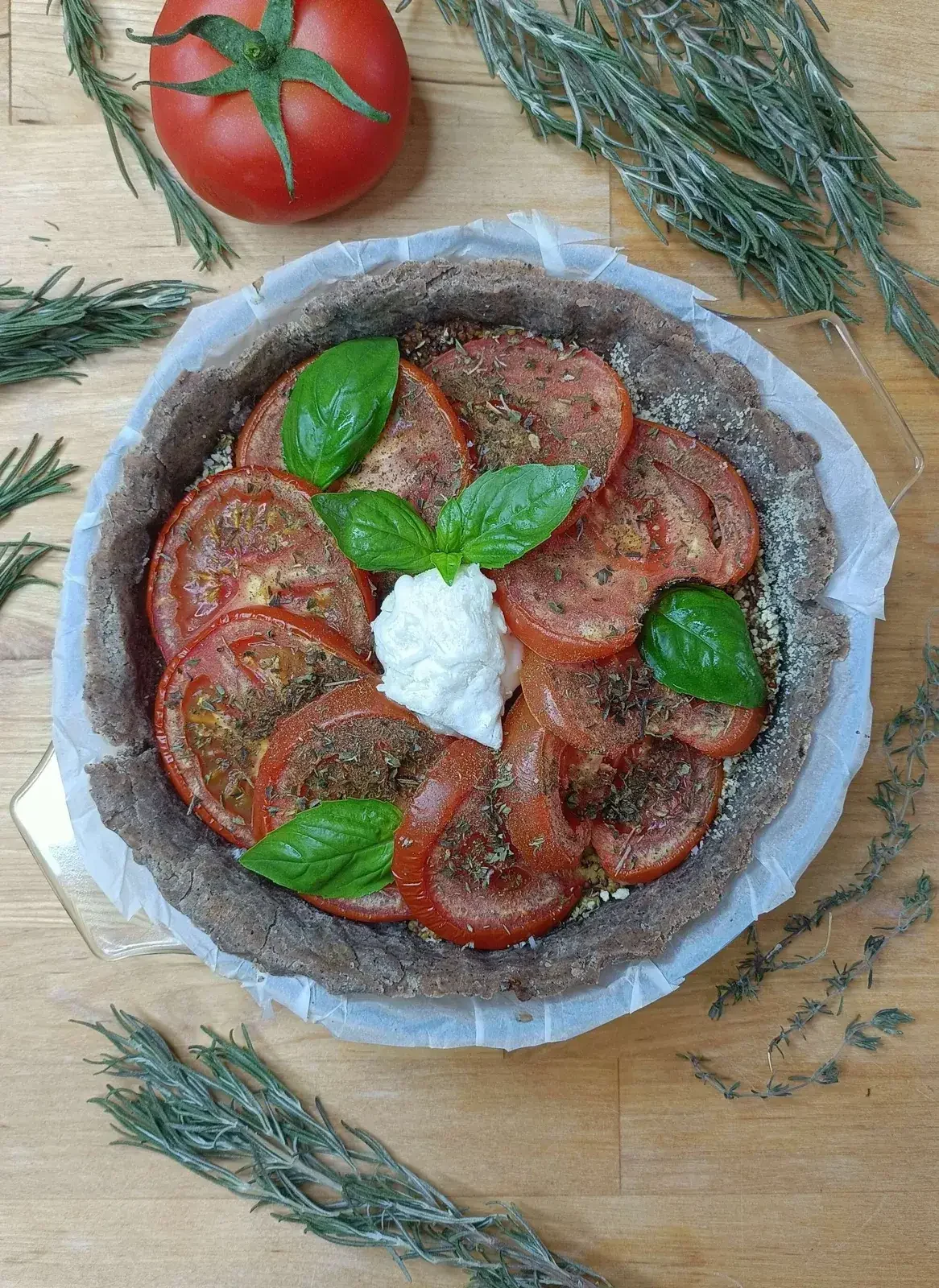
Tomato and goat's cheese tart, gluten-free pastry with flaxseeds
Florence Oustau's summer tomato and goat's cheese tart: a gluten-free shortcrust pastry bound with ground flaxseeds, a rosette of tomatoes and melted goat's cheese.
1 min read
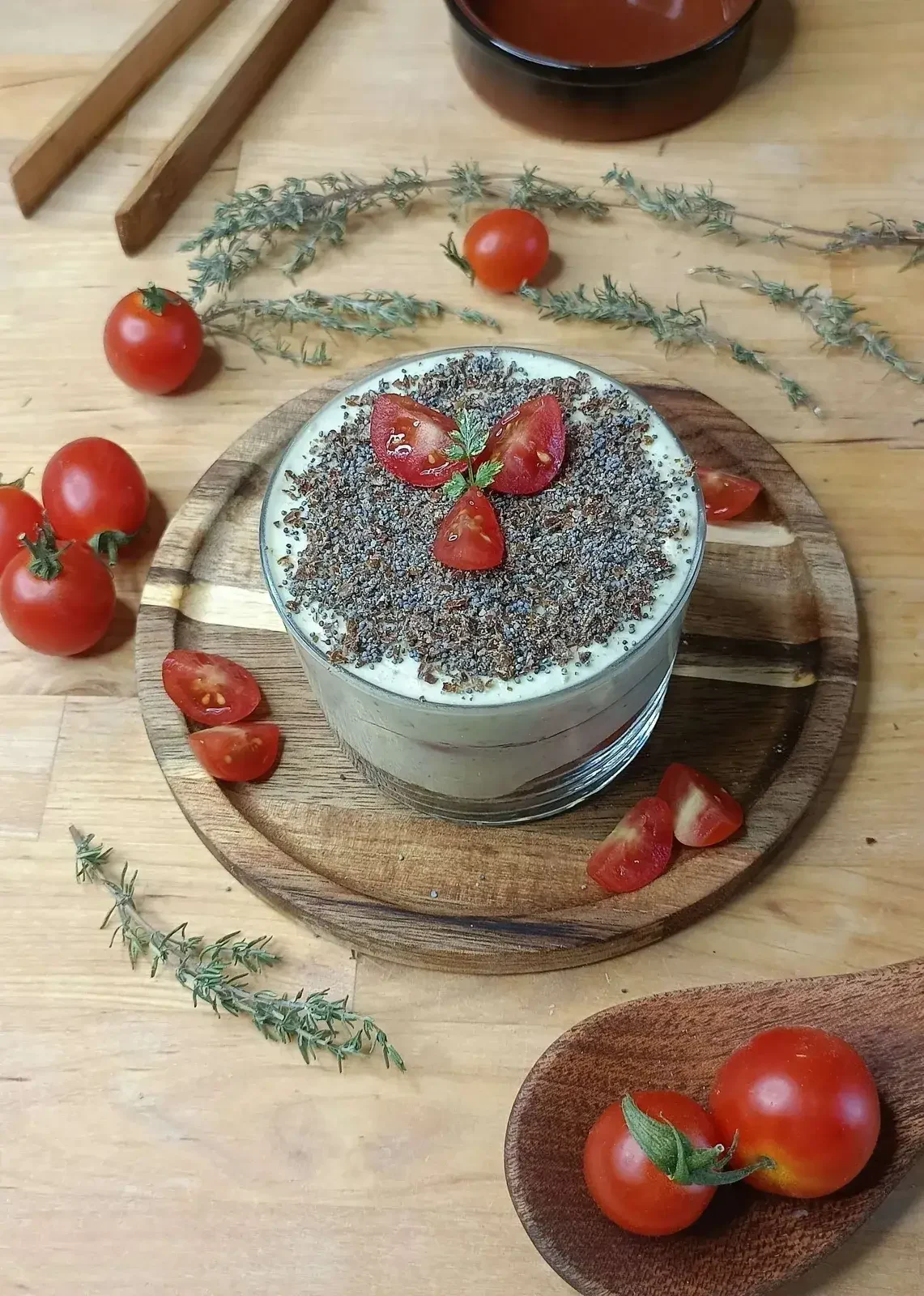
Savoury tomato, pesto and kibbled flaxseed tiramisù
Florence Oustau's savoury tiramisù: plant-based mascarpone, pesto, tomato and the crunch of kibbled flaxseed. A chic and fresh aperitif verrine.
2 min read