Flaxseed FlourPublished on 7 min read
Gluten-free flaxseed flour: the practical kitchen guide
Flaxseed flour: a gluten-free substitute for wheat, replacement ratios, a plant-based binder, bread and bake recipes, and where to find it.
Updated on
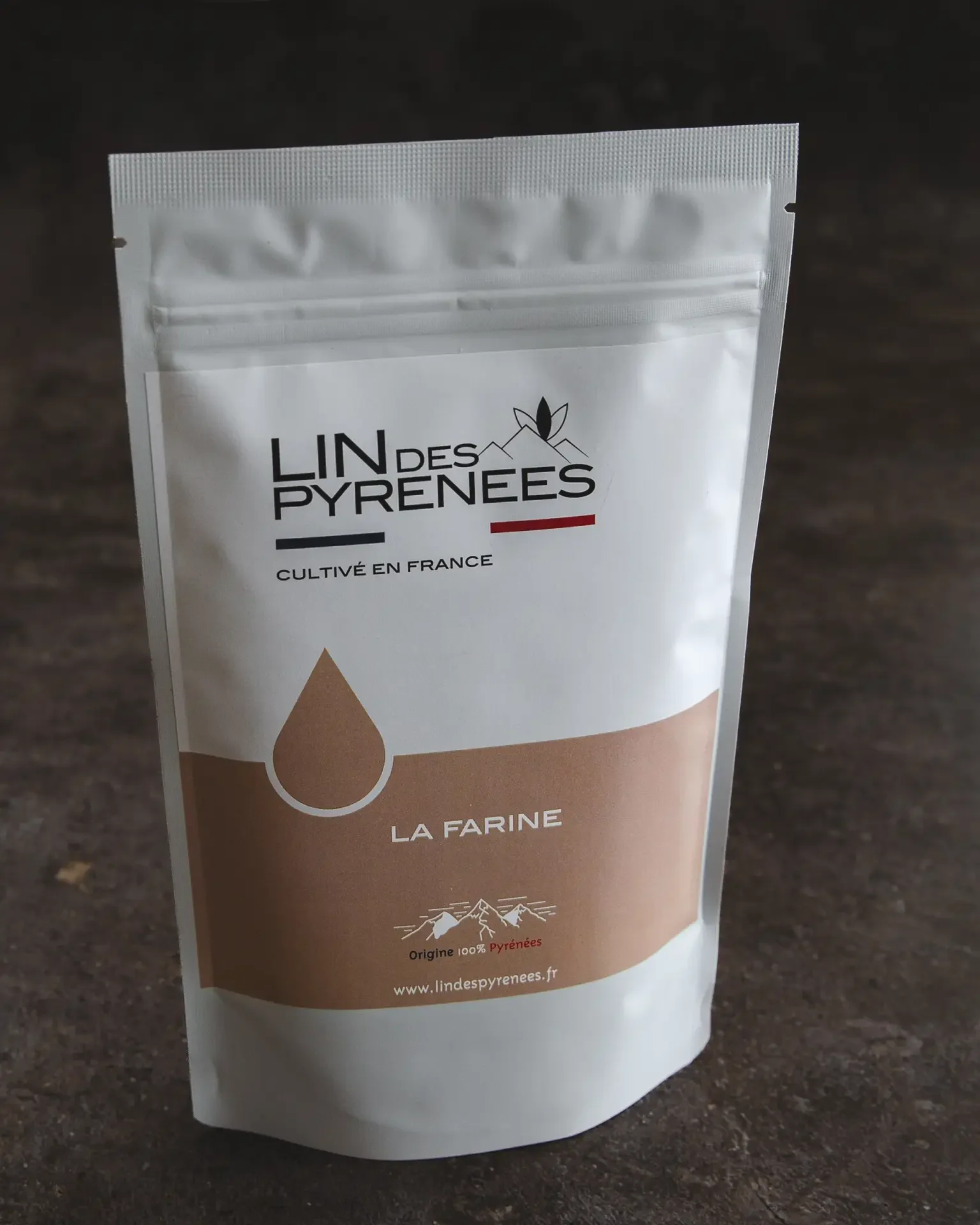
Flaxseed flour is one of the most valuable allies in gluten-free cooking - and yet one of the least known. Naturally gluten-free, it replaces part of the wheat flour in breads, pancakes and bakes, while bringing its nutty taste and lovely golden colour. This practical guide brings together everything you need to know: what it really is, how to use it as a substitute, in what ratios, how to make the famous "flax egg", and where to find it - illustrated with our flaxseed flour milled in the Béarn, made from the press cake of our seeds pressed in the heart of the Pyrenees.
What is flaxseed flour?
Flaxseed flour is made from flax press cake, in other words what remains of the flaxseed (Linum usitatissimum) once its oil has been extracted. After the seed has been cold-pressed to obtain the oil, the solid residue - the press cake - is dried and then finely milled: this golden powder is what we call flaxseed flour, or sometimes flaxseed meal. Nothing is wasted: each seed yields a precious oil on one side and a delicious flour on the other. That is the whole point of our short supply chain approach: making full use of the seed, from field to bag.
This origin explains its distinctive profile. Unlike a simple powder of whole seeds, flaxseed flour is partially defatted: as a good part of the oil has been extracted, it is more stable, lighter and easier to store, while remaining a source of fibre and plant protein. It is a fine flour, beige to brown in colour, with a subtle nutty taste reminiscent of our virgin linseed oil.
Is flaxseed flour really gluten-free?
Yes: flax is an oilseed plant with no botanical relationship to wheat, barley or rye. Flaxseed flour naturally contains no gluten. This is one of the reasons why the search "flaxseed flour gluten" comes up so often: many people want to know whether this ingredient is compatible with gluten-free cooking.
One caveat, however: "naturally gluten-free" refers to the seed itself. Cross-contamination can occur during transport or milling if the facilities also process cereals containing gluten. If you need to avoid gluten strictly, choose a flour from a traceable, controlled supply chain and check the information on the packaging. Our Pyrenean flaxseed flour comes from a supply chain dedicated to flax, from field to mill, with batch traceability.
In what ratios should you replace wheat flour?
Flaxseed flour does not behave like wheat flour: being gluten-free, it does not "rise" in the same way and absorbs much more liquid. The golden rule is therefore partial substitution:
- 10 to 15% flaxseed flour in a bread or brioche: a subtle nutty taste, a more colourful crumb, texture preserved;
- 15 to 20% in pancakes, muffins, loaf cakes and biscuits: a more pronounced flavour, with softness guaranteed;
- up to 25% in dense preparations (rustic breads, crackers, galettes), where its texture works wonders.
Beyond that, the dough becomes heavy and compact: flaxseed flour is a characterful addition, not a flour you can make bread with on its own. Also remember to slightly increase the amount of liquid in your recipe (about +10%), as its fibre absorbs water. For concrete examples, our article on the right flaxseed flour ratios covers pancakes, breads and bakes step by step.
The "flax egg": the star plant-based binder of egg-free cooking
This is one of the cleverest uses of flaxseed flour (and of ground seeds): mixed with water, it forms a gel that replaces egg as a binder in many recipes. The formula is simple:
- 1 tablespoon of flaxseed flour + 3 tablespoons of water = the equivalent of one egg;
- leave to rest for 10 to 15 minutes: the mixture thickens and takes on the consistency of egg white;
- add it to your cake batters, cookies, muffins or plant-based patties.
This binding power comes from mucilage, the fibre in the seed that swells on contact with water and gives that gel-like texture so useful in plant-based baking. The result: cakes that hold together, without eggs, with a lovely rustic note. Our kibbled flaxseed do the same job in a more textured version.
What can you cook with flaxseed flour? Our favourite ideas
Flaxseed flour finds its way into anything where its nutty flavour and golden colour make a difference:
- Breads and buns: blended with a base flour, for a fragrant, colourful crumb;
- Pancakes and crêpes: try our flaxseed flour crêpes, a house classic;
- Savoury muffins: the signature recipe of our ambassador Florence Oustau, ratatouille muffins with flaxseed flour;
- Winter bakes: our Christmas gingerbread owes its softness to it;
- Coatings and savoury crumbles: mixed with breadcrumbs, it browns beautifully and adds a nutty crunch;
- Porridges and breakfast bowls: a spoonful is enough to thicken and flavour.
For more inspiration from our chefs, browse all our flax recipes.
What does flaxseed flour taste like?
Its aromatic profile is one of its great qualities: a gentle nutty taste, slightly toasted, with no bitterness when it is fresh and well stored. In baking, it warms up the flavours; in savoury dishes, it goes beautifully with sheep’s cheese, roasted vegetables and herbs. It is this character that our ambassador chefs draw on in their creations, and that the Best Of Gastronomie 2026 Gold Medal awarded to our company came to recognise.
How should flaxseed flour be stored?
Being partially defatted, flaxseed flour keeps better than homemade ground seeds, but it is still a living product:
- in an airtight container, away from light, heat and moisture;
- ideally in the fridge once opened;
- to be used within 2 to 3 months of opening to enjoy its full aroma.
A sharp smell or pronounced bitterness indicates a flour that has aged: it is then best to replace it.
Flaxseed flour, ground seeds, cracked seeds: what are the differences?
Three products, three uses, one seed:
- Flaxseed flour (milled press cake, partially defatted): the finest, ideal for baking, coatings and binding;
- Whole flaxseeds: crunchy, perfect as a topping on breads, salads and yoghurts;
- Cracked seeds (crushed seeds): the compromise - more textured than the flour, more tender than the whole seed, ready to sprinkle.
The three complement rather than replace one another: flour in the dough, cracked seeds as a topping, whole seeds for crunch. And linseed oil, for its part, cold-seasons what the flour helped to bake.
Where can you buy flaxseed flour?
To choose your flaxseed flour well, three criteria matter: the origin of the seed (favour a clearly stated French origin), the production method (press cake from cold pressing, finely milled), and freshness (a recent milling or packaging date).
Our organic flaxseed flour is milled in the Béarn from the press cake of our own seeds, grown at the foot of the Pyrenees and pressed a few kilometres from the fields. You will find it in our online shop, in our discovery gift boxes, or in our shop among the full range.
Frequently asked questions
Does flaxseed flour contain gluten? No. Flax is naturally gluten-free. If you need to avoid gluten strictly, check the manufacturing and packaging conditions stated by the producer.
Can you replace all the wheat flour with flaxseed flour? No: being gluten-free, it does not rise like wheat. It is used as a partial substitute, from 10 to 25% depending on the recipe.
How do you make a "flax egg"? Mix 1 tablespoon of flaxseed flour with 3 tablespoons of water and leave to rest for 10 to 15 minutes: the resulting gel replaces one egg as a binder.
What does flaxseed flour taste like? A gentle, slightly toasted nutty taste that flavours breads, crêpes and biscuits without overpowering the other flavours.
How should flaxseed flour be stored? In an airtight container, away from light and heat, ideally in the fridge once opened, and used within 2 to 3 months.
Sources: AFDIAG, the French coeliac association; the Ciqual food composition table (ANSES).
Recent articles
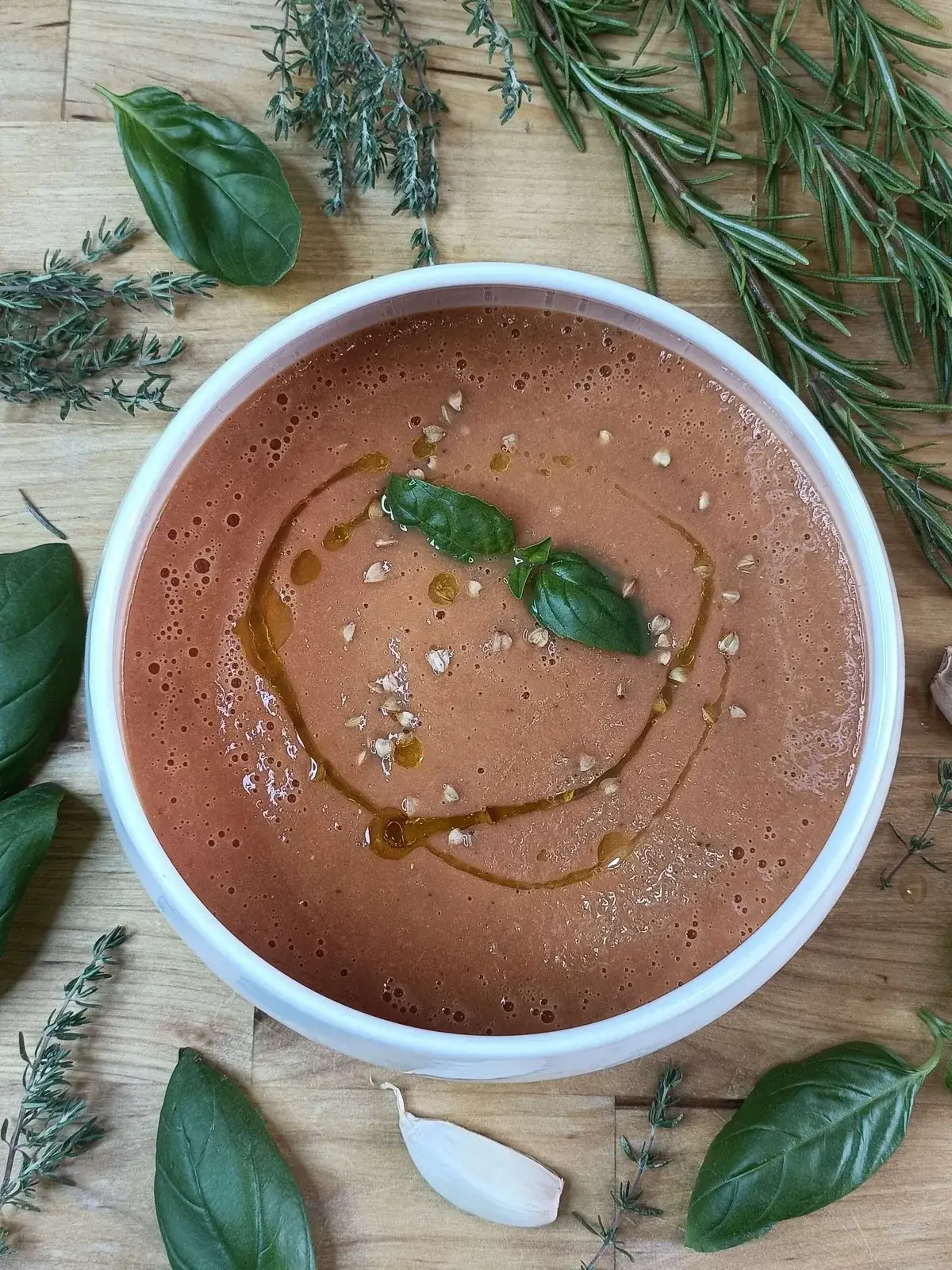
Chilled roasted tomato and garlic soup, with a drizzle of linseed oil
Florence Oustau's chilled soup: oven-roasted tomatoes and garlic, a night in the fridge, crunchy kasha and a drizzle of linseed oil just before serving.
1 min read
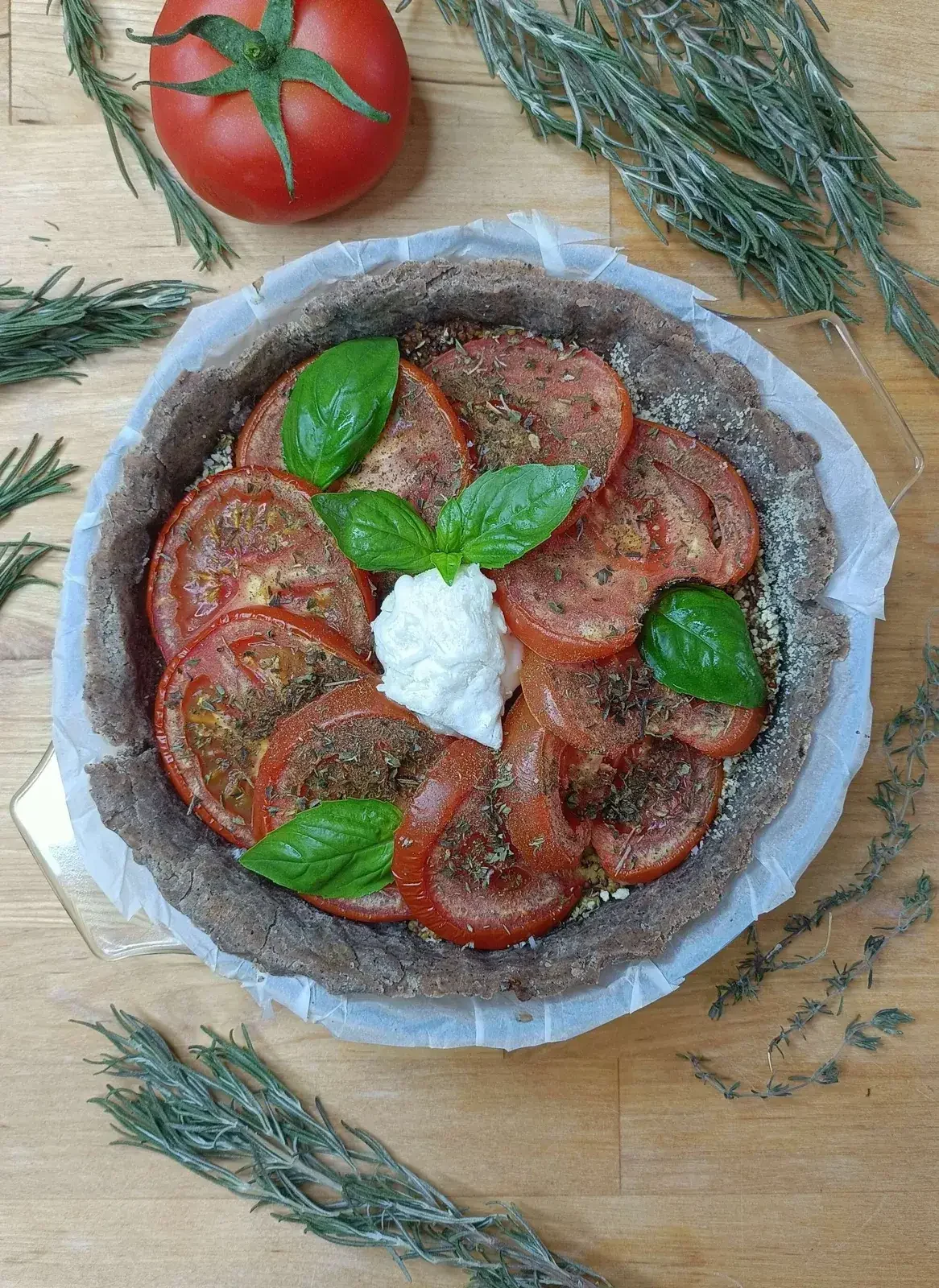
Tomato and goat's cheese tart, gluten-free pastry with flaxseeds
Florence Oustau's summer tomato and goat's cheese tart: a gluten-free shortcrust pastry bound with ground flaxseeds, a rosette of tomatoes and melted goat's cheese.
1 min read
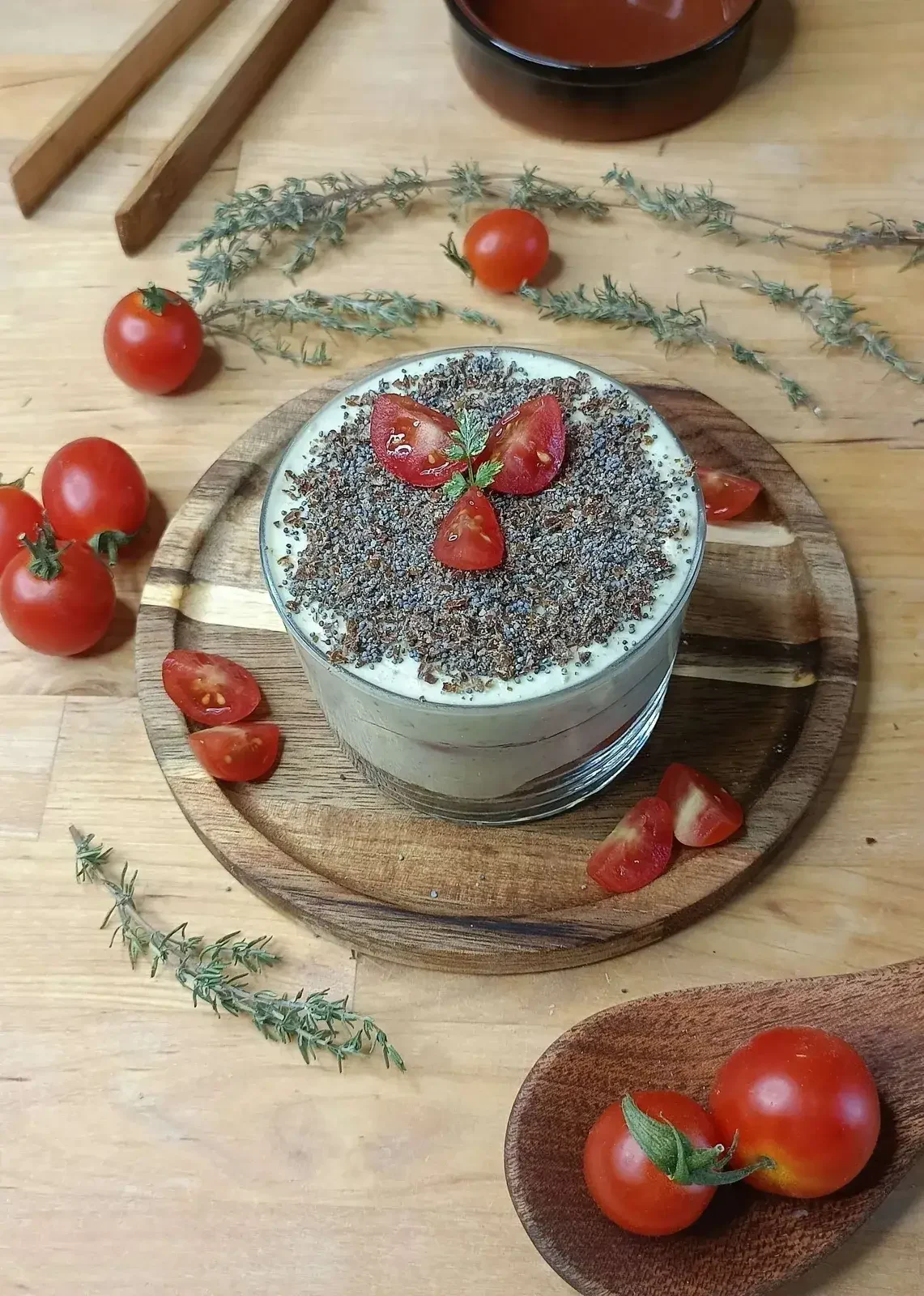
Savoury tomato, pesto and kibbled flaxseed tiramisù
Florence Oustau's savoury tiramisù: plant-based mascarpone, pesto, tomato and the crunch of kibbled flaxseed. A chic and fresh aperitif verrine.
2 min read