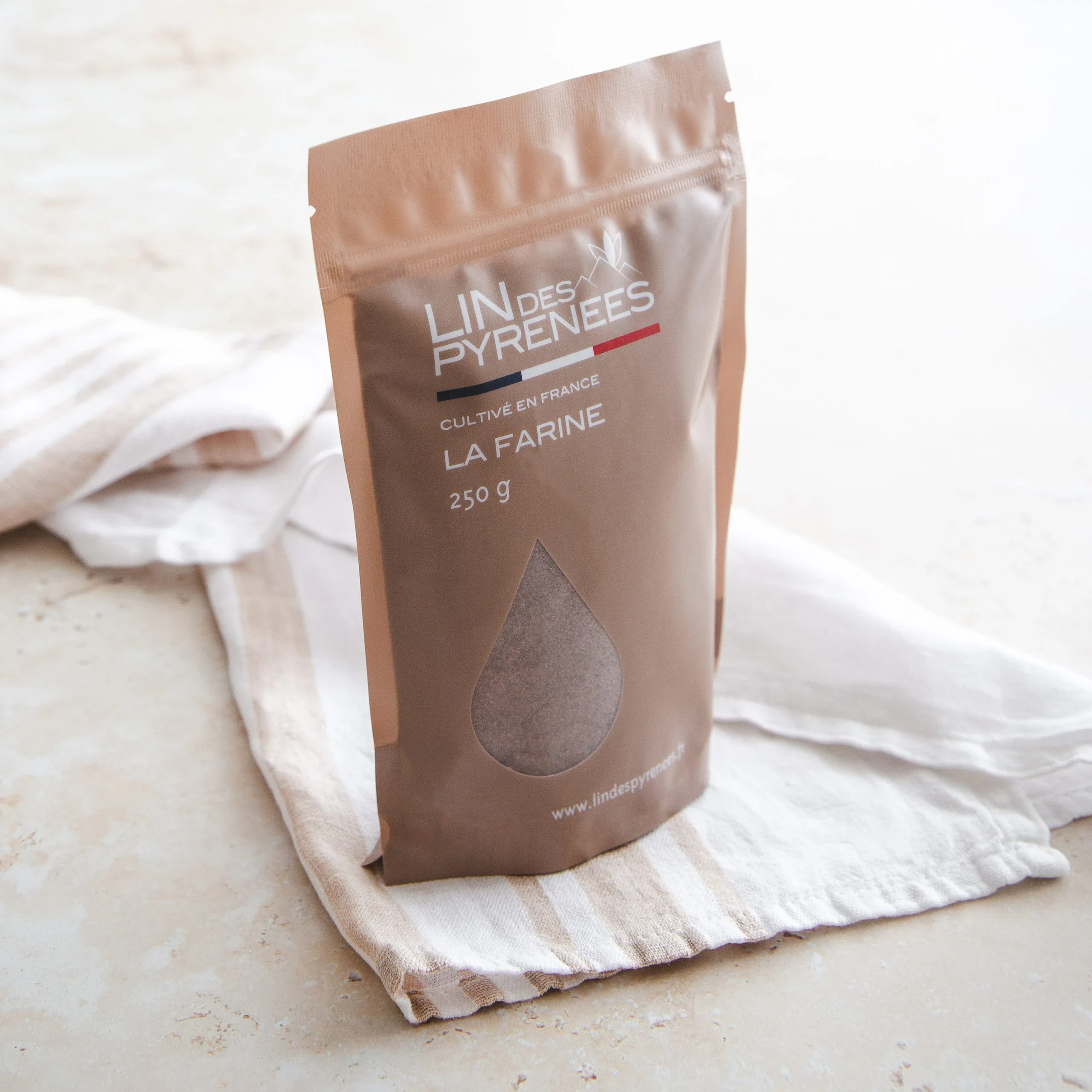
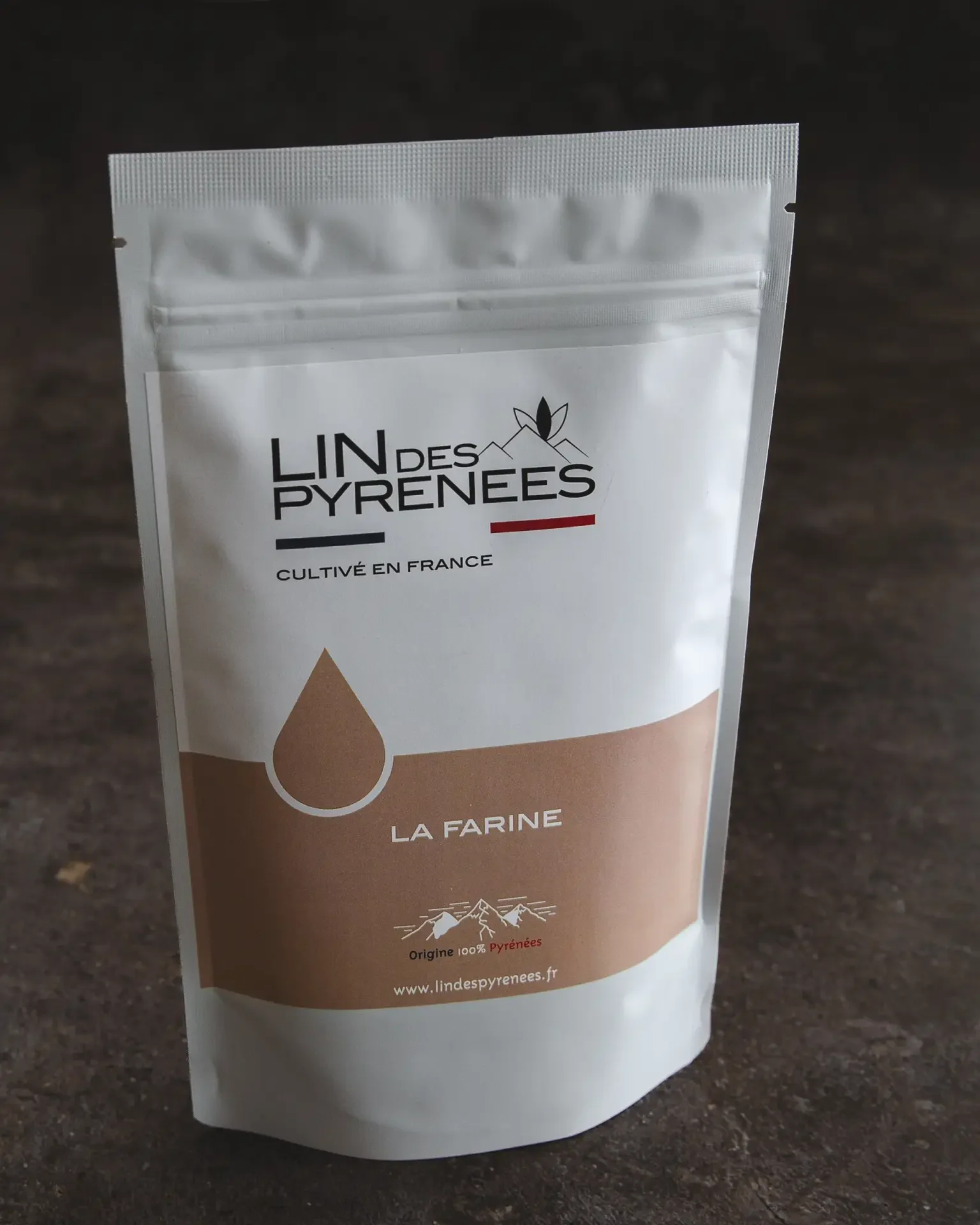
Flax Flour 250 g
€11.90
Price includes VAT · Shipping from €5.28, free in France from €49 · VAT 5.5%
Our organic gluten-free flax flour, made from the cold-pressing press cake: fibre, plant protein and a hazelnut taste, for baking and binding.
In stock
Details
- Weight
- 250 g
Lin des Pyrénées guarantees premium-quality products from an eco-responsible and local approach.
Free delivery from €49
Shipping from €5.28, free in France from €49.
14 days to change your mind
Right of withdrawal of 14 calendar days from receipt, with no justification or penalty. Model form provided in the terms of sale.
Your payment stays with your bank
Bank card, PayPal, bank transfer or cheque. We never see or store any card number.
What you need to know
Lin des Pyrénées organic flax flour was born of a simple principle: waste nothing of the flaxseed. After the cold pressing of our linseed oil, a dense press cake remains, the solid fraction of the seed. Finely milled, this co-product becomes a gluten-free flax flour, from organic farming, grown and processed in the heart of Béarn - both a baking ingredient and an everyday plant binder.
Our flax flour is 100% vegan, certified organic and naturally gluten-free.
An organic flax flour from cold pressing
Our organic flax flour is not an anonymous by-product: it is the solid fraction of the seed, obtained after the oil has been extracted by mechanical cold pressing. Where the oil concentrates the fatty acids, the press cake concentrates everything else - fibre, plant protein and minerals. By milling it into flour, we make use of every part of the seed and limit waste.
This flour is certified as coming from organic farming: flax grown without synthetic pesticides or fertilisers, on a Pyrenean terroir traced from field to bag. The flax is pressed then milled a few kilometres from the plots, in a short supply chain where each batch is identified. To discover the flax grown in the Pyrenees, browse our feature on flax.
Gluten-free: naturally, with an honest caveat
Flax is an oilseed, not a cereal: flax flour is therefore naturally gluten-free. It has its place with people who cook without wheat, barley or rye, and brings taste and structure to gluten-free preparations that are often bland.
One caveat is nevertheless necessary: depending on the workshop, a risk of cross-contamination with gluten-containing cereals may exist. Sensitive coeliacs should check the production conditions stated on the packaging before buying.
A dense composition: fibre and plant protein
Flax flour stands out for a combination that is unusual in baking: it is rich in fibre and a source of plant protein, with minerals naturally present in the seed. As the oil has been removed during pressing, it is however much lower in omega-3 than the whole seed or the oil.
- Fibre: this is what gives the flour its ability to absorb water and to gel - the basis of the flax egg described below.
- Plant protein: useful for enriching breads, galettes and crêpe batters, especially in plant-based cooking.
- Taste: a subtle toasted hazelnut flavour, which pairs with wholemeal flours, buckwheat and dried fruit.
Each form of flax has its use
The omega-3 in flax, alpha-linolenic acid (ALA), is concentrated in the fat fraction: for this intake, linseed oil and ground flaxseed are the forms to choose. The flour, for its part, provides the dry matter: fibre, protein, structure and taste. Kibbled flaxseed sits between the two, with added crunch.
How to use flax flour in cooking
Flax flour is a versatile ingredient with a subtle hazelnut taste. It is generally not used on its own, but alongside another flour, as it does not rise and gives a dense texture. As it absorbs a lot of water, remember to slightly increase the liquid in your doughs and batters.
Flax flour as a partial substitute
In pastry and bread making, replace 10 to 20% of your usual flour with flax flour to enrich breads, crêpes, muffins or cookies in flavour and structure. Beyond that, the mixture becomes compact: flax flour adds density without helping it rise. For detailed ratios, read our complete guide to gluten-free flax flour.
The flax egg: a plant-based binder
Flax flour is an excellent egg-free binder, ideal for vegan cooking. To make a "flax egg", mix 1 tablespoon of flax flour with 3 tablespoons of water, leave to stand for 10 minutes until it gels, then use it in place of an egg. This binder works particularly well in cakes, pancakes, cookies and vegetable patties.
Other ideas
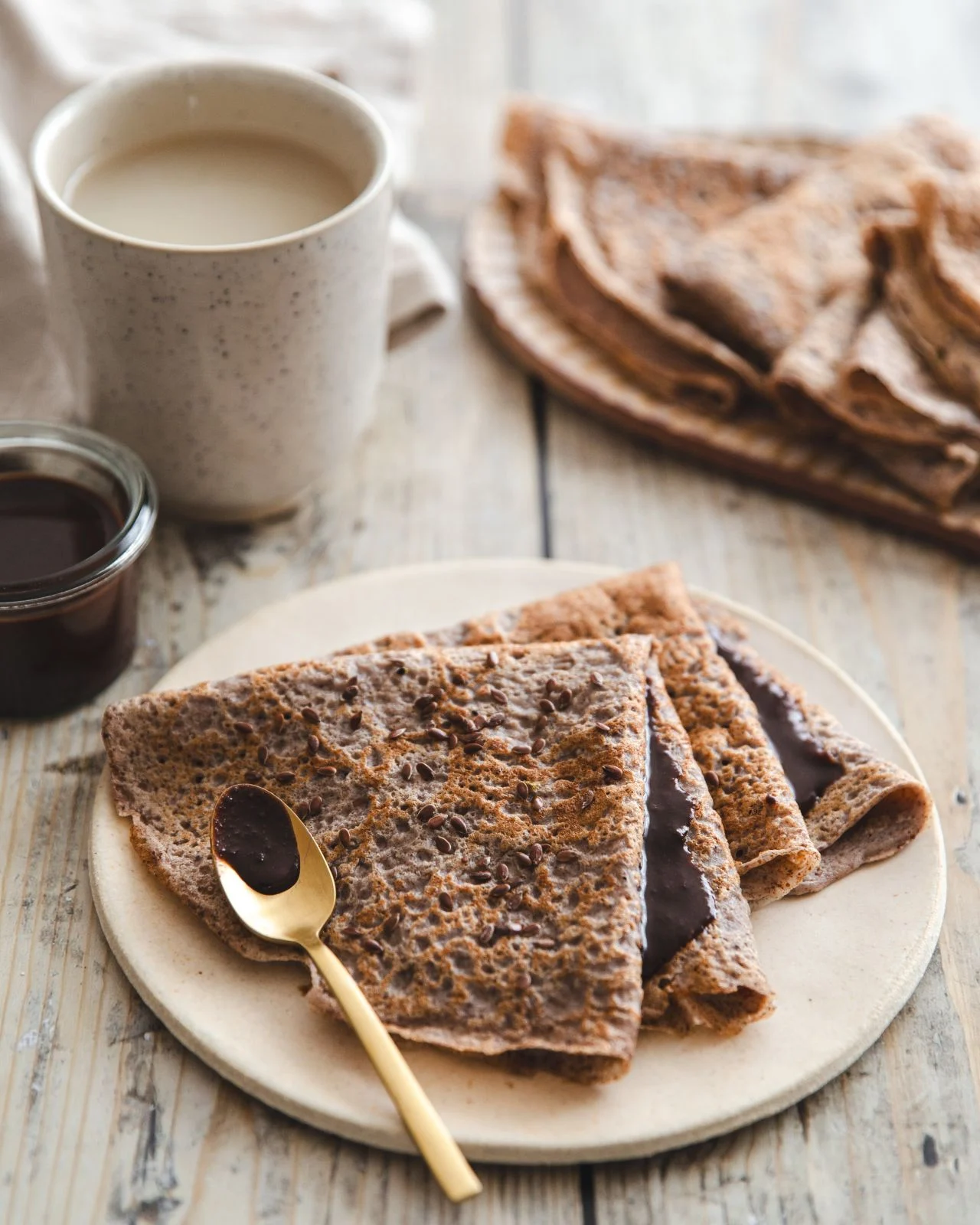
- in a crêpe or blini batter, for a hazelnut taste;
- as a coating, mixed with gluten-free breadcrumbs;
- by the spoonful in a porridge, a smoothie or a yoghurt;
- in a gluten-free bread dough, to give the crumb structure.
Find signature ideas from our ambassador chefs on our recipes page.
Storing organic flax flour
Like any flour made from an oilseed, flax flour should be kept away from light, heat and moisture, in an airtight container, ideally in the fridge after opening. A fresh flour smells of hazelnut; an acrid smell or a marked bitterness indicate that it has aged. The 250 g format is calibrated for regular use, without waste.
Why choose Lin des Pyrénées flax flour
Our organic flax flour embodies a consistent approach, from field to bag:
- From organic farming: flax grown without synthetic inputs, certified organic.
- A co-product of cold pressing: the flour makes use of the press cake from our cold-pressed oil, in an anti-waste approach that honours every fraction of the seed.
- Full traceability: we know where the seed comes from, who grew it and where it was processed, in the heart of Béarn.
- Short, local supply chain: growing, pressing and milling brought together in the same Pyrenean territory, direct from the producer.
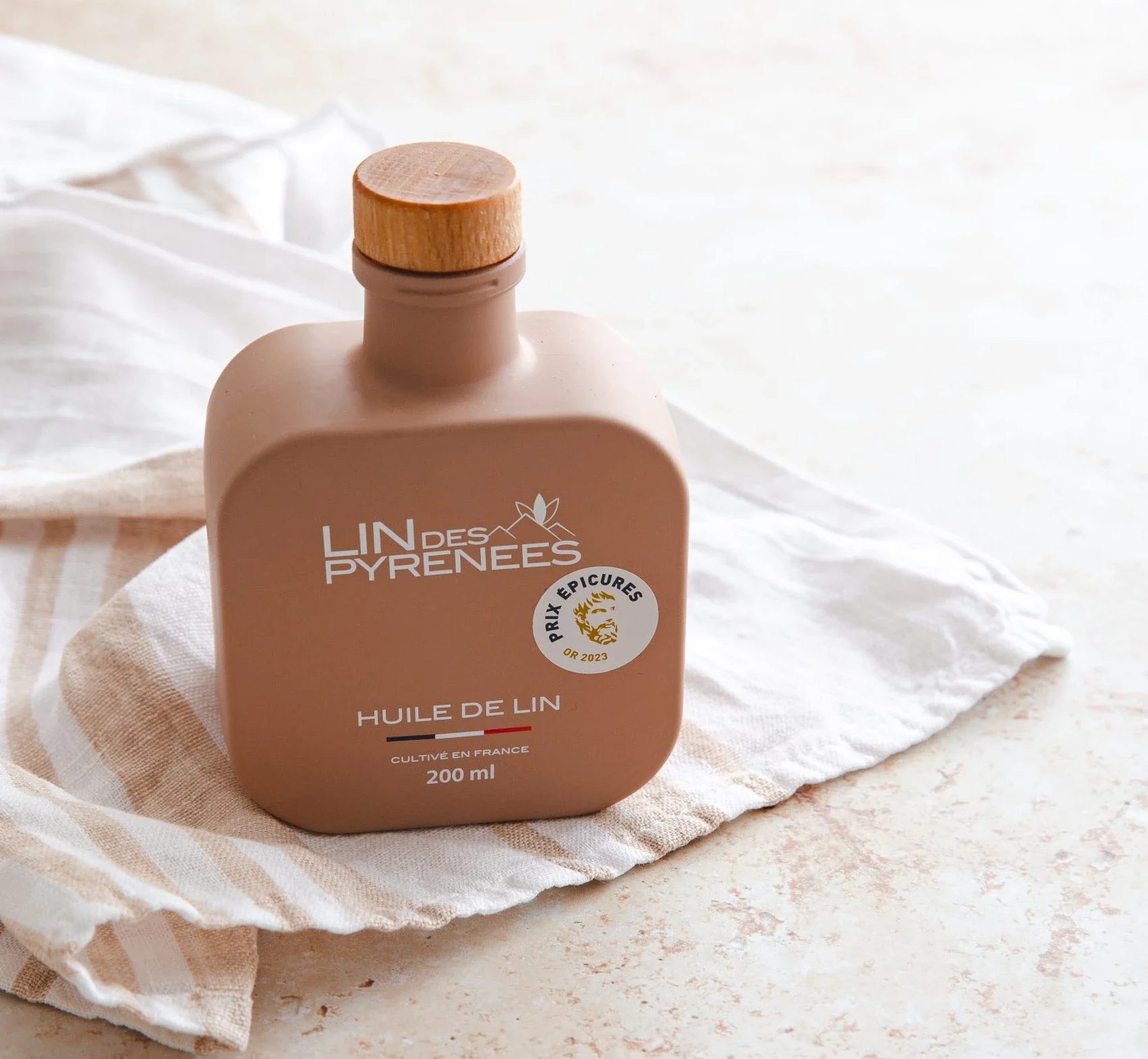
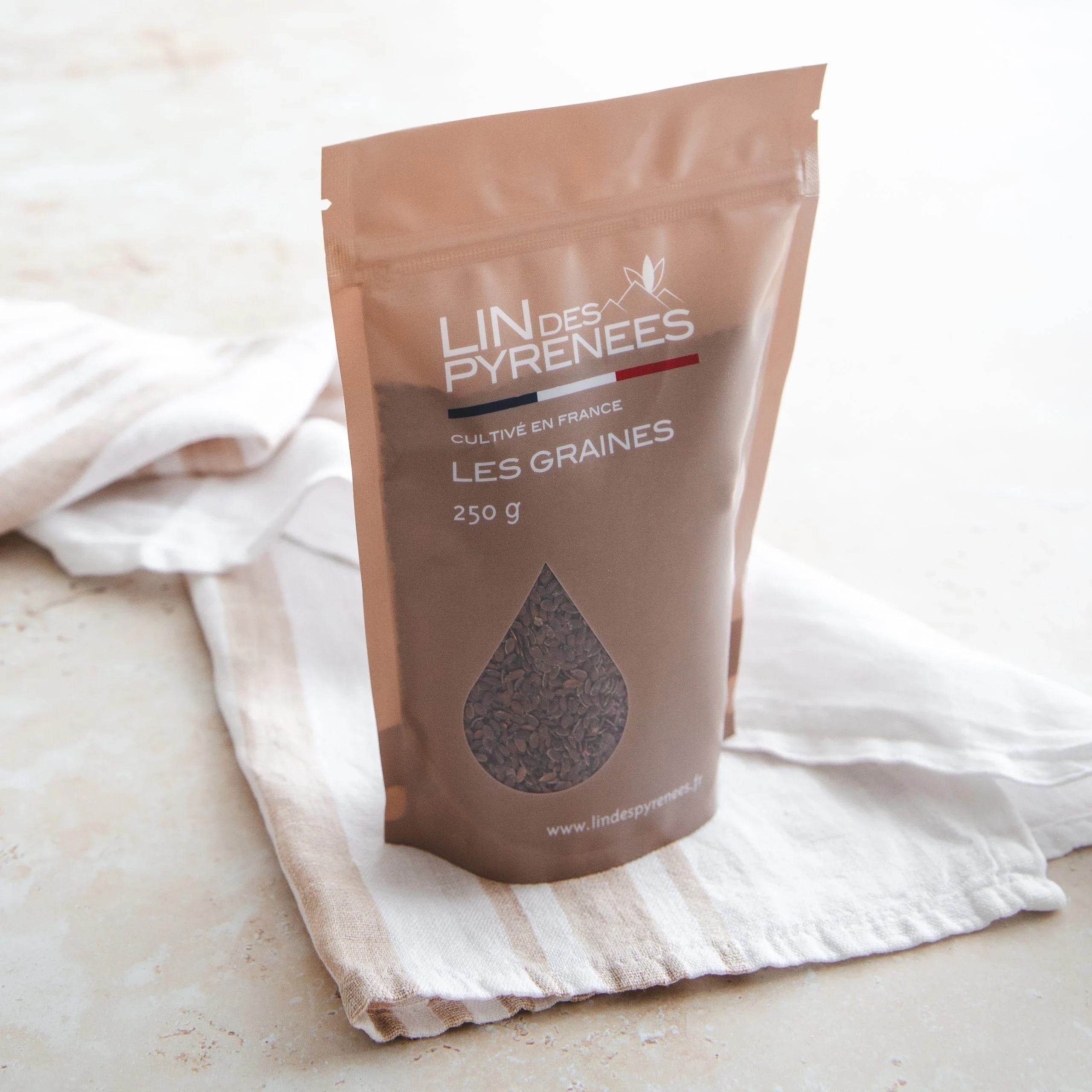
To discover the spirit of the house, browse our story, and complete your cooking with the other products in the range: organic flaxseed, kibbled flaxseed and virgin linseed oil.
Format and availability
Organic gluten-free flax flour comes in a 250 g bag, a practical format for regular use in baking. It is available in our online shop and from our partner stockists.
Frequently asked questions
Is flax flour really gluten-free?
Yes, flax is not a cereal: flax flour is naturally gluten-free. A caveat remains about cross-contamination depending on the workshop; sensitive coeliacs should check the production conditions.
Can all regular flour be replaced with flax flour?
No: it does not rise and makes preparations denser. It is used as a partial substitute, for 10 to 20% of your usual flour.
How do I make a flax egg?
Mix 1 tablespoon of flax flour with 3 tablespoons of water, leave to stand for 10 minutes until it gels, then use in place of an egg.
How should flax flour be stored?
In an airtight container, away from light, heat and moisture, ideally in the fridge after opening. The 250 g bag is used up over a few weeks.
Is your flax flour organic?
Yes, it comes from organic farming, grown and processed in Béarn in a short and traceable supply chain.
Goes well with
Recipes and tips
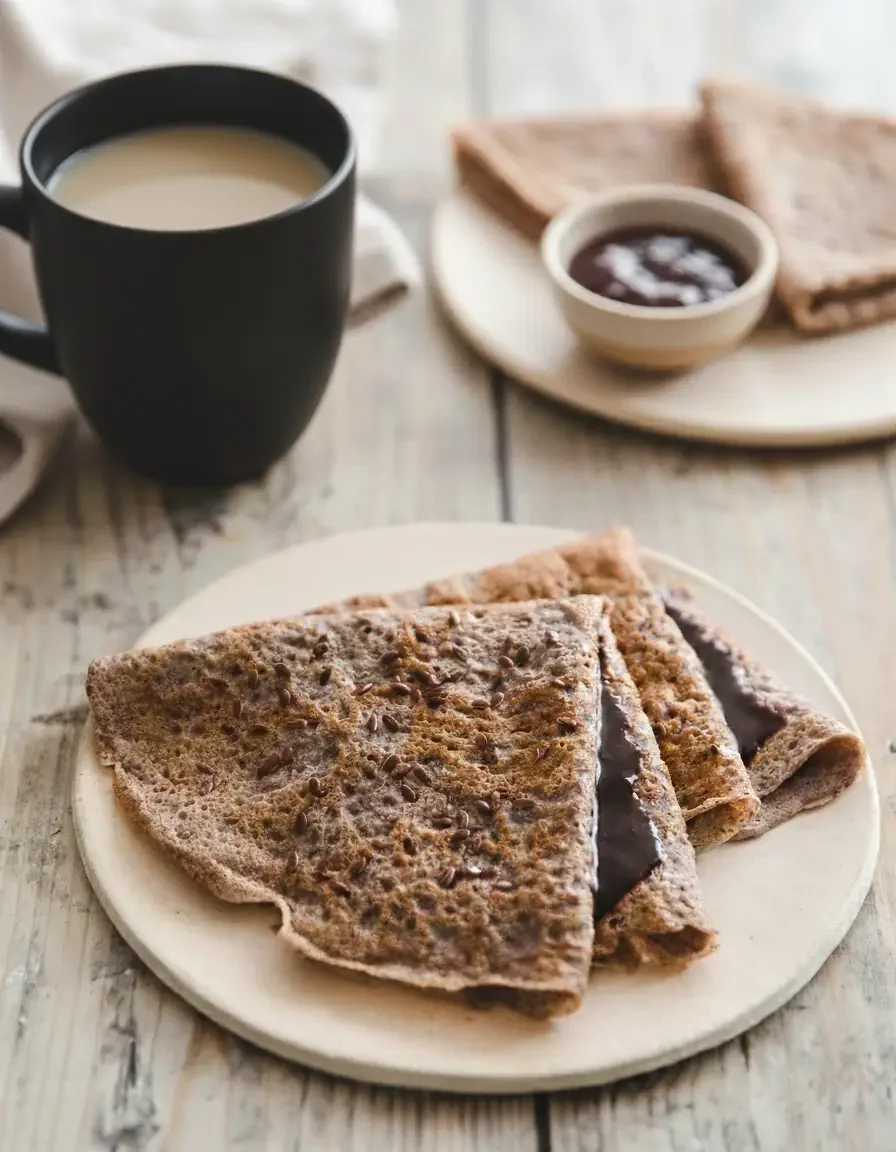
Flaxseed flour: pancakes, breads, bakes - the right ratios
Cooking with flaxseed flour: substitution ratios, the flax egg binder, pancakes, breads, bakes and coatings. The practical guide from Lin des Pyrénées.
7 min read
Gluten-free flaxseed flour: the practical kitchen guide
Flaxseed flour: a gluten-free substitute for wheat, replacement ratios, a plant-based binder, bread and bake recipes, and where to find it.
7 min read
Délice 2026, the indulgent flaxseed recipe
Délice 2026: Lin des Pyrénées' creative flaxseed recipe, to put together as the mood takes you and enjoy in every season.
1 min read