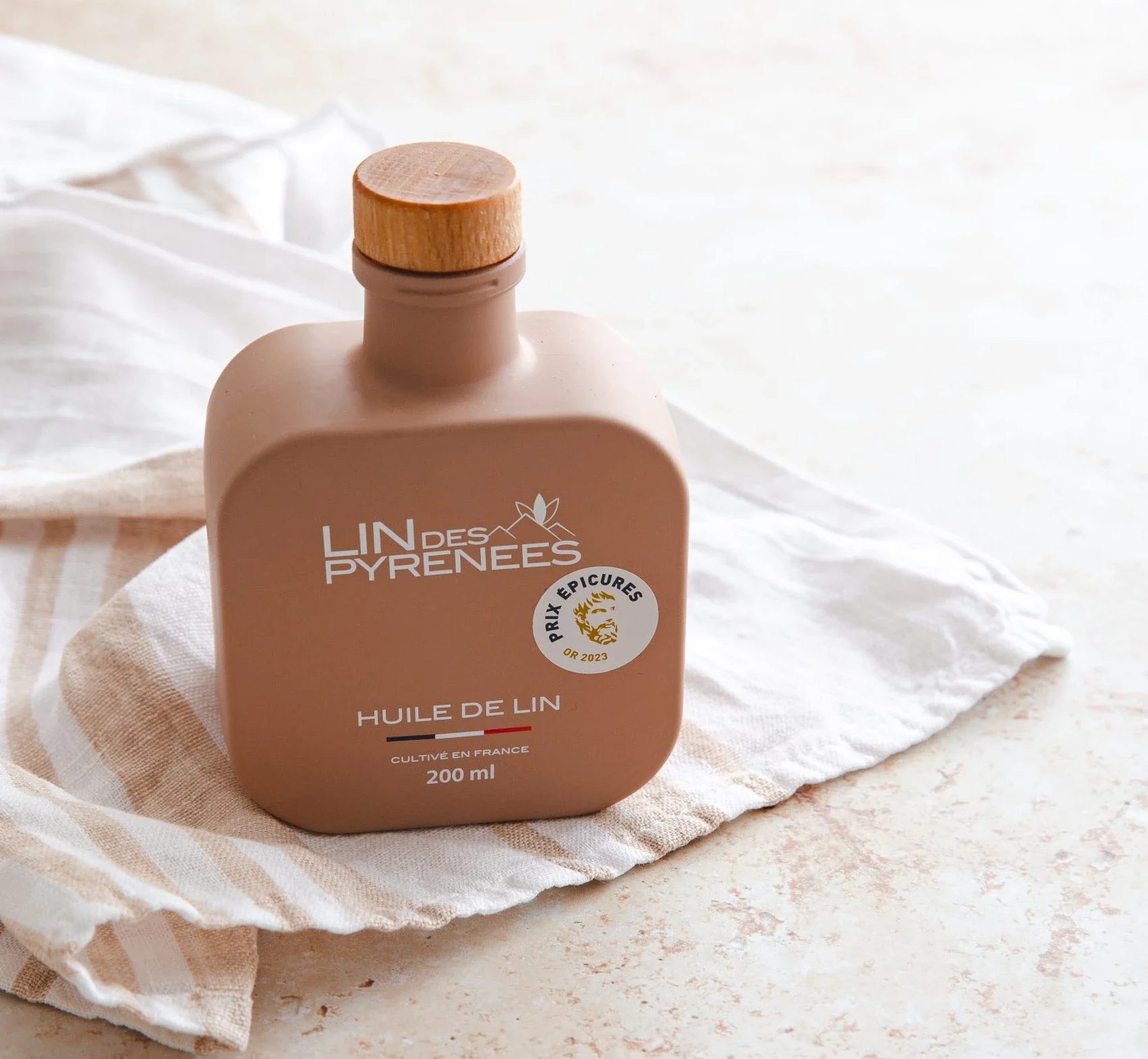
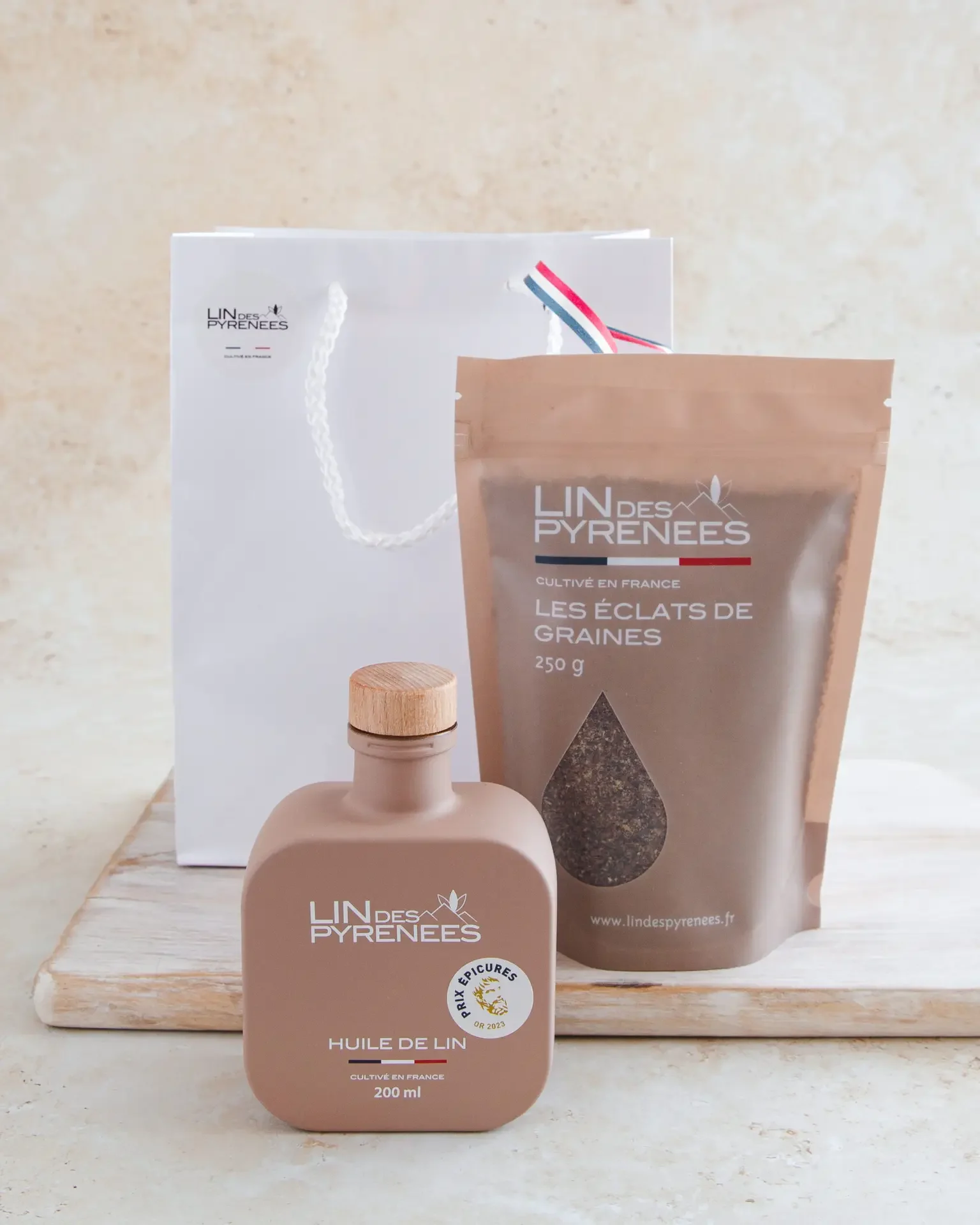
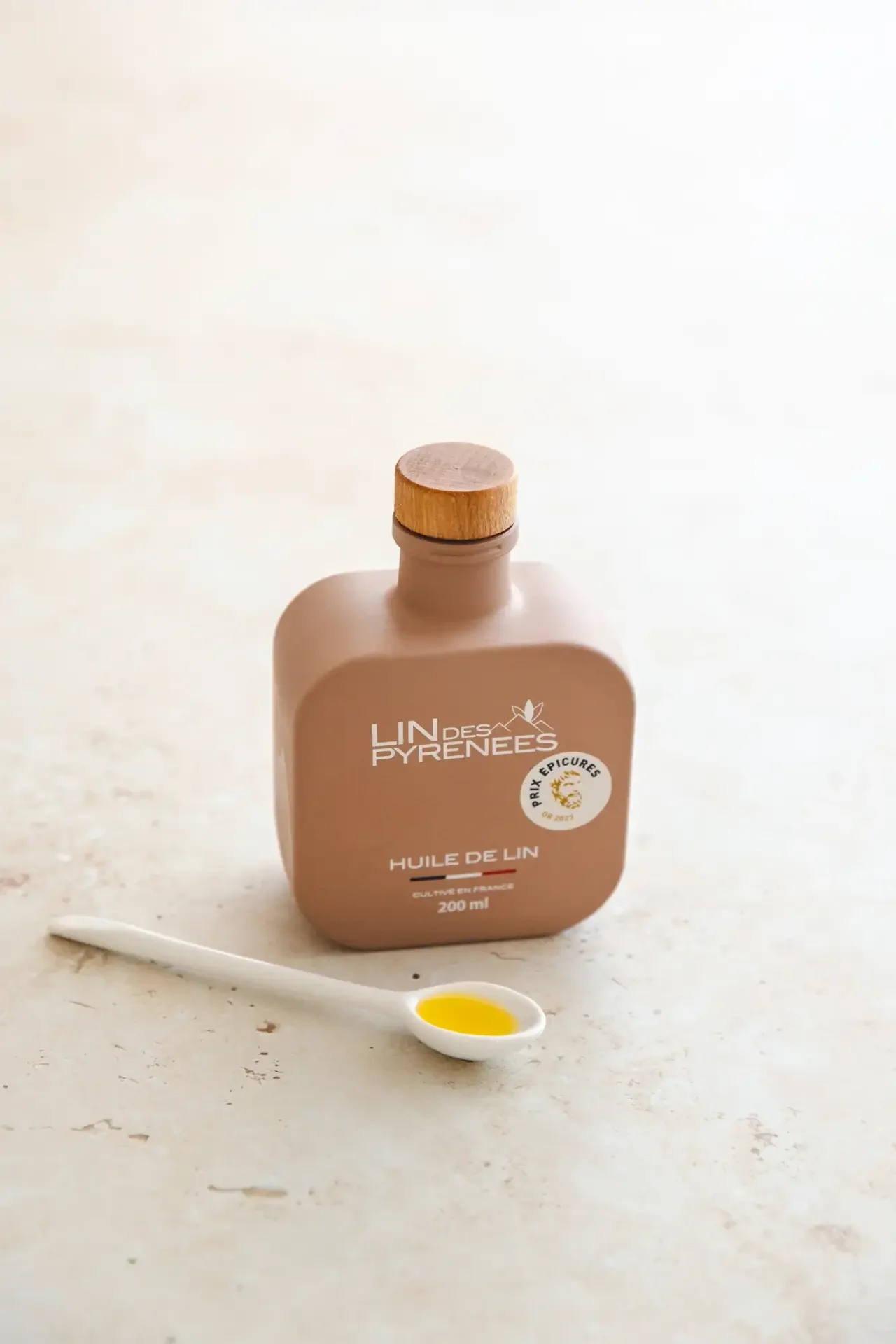
Virgin Linseed Oil 200 ml
€19.90
Price includes VAT · Shipping from €5.28, free in France from €49 · VAT 5.5%
Our virgin organic linseed oil, cold-pressed in Béarn: omega-3 ALA, hazelnut taste, Médaille d’Or 2026.
In stock
Details
- Weight
- 550 g
Lin des Pyrénées guarantees premium-quality products from an eco-responsible and local approach.
Free delivery from €49
Shipping from €5.28, free in France from €49.
14 days to change your mind
Right of withdrawal of 14 calendar days from receipt, with no justification or penalty. Model form provided in the terms of sale.
Your payment stays with your bank
Bank card, PayPal, bank transfer or cheque. We never see or store any card number.
What you need to know
Our virgin organic linseed oil is cold-pressed in the heart of Béarn, from oilseed flaxseed from organic farming. Golden, clear, with a frank hazelnut taste, it is among the culinary oils richest in omega-3 ALA. Awarded the Médaille d’Or Best Of Gastronomie 2026, it embodies the know-how of a short, traceable supply chain in the Pyrenees. To go further, read our complete guide to culinary linseed oil.
Our linseed oil is 100% vegan, certified organic, virgin and unrefined, and naturally gluten-free.
An organic linseed oil, from organic farming in Béarn
Our linseed oil is certified organic: the oilseed flax it is made from is grown according to organic farming specifications, without synthetic fertilisers or pesticides. This recent certification crowns a standard we have upheld from the very beginning: a raw material grown on a specific terroir, harvested when ripe and monitored plot by plot.
From the Béarn plot to the bottle, the supply chain stays short. The flax is pressed a few kilometres from the fields, in the days following the harvest: this short delay between harvest and pressing is decisive for an oil so sensitive to oxidation. Each batch is identified, from sowing to bottling. To discover the flax grown in the Pyrenees, browse our feature on flax.
A composition rich in omega-3 ALA
Linseed oil stands out for its content of alpha-linolenic acid (ALA), the plant-based omega-3. On its own it makes up nearly half of its fatty acids, making it one of the culinary oils most concentrated in omega-3. A tablespoon provides several grams.
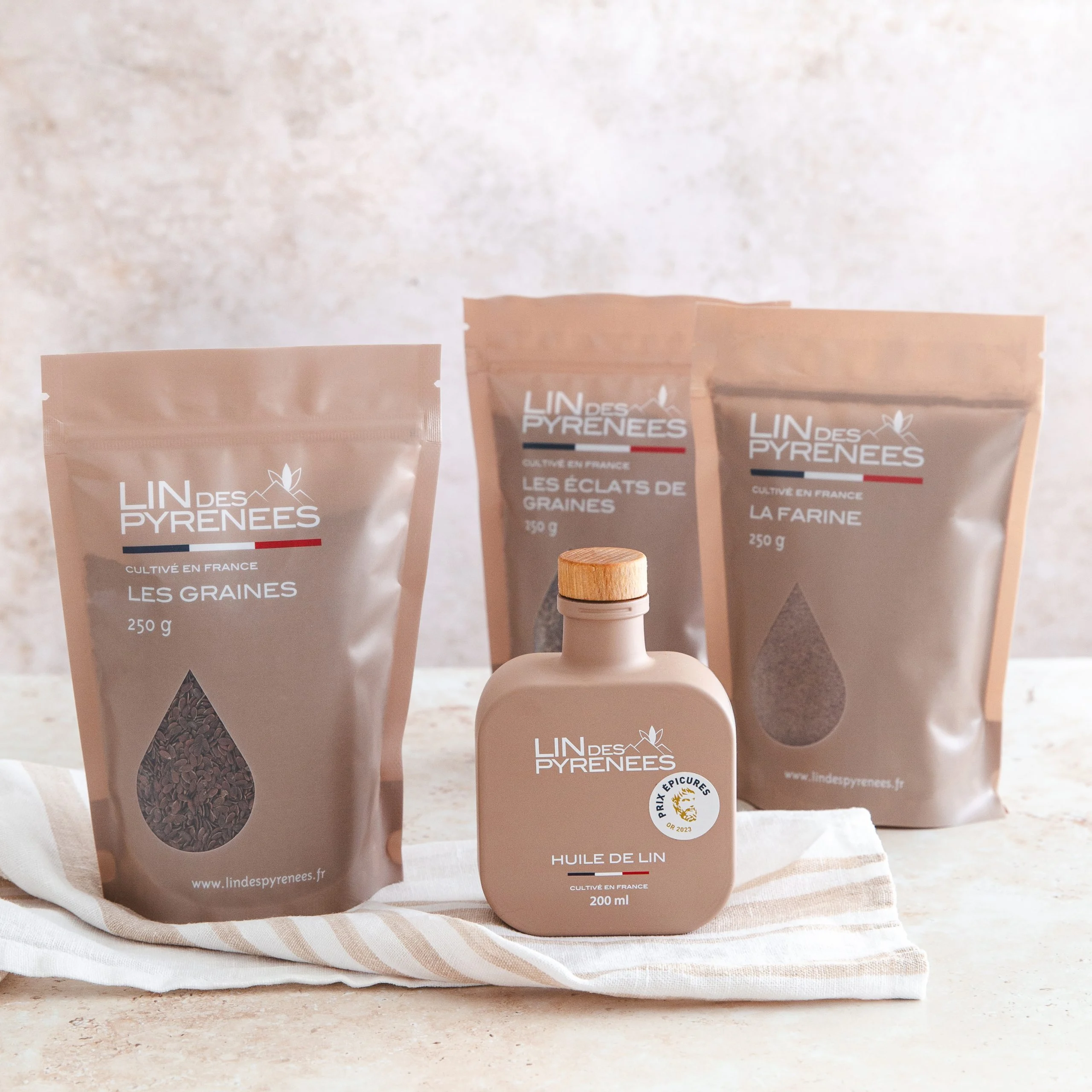
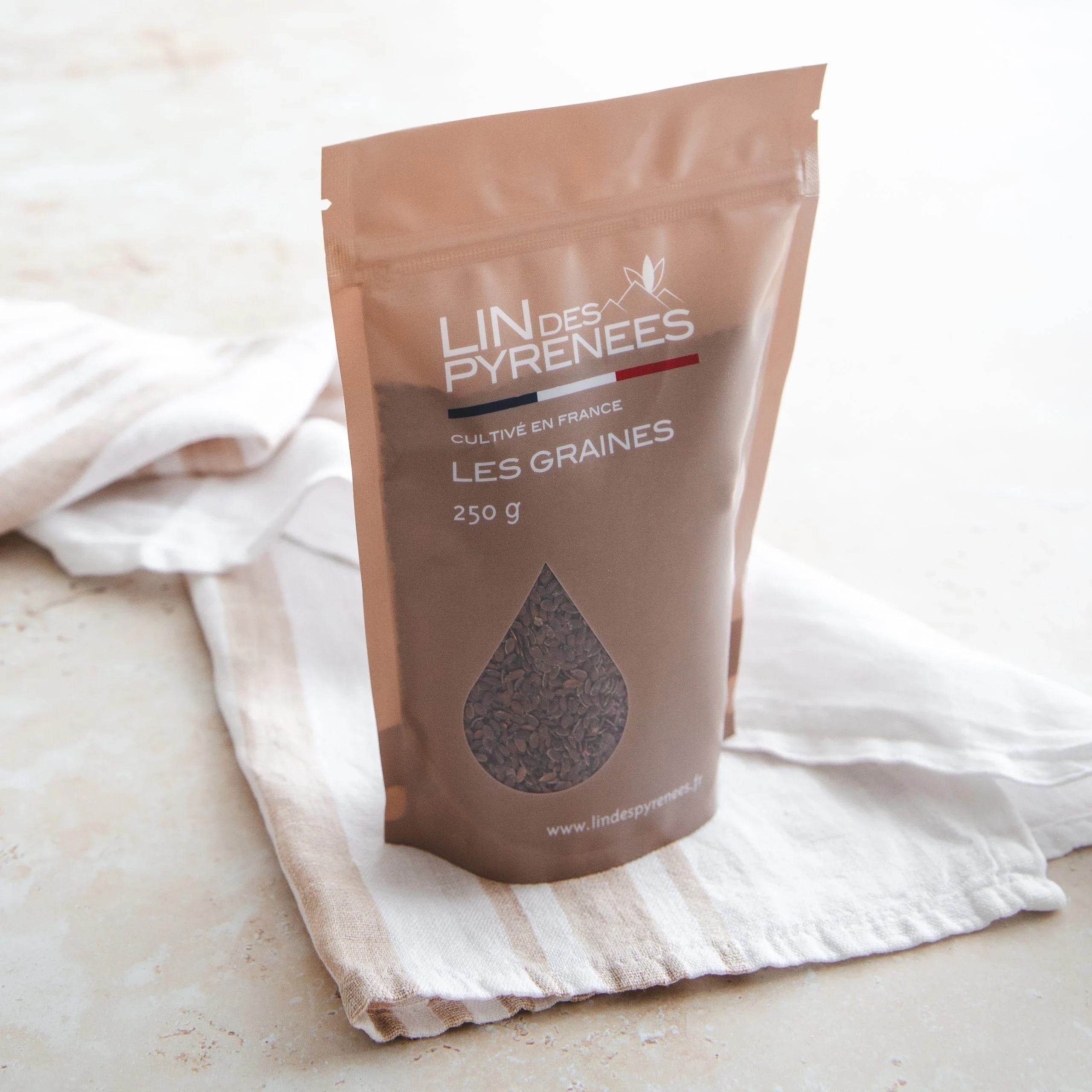
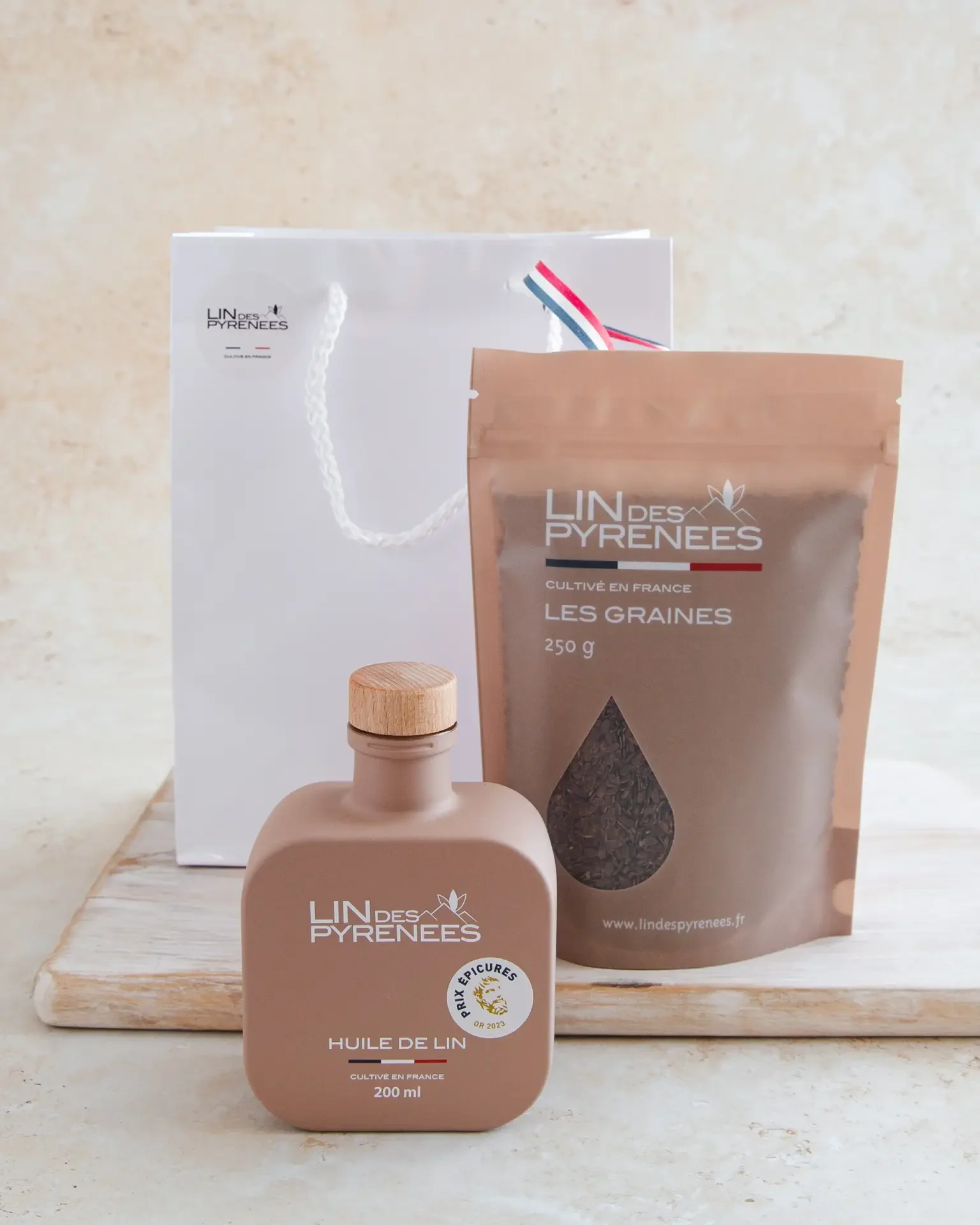
This composition also explains the oil’s fragility: it is what dictates the cold pressing, the tinted bottle, the 200 ml format and the refrigerated storage detailed below. Unlike the seed, the oil contains neither fibre nor protein: it provides only the fat fraction. For the whole seed, turn to our flaxseed or our organic kibbled flaxseed.
Cold pressing, without solvents: a purely mechanical process
The extraction method makes all the difference. Cold pressing is mechanical: the seed passes through a screw press, without external heating, without solvents and without refining. The temperature stays low, which preserves the fatty acids and aromas, whereas hot extraction or refining would neutralise the taste and colour.
The oil is then simply decanted, then bottled in tinted glass, protected from light. Nothing is added: no preservatives, no synthetic antioxidants, no flavourings. Our story and our know-how rest on this standard.
The press cake, turned into flour
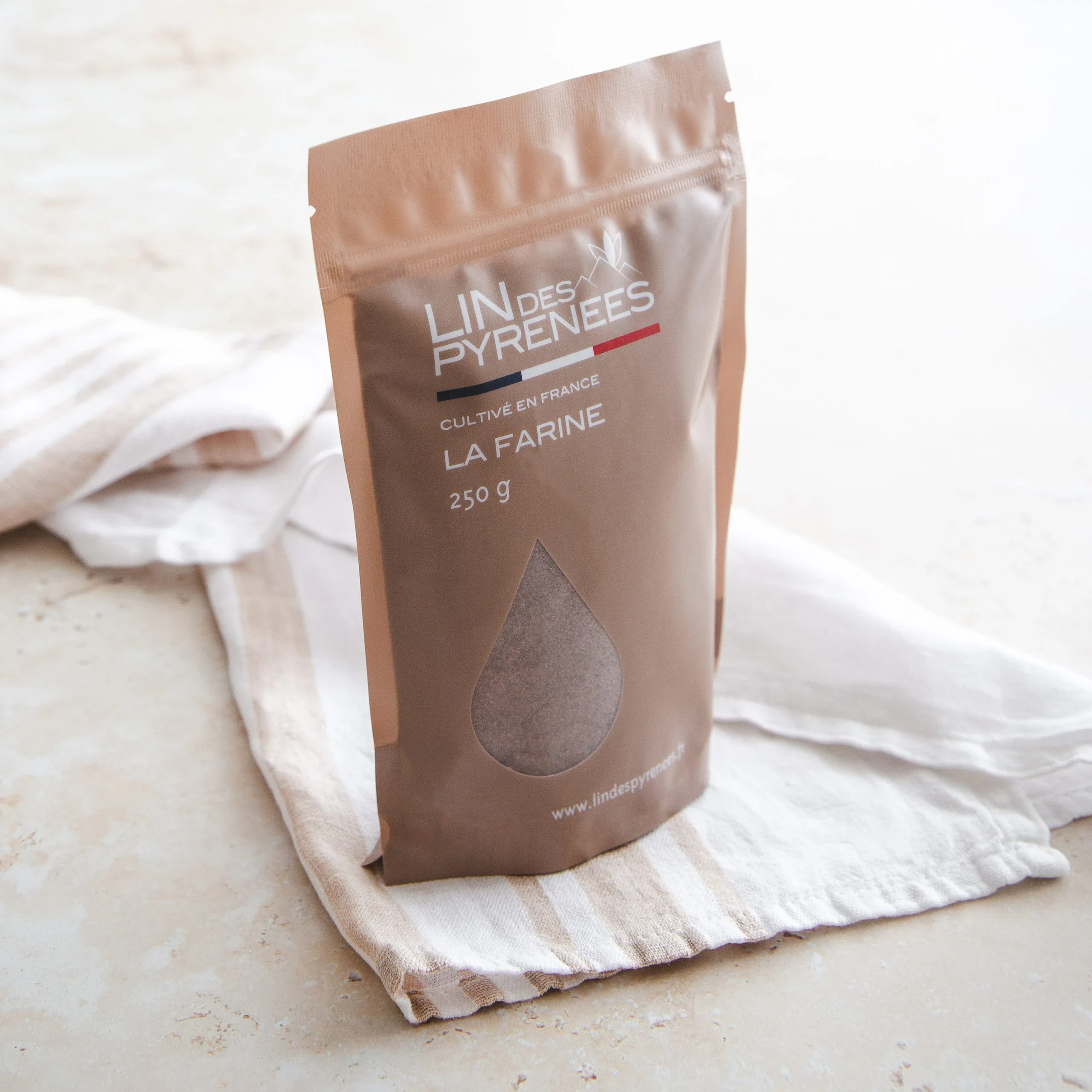
Pressing leaves a dense press cake, the solid fraction of the seed. Rather than waste it, we mill it finely: it becomes our flax flour. Nothing of the seed is left aside.
Taste and texture: an oil with character
When fresh, our linseed oil has a golden colour, a fluid texture and a frank hazelnut taste, with a herbaceous hint and a slightly bitter finish that is the hallmark of an unrefined virgin oil. It pairs naturally with local produce: root vegetables, steamed potatoes, fresh cheeses, trout, autumn salads, lentils. A strong bitterness or a smell of old cardboard, on the other hand, signals an oxidised oil, to be replaced.
How to use linseed oil in cooking (without ever heating it)
The golden rule fits in one sentence: linseed oil is never cooked. When heated, it oxidises, browns and develops an unpleasant bitterness. It is used only cold, as a finishing touch or in dressings:
- drizzled over steamed vegetables, a purée or a velouté already served;
- in a vinaigrette, using one third linseed oil to two thirds of a more neutral-tasting oil;
- on cold fish, a tartare, raw vegetables or fromage blanc;
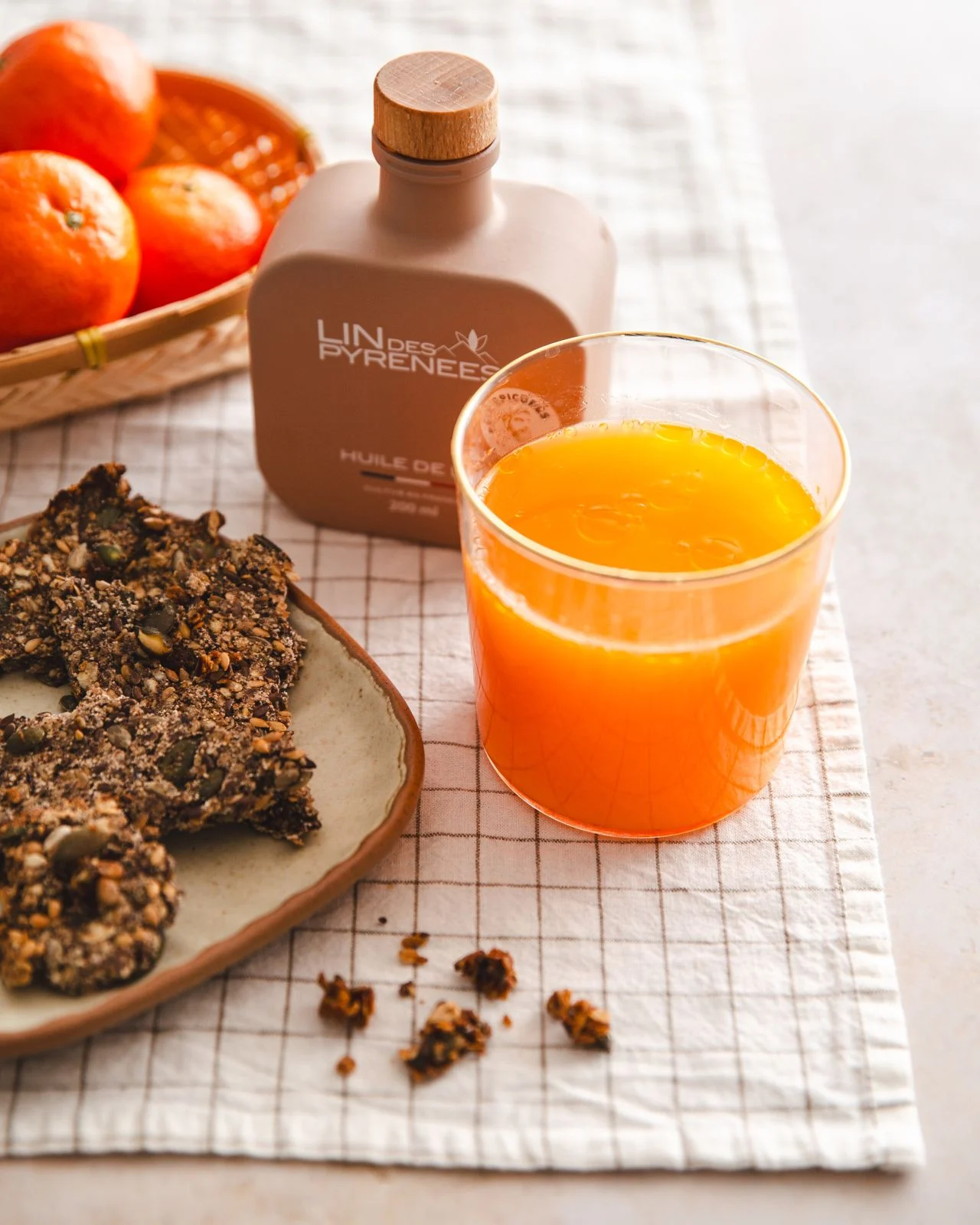
- in a smoothie, a yoghurt or a porridge, by the spoonful;
- mixed into a hummus, an avocado purée or a yoghurt and herb sauce.
Allow one tablespoon (10 to 15 ml) to flavour a dish for two. Always add it last, off the heat. Our ambassador chefs use it in signature recipes to be found on our recipes page.
Storage: protecting a delicate oil
Because it oxidises quickly, linseed oil must be stored with care:
- in the fridge, always, as soon as it is opened;
- away from light, in its tinted bottle, tightly closed;
- used within 4 to 6 weeks of opening, ideally;
- before opening, in a cool, dry and dark place, until the date shown on the label.
That is why we offer it in a 200 ml format: a volume calibrated for regular use, without waste or a bottle left open for too long.
Why choose Lin des Pyrénées linseed oil
Choosing our organic linseed oil means choosing an acclaimed and traceable oil:
- Médaille d’Or Best Of Gastronomie 2026 - an award won on taste;
- organic certification - from organic farming;
- mechanical cold pressing, without solvents, without refining, as close as possible to the fields;
- full traceability: seed origin, plot and pressing date all known;
- short supply chain in Béarn, direct from the producer;
- press cake turned into flax flour, so that no fraction of the seed is discarded.
Available on this page and from our partner stockists.
Frequently asked questions
Is this linseed oil organic?
Yes. Our linseed oil comes from organic farming and is certified organic: the flax is grown without synthetic fertilisers or pesticides, then cold-pressed in Béarn.
Can linseed oil be cooked?
No, never. Heat oxidises it, makes it brown and gives it a marked bitterness. It is used only cold, in dressings or as a finishing touch.
What does linseed oil taste like?
A frank hazelnut taste, with a herbaceous hint and a slight bitter finish, typical of an unrefined virgin oil. A strong bitterness signals an oxidised oil.
How should linseed oil be stored after opening?
In the fridge, away from light in its tinted bottle, and ideally used within 4 to 6 weeks.
Where is your linseed oil produced?
The flax is grown in Béarn, in the Pyrenees, then cold-pressed a few kilometres from the fields. Each batch is traced, from sowing to bottling in 200 ml.
Goes well with
Recipes and tips
Cold pressing: what it changes for a linseed oil
Cold pressing linseed oil: what this mechanical, solvent-free process changes for the omega-3, the taste and the quality of your virgin oil.
6 min read
Linseed oil vs rapeseed oil: which omega-3 oil should you choose?
Linseed oil or rapeseed oil: ALA omega-3 content, smoke point, taste and uses compared so you can make the most of them every day.
6 min read
Where to buy culinary linseed oil in France?
Where can you find a good culinary linseed oil? Our quality criteria, the best buying channels and the strengths of a French supply chain.
6 min read