Linseed OilPublished on 6 min read
Cold pressing: what it changes for a linseed oil
Cold pressing linseed oil: what this mechanical, solvent-free process changes for the omega-3, the taste and the quality of your virgin oil.
Updated on

On the label of our virgin linseed oil, three words always appear: "cold-pressed". Far from being a mere selling point, this process is what separates a fresh linseed oil, rich in omega-3 ALA and with a clear hazelnut taste, from a denatured oil. But what does cold pressing really mean, and why is it so decisive for an oil as fragile as linseed oil? Here is what this choice concretely changes in your bottle.
What is cold pressing?
Cold pressing is a mechanical extraction process: the flaxseed is physically pressed, simply by crushing, to release the oil. Three principles define it:
- a mechanical extraction, by pressing, with no chemical step;
- a low temperature, controlled throughout pressing;
- the absence of solvents, unlike some industrial extraction methods.
In practice, the seed enters a screw press, the oil flows out, and that is all: no chemicals, no heating intended to increase yield. The oil is then simply left to settle and bottled in tinted glass, away from light. Nothing is added: no preservatives, no synthetic antioxidants, no flavourings. What is collected is a virgin linseed oil, meaning an oil obtained solely by mechanical means and fit for consumption as it is. This is the standard we apply at Lin des Pyrénées, as told in our story and know-how.
Why it is decisive for fragile fatty acids
If cold pressing matters so much, it is because of the very nature of linseed oil. It is exceptionally rich in alpha-linolenic acid (ALA), the plant-based omega-3, which on its own accounts for nearly half of its fatty acids. Yet this fatty acid is fragile: heat, light and oxygen degrade it quickly.
Hot extraction, or solvent-assisted extraction, exposes the oil to high temperatures that alter some of these fatty acids and their aromas. Cold pressing, by maintaining a low temperature, preserves the integrity of the ALA and the aromatic profile of the seed. That is the whole point: harvesting a seed rich in omega-3 is pointless if the extraction process then degrades part of it. To discover the flax grown in the Pyrenees, browse our feature on flax.
Cold pressing versus refined oils: the real difference
To fully grasp the value of cold pressing, it needs to be compared with refined oils. Refining is a set of treatments (heating, sometimes the use of solvents, deodorisation) designed to produce a neutral, stable and cheap oil. Effective for mass production, this process has a downside: it erases some of the aromatic qualities and the original composition.
Where a refined oil favours yield and long shelf life, a cold-pressed virgin oil favours quality: it retains its fatty acids, its aromas and its character. This is exactly the difference between an anonymous supermarket linseed oil and a virgin linseed oil from a terroir. To understand all the selection criteria, our complete guide to culinary linseed oil sets out the facts.
What cold pressing changes to the taste
The difference is not only on paper: you can taste it. A cold-pressed and well-kept linseed oil offers:
- a clear golden to amber colour;
- a fresh, green aroma;
- a clear hazelnut taste, mild, with at most a slight finishing note typical of an unrefined virgin oil.
This aromatic profile is the sign of an oil true to the seed it comes from. Conversely, strong bitterness or a smell of old cardboard betray an oxidised or mistreated oil. By preserving the aromatic compounds of the seed, cold pressing produces an oil as pleasant on the palate as it is true to its terroir - a quality that our ambassador chefs recognise immediately when they work with it in their recipes, and which the Médaille d’Or Best Of Gastronomie 2026 has recognised.
An oil to use cold, always
Because its fatty acids are fragile, cold-pressed linseed oil is never cooked: it is used as a finishing touch, in dressings or drizzled over a dish that has already been served. Allow one tablespoon (10 to 15 ml) to flavour a dish for two, or one third linseed oil to two thirds of a more neutral oil in a vinaigrette. It is the best way to enjoy everything the process has preserved.
Cold pressing and terroir: an inseparable pair
Cold pressing takes on its full meaning when it is part of a local, traceable supply chain. Cold pressing a quality seed, harvested when ripe a few kilometres away, shortens the time between field and bottle - a decisive advantage for an oil sensitive to oxidation. Pressing also leaves a dense press cake, which we mill finely: it becomes our flaxseed flour, so that nothing of the seed is left aside.
At Lin des Pyrénées, cold pressing is therefore not an isolated step: it extends the work of the Béarn terroir, from sowing to harvest. To understand how this process fits into the whole journey, discover our article on the oilseed flax supply chain of the Pyrenees, from field to plate. It is this pairing of extraction know-how and local roots that gives our oil its signature.
How can you check that an oil is really cold-pressed?
Not all oils labelled "cold-pressed" are equal. A few simple pointers help you sort them out when buying:
- The words "virgin" + "first cold pressing" on the label: this is the regulatory foundation of an unrefined oil.
- An opaque or tinted bottle, which protects the oil from light - a producer concerned with preserving its fatty acids never puts it in clear glass on display.
- A recent pressing or harvest date, and not just a distant use-by date: freshness matters more than longevity.
- A clear origin and traceability: knowing where the seed was grown and pressed is the sign of a genuine supply chain.
- A small size (such as 200 ml), a guarantee of quick consumption after opening.
On tasting, an authentically cold-pressed oil can be recognised by its roundness and hazelnut flavour. This is precisely the specification we set ourselves for our virgin linseed oil, which you can find at our retailers.
Frequently asked questions
What does "cold pressing" mean for a linseed oil? It means that the oil is extracted mechanically, by pressing, at a low temperature and without solvents, which preserves its fatty acids and aromas.
What is the difference between virgin oil and refined oil? Virgin oil is obtained solely by mechanical means and retains its original qualities; refined oil undergoes treatments that neutralise it and deplete its aromas.
Why is cold pressing important for omega-3? The omega-3 fatty acids in linseed oil are fragile: heat degrades them. The low temperature of cold pressing preserves them.
Can you cook with a cold-pressed linseed oil? No. It is used cold only, as a finishing touch or in dressings, so as not to degrade its fatty acids or make it bitter.
Does cold pressing change the taste of the oil? Yes: it preserves a clear hazelnut taste, mild and without marked bitterness, true to the seed and its terroir of origin.
Sources: ANSES, omega-3 fatty acids (in French); the Ciqual food composition table (ANSES).
Recent articles

Chilled roasted tomato and garlic soup, with a drizzle of linseed oil
Florence Oustau's chilled soup: oven-roasted tomatoes and garlic, a night in the fridge, crunchy kasha and a drizzle of linseed oil just before serving.
1 min read
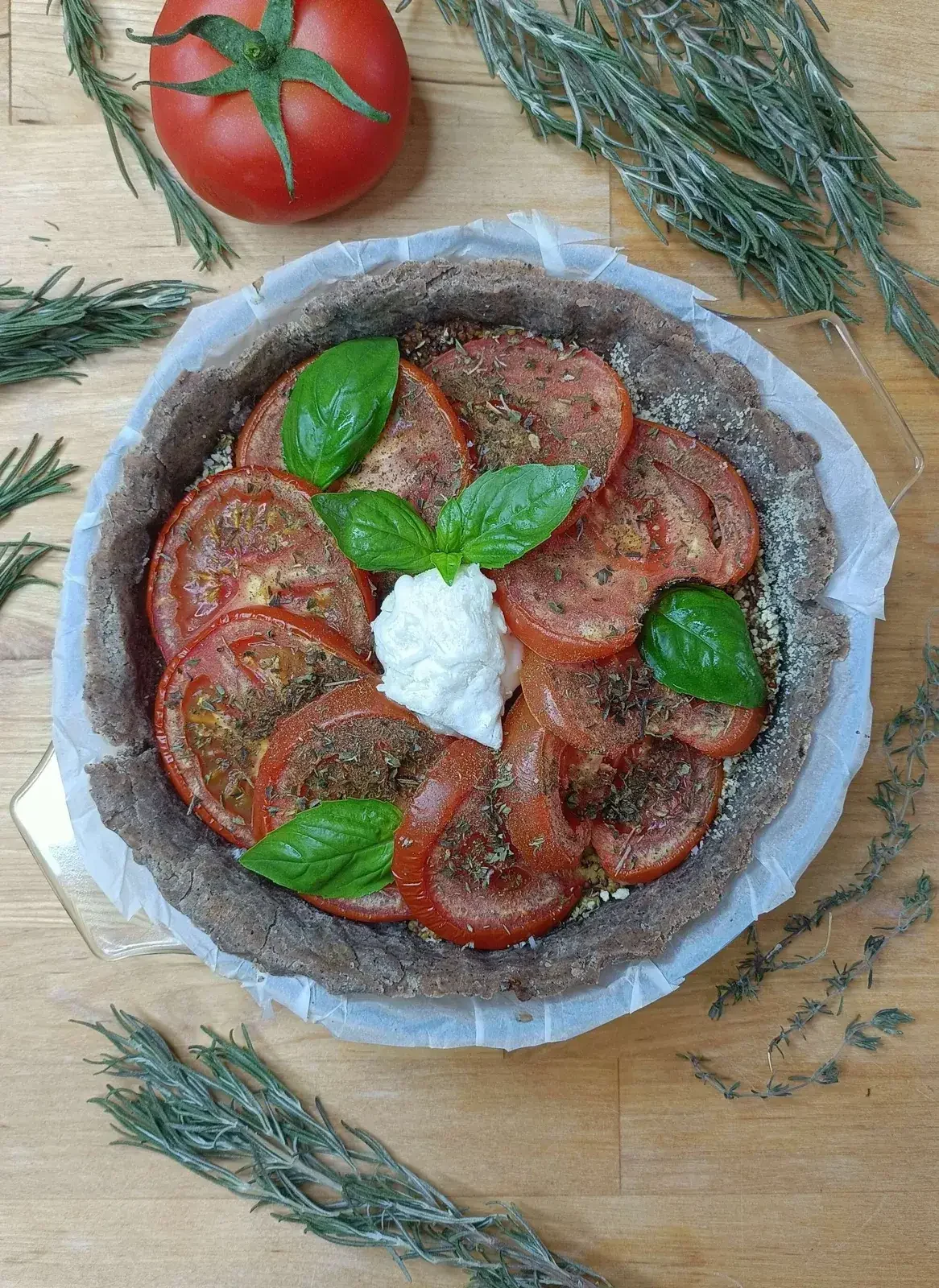
Tomato and goat's cheese tart, gluten-free pastry with flaxseeds
Florence Oustau's summer tomato and goat's cheese tart: a gluten-free shortcrust pastry bound with ground flaxseeds, a rosette of tomatoes and melted goat's cheese.
1 min read
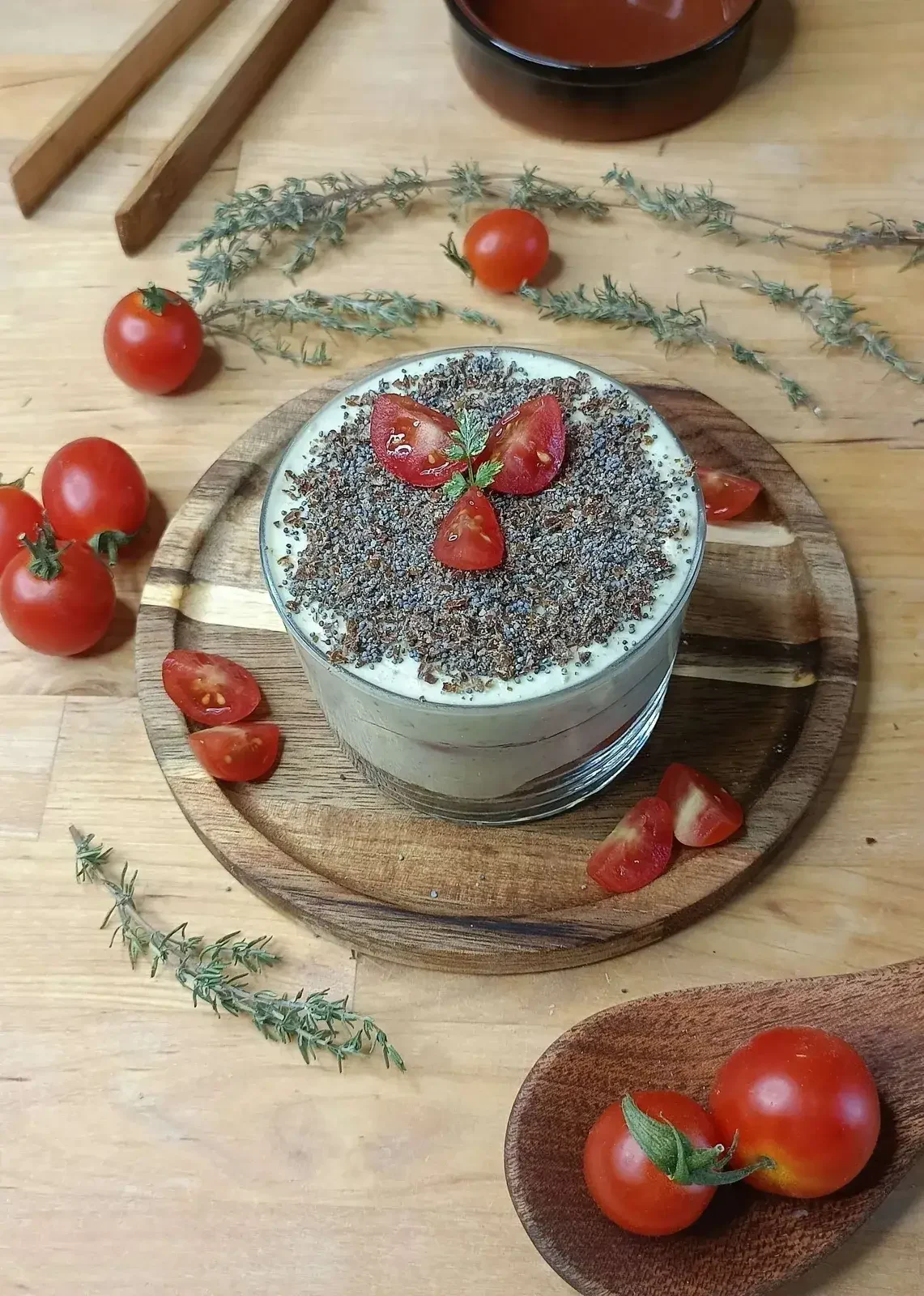
Savoury tomato, pesto and kibbled flaxseed tiramisù
Florence Oustau's savoury tiramisù: plant-based mascarpone, pesto, tomato and the crunch of kibbled flaxseed. A chic and fresh aperitif verrine.
2 min read