NewsPublished on 8 min read
From field to plate: the Pyrenean oilseed flax supply chain
The history and revival of the Pyrenean oilseed flax supply chain: Béarn terroir, cultivation, local cold pressing and traceability, from field to plate.
Updated on
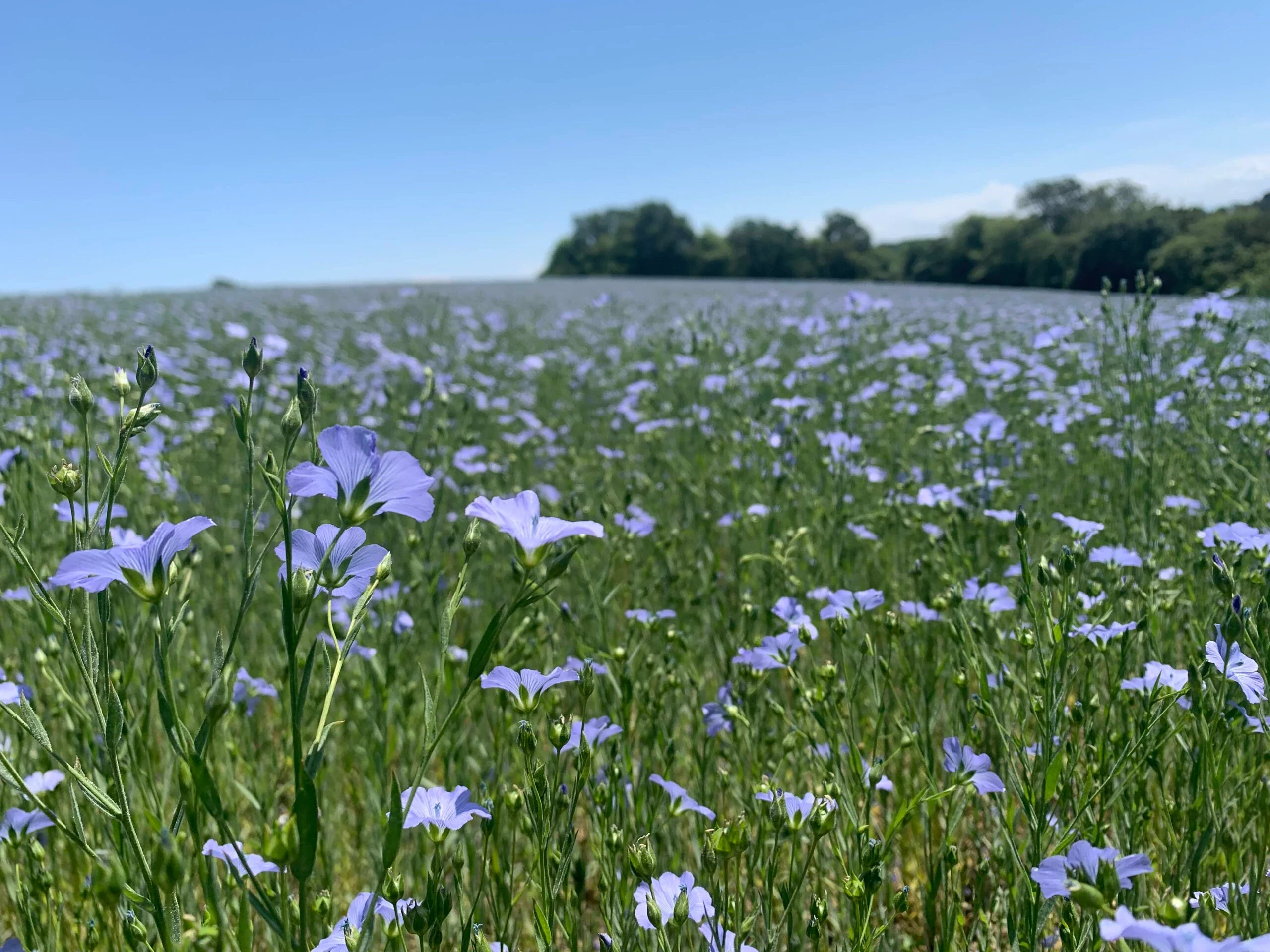
At the foot of the Pyrenees, where the Atlantic rain meets the light of the South, a discreet plant blooms again every year in the fields of the Béarn: oilseed flax. Behind every bottle of cold-pressed virgin linseed oil lies an entire supply chain - from seed growers to farmers, from pressers to chefs - that chose to revive a long-forgotten crop. This article tells the story of that adventure: where Lin des Pyrénées flax comes from, how it grows, how it is processed, and why its roots in the region make all the difference, from field to plate.
Oilseed flax, an ancient crop reborn
Flax (Linum usitatissimum) has accompanied humankind for thousands of years. It is grown both for its fibre - used for linen cloth and clothing - and for its seeds, which yield one of the richest oils in ALA omega-3 in the plant kingdom. It is this second path, oilseed flax, that interests us here: flax grown for the seed, not for textiles.
Long present in the French countryside, flax grown for food had gradually disappeared from crop rotations, supplanted by more standardised oilseeds and by imports. Today, driven by demand for local, traceable products, the oilseed flax supply chain is enjoying a genuine revival. Lin des Pyrénées is fully part of this movement, betting on production rooted in its terroir. To discover flax grown in the Pyrenees, explore our feature on flax.
Reviving a supply chain: the Lin des Pyrénées gamble
You cannot revive a supply chain by decree: it has to be built, season after season. It meant relearning how to sow oilseed flax on this terroir, selecting varieties suited to the Pyrenean climate, building ties with farmers ready to reintroduce this crop into their rotation, and bringing processing know-how together close to the fields.
This collective work was supported by concrete backing: EAFRD co-financing (European Agricultural Fund for Rural Development) and a partnership with Ecloz, which made it possible to structure the first links in the chain. Controlling every stage - the seed, the cultivation, the harvest, the pressing, the bottling - rather than buying an anonymous oil on a global market: it is precisely this control that makes the difference in the glass. Our story and our know-how rest on this conviction.
The terroir of the Pyrenees and the Béarn
A terroir is the meeting of a soil, a climate and the human hand. At the foot of the Pyrenees, the Béarn offers oilseed flax distinctive conditions: regular rainfall from the Atlantic, foothill soils, and a contrast between cool nights and bright days.
A favourable microclimate
Oilseed flax is a plant that needs plenty of light but is sensitive to extremes. The climate of the Pyrenean foothills, neither too dry nor too hot, suits it particularly well: the plant ripens without sudden water stress, which helps the seeds fill out properly. This gradual ripening contributes directly to the quality of the final oil. Flax in flower, a fleeting pale blue in the early morning, is now part of the Béarn landscape - and we can speak of a Pyrenean terroir with sincerity, because the seed is genuinely grown here, not simply packaged.
Cultivation and harvest, season after season
The life of an oilseed flax field follows the rhythm of the seasons. Sowing takes place in spring, on carefully prepared soil; then comes emergence, then flowering, before the plant forms its capsules, the small "heads" that contain the seeds. Oilseed flax fits well into a crop rotation: it diversifies the rotations of partner farms.
Patience is then the golden rule. Harvested too early, flax gives immature seeds; harvested too late, it risks shedding its seeds and losses. The whole art lies in waiting for the right moment, when the capsules turn brown and the seed reaches full maturity. Once harvested, the seeds are cleaned and dried in good conditions: rich in fragile fats, they can oxidise even before being pressed if they are poorly stored. This rigour extends all the way to our flaxseeds and our kibbled flaxseed, offered as they are for the table.
Cold pressing, a few kilometres from the fields
Next comes the stage that reveals the seed’s full potential: extracting the oil. Lin des Pyrénées has chosen cold pressing, mechanical and without solvents. The seed is pressed at low temperature, which preserves the fatty acids and aromas, whereas hot or chemical extraction would degrade some of them.
Pressing a few kilometres from the fields, in the days following the harvest, also shortens the time between harvest and bottle - a decisive factor for an oil so sensitive to oxidation. The result is a clear oil with a frank nutty taste that conveys the character of the seed and the terroir it comes from. It is this quality that the Best Of Gastronomie 2026 Gold Medal, awarded for taste, came to recognise.
Traceability, from sowing to bottle
In a market where you can find linseed oils from far away with no clearly identified origin, traceability is a strong commitment. At Lin des Pyrénées, you can follow the seed’s journey: where it comes from, who grew it, when it was harvested and pressed. Each batch is identified, from sowing to bottling.
For consumers, this translates very concretely into a recent pressing date, a proudly regional origin and a supply chain that can be named. This is exactly what you look for when you want a fresh, reliable oil, as we explain in our complete guide to food-grade linseed oil. At national level, the structuring of oilseed supply chains is monitored by public bodies: see for example the work of FranceAgriMer on French oilseed supply chains.
Press cake turned into flour: nothing is wasted
When the seed is pressed to extract the oil, what remains is known as the press cake: the solid part, a source of fibre and protein. Far from being waste, this press cake is turned into flour: we mill it finely to make our flaxseed flour, used in cooking and baking, particularly in gluten-free recipes and as a plant-based binder.
A single seed thus yields two complementary products: the oil, rich in ALA omega-3, and the flour, a source of fibre and around 20% protein. This approach explains the coherence of our range: the same crop gives the oil, the flour, the seeds and the cracked seeds. To cook with them, our recipes page brings together ideas from the house and from our chefs.
Ambassador chefs and gastronomic recognition
A quality supply chain always ends up being recognised by those whose palate is their profession: chefs. Lin des Pyrénées linseed oil has found its place in the kitchens of several ambassador chefs, won over by its frank nutty taste and the story of terroir it carries.
When a chef chooses an oil to sign a dish, they stake their reputation on it: that is the whole point of a supply chain linking the farmer, the presser and the cook around a single product.
Local supply chain or pure players: what makes the difference
In the linseed oil market, two models stand in contrast. On one side, pure players selling an often imported oil, with an unclear origin, optimised for price and logistics. On the other, a local, traceable supply chain like that of Lin des Pyrénées, which embraces its regional roots and full control, from sowing to bottle.
The difference can be measured on several levels: a short supply chain shortens the time between harvest and consumption, traceability lets you know exactly what you are buying, and terroir leaves a signature you will not find in an anonymous oil.
From field to plate: one supply chain, one promise
From the seed sown in spring in a Béarn field to the drizzle of golden oil on a plate, the Pyrenean oilseed flax supply chain traces a coherent and transparent journey: the revival of a forgotten crop, a distinctive terroir, a careful harvest, cold pressing a few kilometres from the fields, batch traceability and press cake turned into flour.
This is the promise you hold in your hands when you choose our products. To discover it, visit our linseed oil shop, our partner retailers, or explore the whole range from the Lin des Pyrénées home page.
Frequently asked questions
What is oilseed flax? It is flax grown for its seeds, from which an oil rich in ALA omega-3 is obtained, as opposed to textile flax, which is grown for its fibre.
Why do people talk about a revival of the flax sector in France? This crop, long sidelined, is flourishing again thanks to demand for local, traceable products, driven by players such as Lin des Pyrénées, with EAFRD co-financing and a partnership with Ecloz.
Where is Lin des Pyrénées flax pressed? A few kilometres from the fields of the Béarn, in the days following the harvest, by mechanical cold pressing without solvents.
What happens to the seed after the oil is pressed? The press cake, the solid part, is not waste: it is finely milled and turned into flaxseed flour, used in cooking and baking.
How does it differ from a pure player’s linseed oil? A local, traceable supply chain guarantees a clear origin, greater freshness and a taste of terroir, whereas an imported oil often remains anonymous.
Recent articles
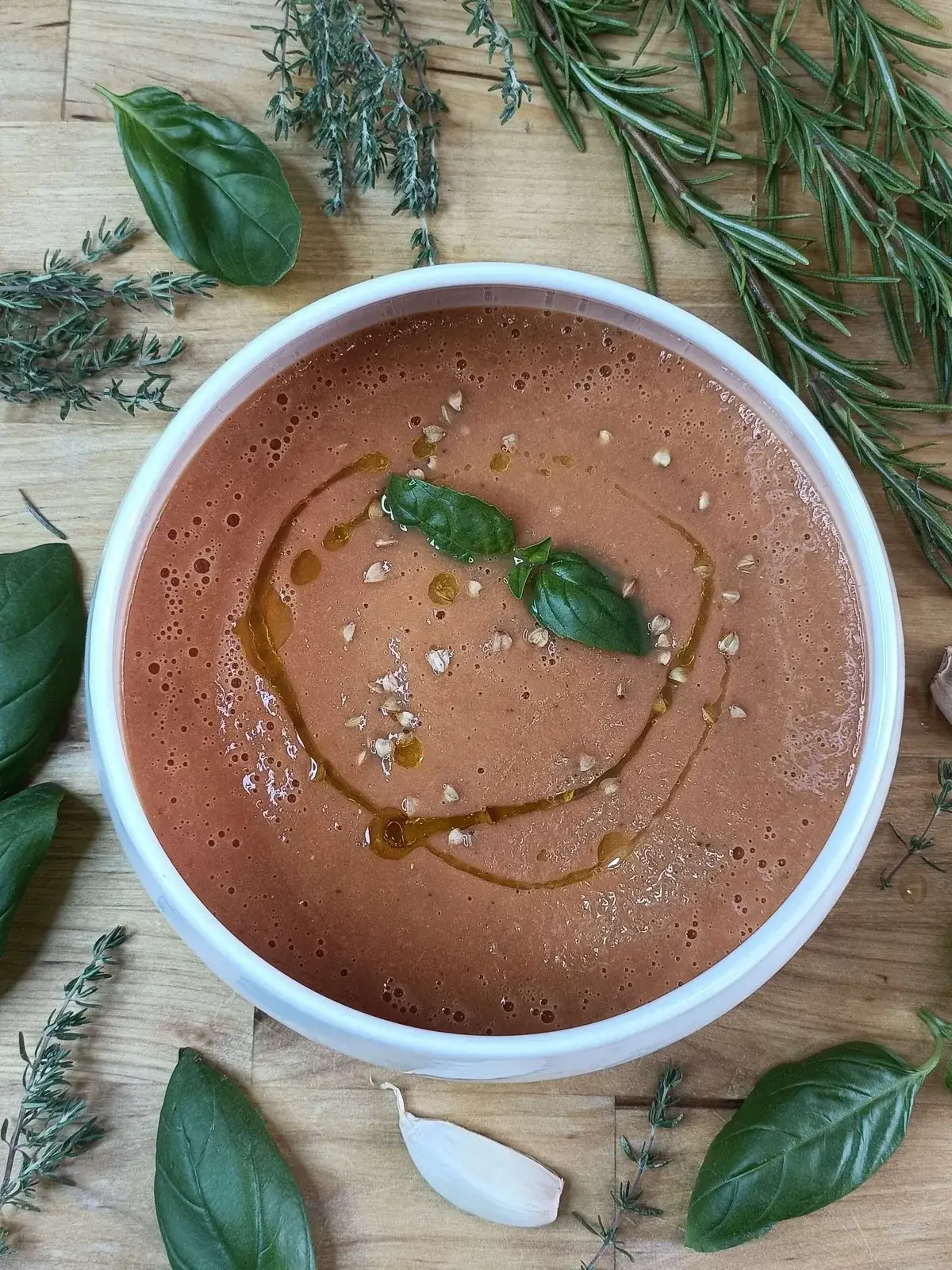
Chilled roasted tomato and garlic soup, with a drizzle of linseed oil
Florence Oustau's chilled soup: oven-roasted tomatoes and garlic, a night in the fridge, crunchy kasha and a drizzle of linseed oil just before serving.
1 min read
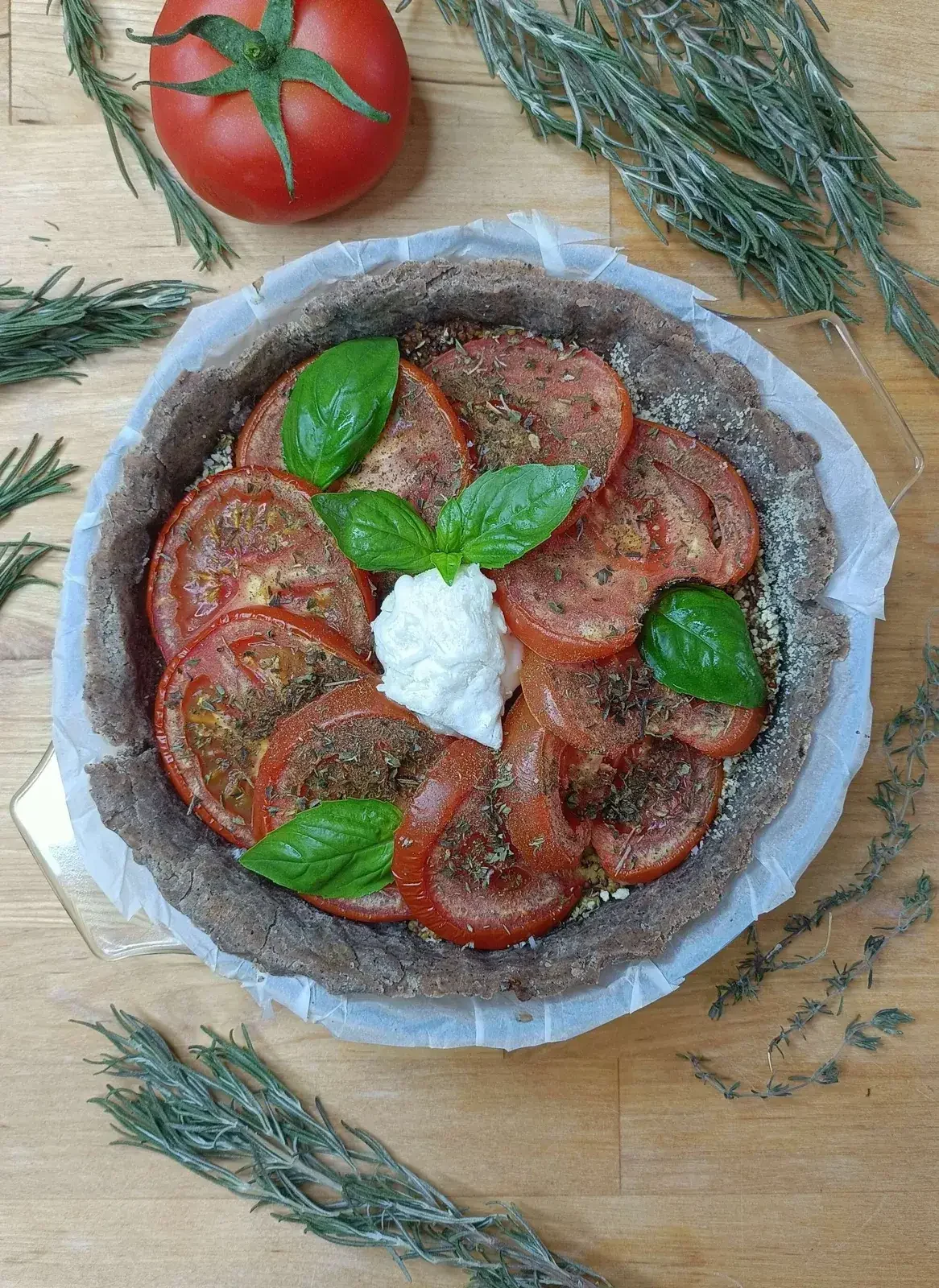
Tomato and goat's cheese tart, gluten-free pastry with flaxseeds
Florence Oustau's summer tomato and goat's cheese tart: a gluten-free shortcrust pastry bound with ground flaxseeds, a rosette of tomatoes and melted goat's cheese.
1 min read
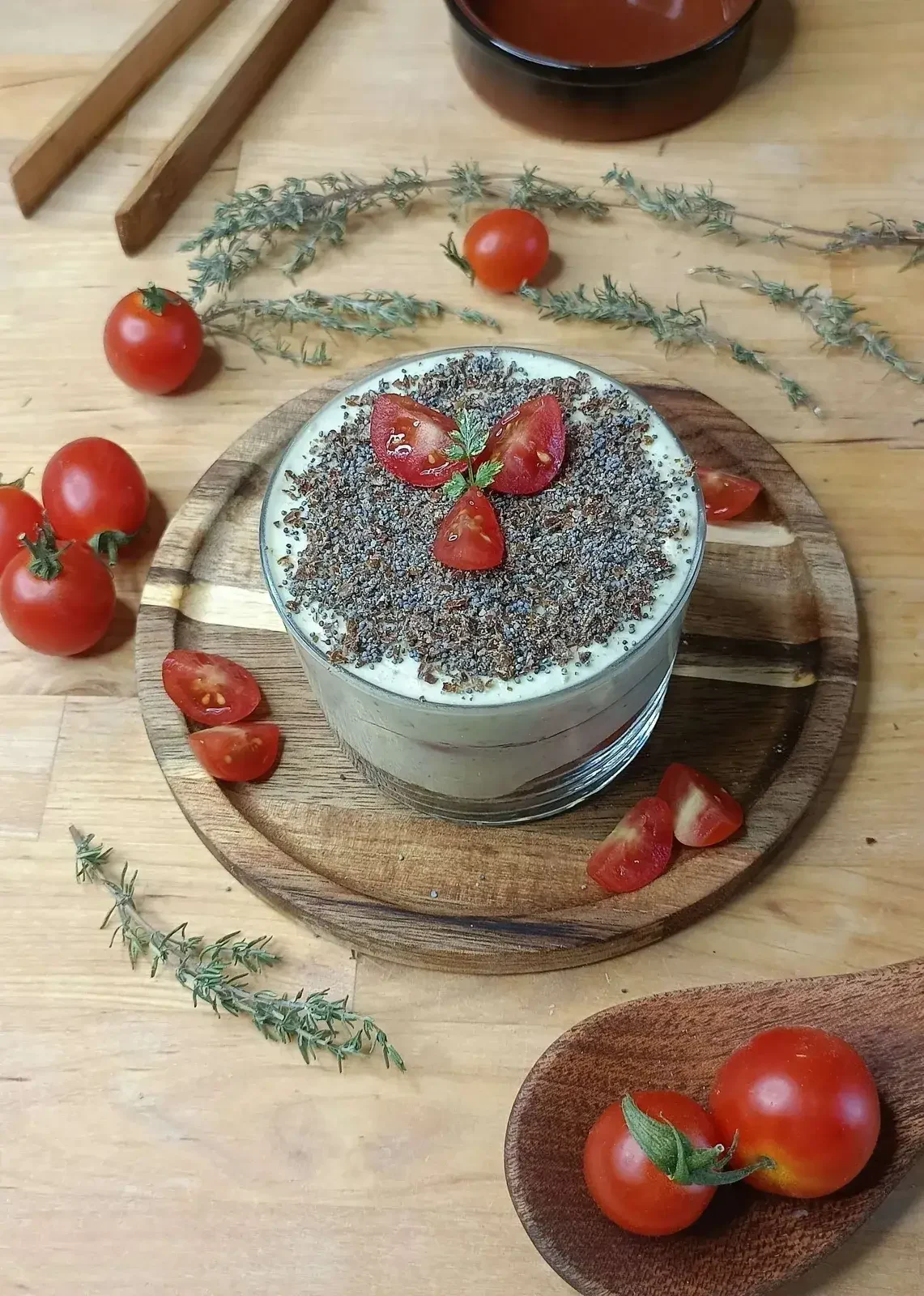
Savoury tomato, pesto and kibbled flaxseed tiramisù
Florence Oustau's savoury tiramisù: plant-based mascarpone, pesto, tomato and the crunch of kibbled flaxseed. A chic and fresh aperitif verrine.
2 min read