Linseed OilPublished on 6 min read
Linseed oil in the kitchen: 7 myths to forget
Cooking, bitterness, storage, price, quantity: we put 7 common misconceptions about linseed oil in the kitchen to the test, myth versus reality.
Updated on
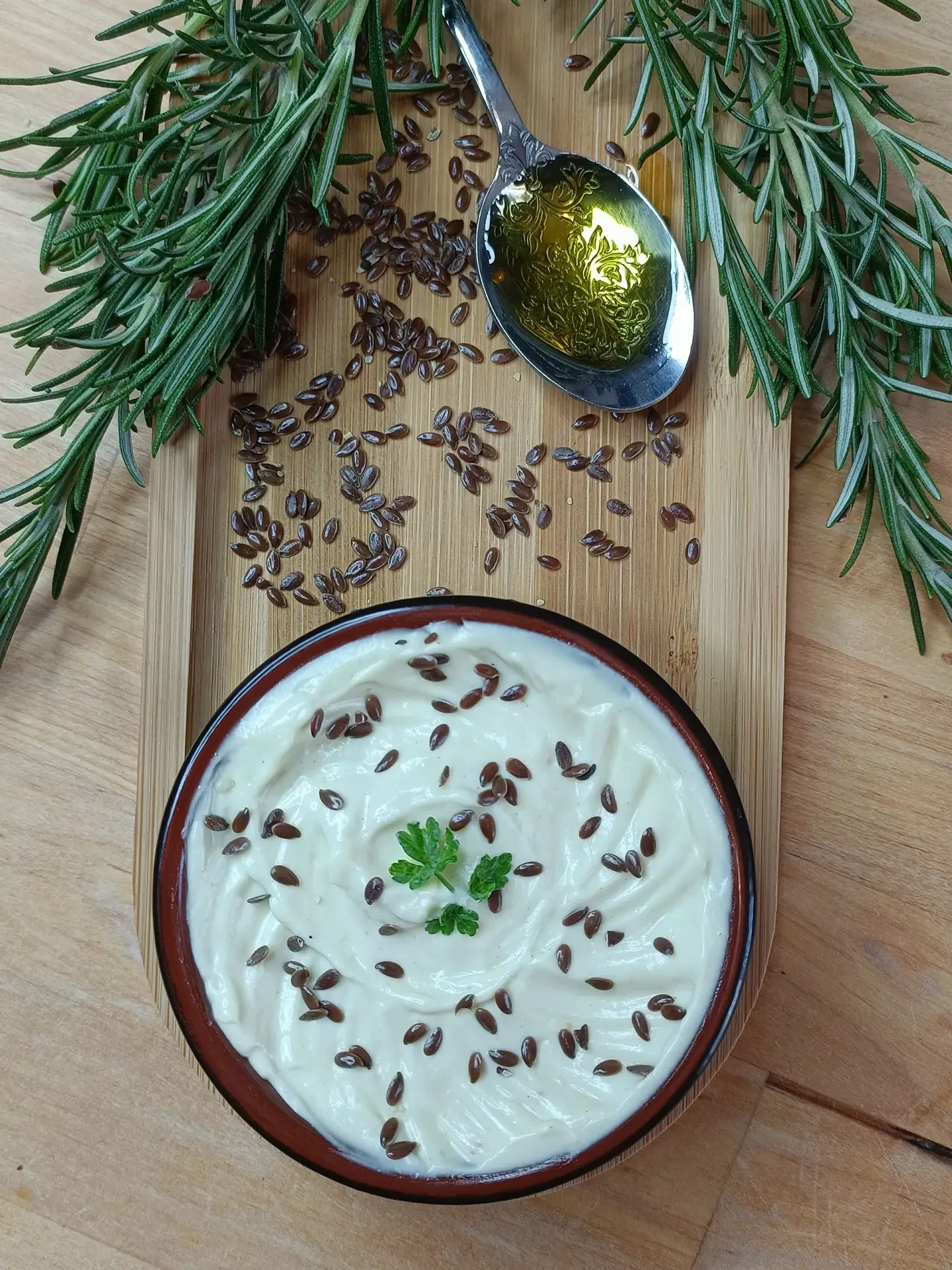
Linseed oil is credited with a thousand flaws that often put people off using it: too fragile, too bitter, impossible to cook with, reserved for specialist diets… Yet, properly understood, our cold-pressed virgin linseed oil, born in the heart of the Pyrenees, is one of the simplest condiments to bring into everyday cooking. Let’s sort fact from fiction: here are 7 misconceptions about linseed oil in the kitchen, put to the test of myth versus reality, so you can cook with confidence and pleasure.
Myth no. 1: "You can cook with linseed oil like any other oil"
The reality: no, and this is the only real golden rule. Linseed oil is never cooked. Its omega-3 fatty acids are fragile: heat oxidises them, darkens the oil and brings out an unpleasant bitterness. So it is kept for raw dishes and finishing touches - a drizzle on a dish that has already been served, never in the frying pan or the oven.
This is not a constraint but a logical way of using it: you cook with a cooking oil (olive, rapeseed) and add linseed oil at the last moment, off the heat, for its nutty taste. All the details of this use are in our complete guide to food-grade linseed oil.
Myth no. 2: "Linseed oil is always bitter"
The reality: a good linseed oil is not bitter; it is mild and nutty. Marked bitterness is not a normal characteristic of the product: it is the sign of an oxidised oil, badly pressed or too old. Fresh and well stored, linseed oil instead develops a frank taste of hazelnut and green grass, with at most a slight finishing note typical of an unrefined virgin oil.
If your oil is distinctly harsh, trust your palate: it has probably gone off. A virgin, cold-pressed, fresh and traceable oil - like the one from our short Pyrenean supply chain - is the best guarantee of a pleasant taste.
Myth no. 3: "It keeps like any other oil"
The reality: linseed oil needs more care than other oils. Sensitive to heat, light and oxygen, it is kept in the fridge as soon as it is opened, away from light in its tinted bottle, and ideally used within 4 to 6 weeks. An oil that smells rancid or of "old cardboard" has oxidised: replace it.
This is why we offer it in a small 200 ml size, calibrated for regular use without waste. Before opening, keep it in a cool, dry, dark place until the date shown on the label. Far from being a chore, this care is part of the pleasure of a fresh product.
Myth no. 4: "Food-grade linseed oil and oil for wood are the same thing"
The reality: not at all, and the confusion can be dangerous. "Technical" linseed oil, sold in DIY shops to nourish wood or thin paint, is not edible: it may contain drying additives. Only virgin, food-grade, cold-pressed oil is for cooking and eating.
The rule of thumb is simple: a food-grade oil is found in the grocery aisle or from a producer, carries the words "virgin" and "food-grade", and shows a pressing date. If in doubt, stick to a reliable, traceable source.
Myth no. 5: "You need a lot of it to taste it"
The reality: on the contrary, a small amount is enough. Allow one tablespoon (10 to 15 ml) to flavour a dish for two people. Beyond that, its nutty signature takes over and masks the other flavours on the plate - not to mention that linseed oil is still a fat, to be measured as such in a recipe.
So what matters is not the quantity on any single day, but regularity and getting the amount right: a spoonful added to a vinaigrette, a yoghurt or a mash that has already been served is enough to give the dish character. You can vary the pleasure with our flaxseeds, whose crunch plays in a different register.
Myth no. 6: "Linseed oil is only for vegans and specialist diets"
The reality: it is for everyone. While it is true that linseed oil is popular with vegans and vegetarians - it is one of the food oils richest in ALA omega-3, and it is 100% plant-based and naturally gluten-free -, it has its place in every kitchen. Families, food lovers, weekend cooks: everyone gains a nutty taste that elevates the simplest dishes.
Our ambassador chefs use it in bistro recipes as well as in fine dining. Far from being a niche product, it is an everyday seasoning found in many indulgent, accessible recipes.
Myth no. 7: "It’s expensive for a simple oil"
The reality: relative to how it is used, the real cost of a spoonful of linseed oil remains modest. It is used in small touches - a spoonful a day - and a bottle lasts several weeks. Its price reflects careful cold pressing, mechanical and without solvents, quick bottling away from light and full traceability, from the Béarn field to the glass.
It is the price of a fresh, local oil, to be compared not with a mass-market cooking oil but with an exceptional condiment used sparingly. A standard recognised by the Best Of Gastronomie 2026 Gold Medal, awarded for taste.
Cooking well with linseed oil: the essentials in practice
Once these myths are set aside, how to use it becomes obvious. Keep it cool, always add it cold, and use it generously but without excess. A few simple ideas to get started:
- drizzled over steamed vegetables, a mash or a velouté once served;
- in a vinaigrette, at one third linseed oil to two thirds of a more neutral-tasting oil;
- on cold fish, a tartare, raw vegetables or fromage blanc;
- in a smoothie, a yoghurt or a porridge, by the spoonful;
- mixed into a houmous, an avocado purée or a yoghurt and herb sauce.
Three pairings that work every time
Its nutty taste goes beautifully with the produce of the Béarn. Three simple pairings to start with: steamed potatoes and a pinch of fleur de sel, with the oil poured off the heat; smoked trout or salmon, where its grassy note answers the richness of the fish; fresh sheep’s cheese and a few snipped herbs, on an evening open sandwich. To go further, complete your cupboard with flaxseed flour for baking and the oil for dressings: the same seed, two complementary uses.
Frequently asked questions
Can you really cook with linseed oil? Yes, but only cold: in dressings and as a finishing touch. It is never heated, because cooking oxidises its omega-3 and makes it bitter.
Why does my linseed oil taste bitter? Strong bitterness indicates an oil that is oxidised or too old. A fresh, well-stored oil has a gentle nutty taste, with no marked harshness.
How should linseed oil be stored in the kitchen? In the fridge as soon as it is opened, away from light, and ideally used within 4 to 6 weeks.
How much linseed oil for a dish? One tablespoon (10 to 15 ml) flavours a dish for two. Beyond that, its nutty taste dominates the other flavours.
Is the linseed oil sold in DIY shops edible? No. Technical linseed oil for wood is not food-grade. Only virgin, food-grade, cold-pressed oil is for eating.
Sources: ANSES, omega-3 fatty acids (in French); EFSA, dietary reference values for fats.
Recent articles

Chilled roasted tomato and garlic soup, with a drizzle of linseed oil
Florence Oustau's chilled soup: oven-roasted tomatoes and garlic, a night in the fridge, crunchy kasha and a drizzle of linseed oil just before serving.
1 min read

Tomato and goat's cheese tart, gluten-free pastry with flaxseeds
Florence Oustau's summer tomato and goat's cheese tart: a gluten-free shortcrust pastry bound with ground flaxseeds, a rosette of tomatoes and melted goat's cheese.
1 min read
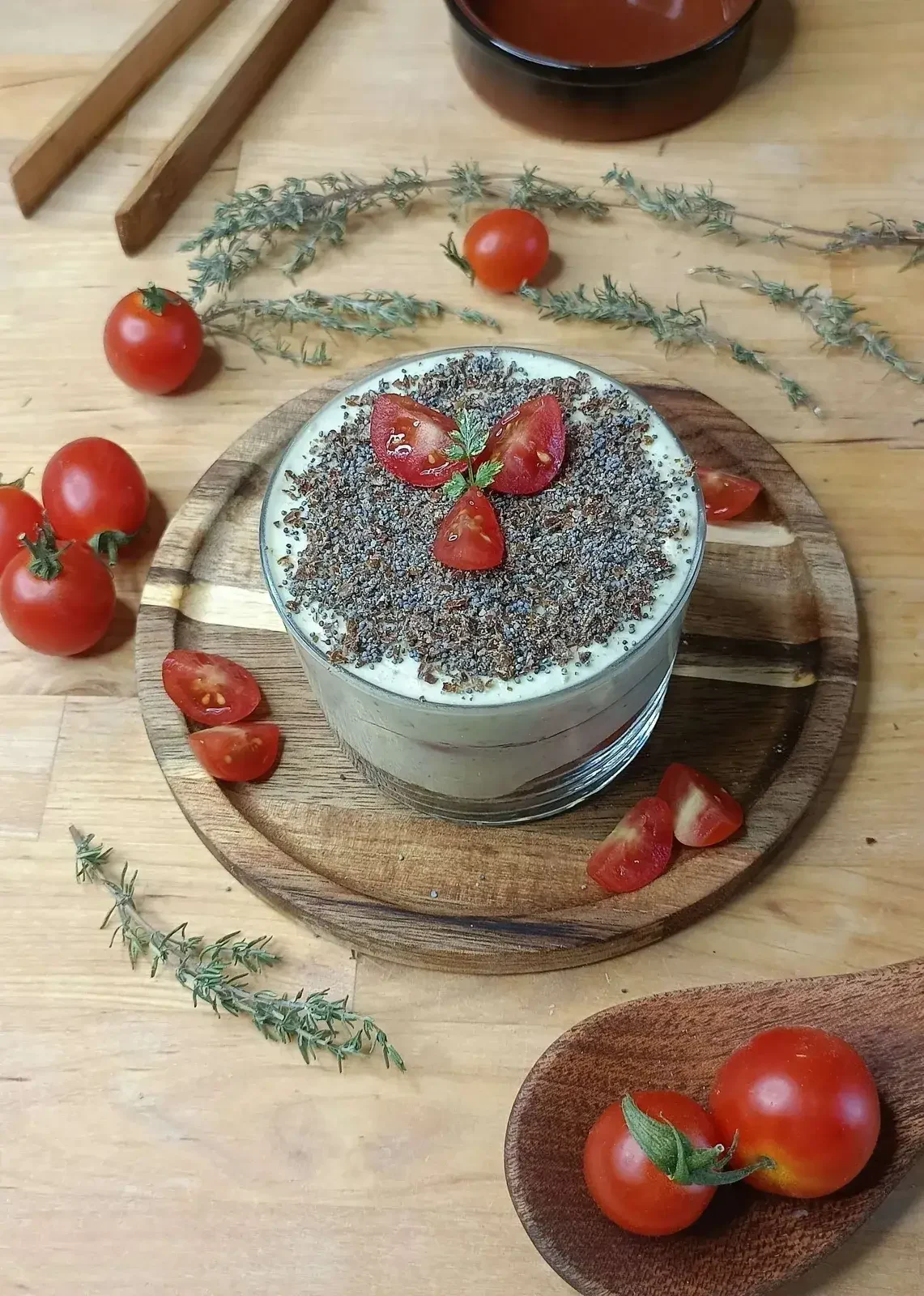
Savoury tomato, pesto and kibbled flaxseed tiramisù
Florence Oustau's savoury tiramisù: plant-based mascarpone, pesto, tomato and the crunch of kibbled flaxseed. A chic and fresh aperitif verrine.
2 min read